Dear Caladriii,
I often talk to you about artists and art, but what about art in literature? Can art influence heroes, change with them, and even speak for them?
Maybe I am still under the influence of my bachelor thesis, in which I explored Oscar Wilde's complex understanding of beauty, aestheticism, and morality, and I wanted to share a few thoughts from it as I touched on The Picture of Dorian Gray. But in this novel, art plays a much greater role: it becomes almost an intangible character.
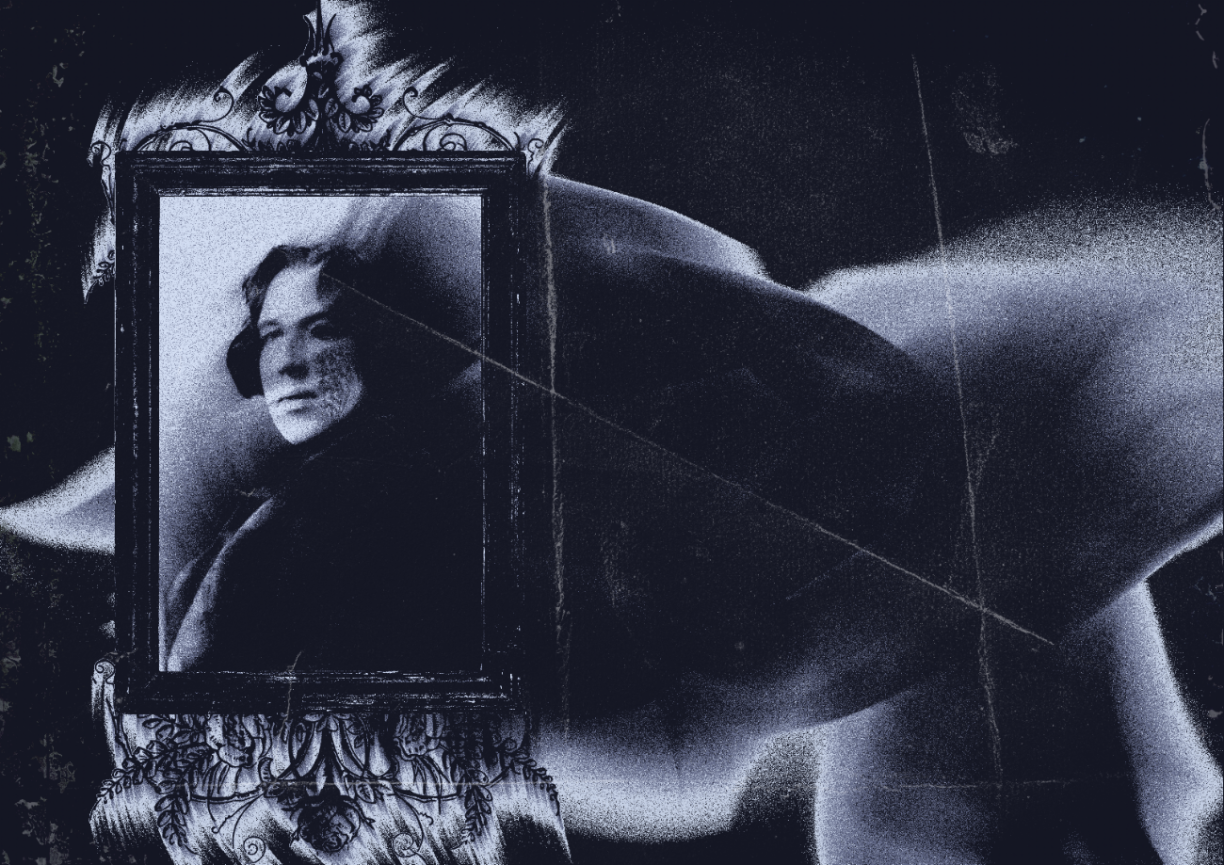
At the very beginning, Dorian is terrified of growing old and wishes that the portrait could age instead of him. His wish comes true: Dorian remains young and beautiful, while the painting changes with every cruel or selfish act he commits.
But the changes are more radical. The portrait becomes Dorian's hidden mirror, showing everything his beautiful appearance lets him hide from the world.
Many see The Picture of Dorian Gray as a celebration of aestheticism. To me, it is more of a warning.
At Oxford, Wilde was influenced by his professor Walter Pater, one of the great philosophers of the Victorian era, who encouraged one to "burn always with this hard, gem-like flame" and live as intensely as possible.
At first, the novel seems to embrace this idea. In the very beginning Dorian declares: "If it were I who was to be always young, and the picture that was to grow old! [...] I would give everything! [...]! would give my soul for that!"
But this is precisely where his moral decline begins.
Dorian chooses external beauty over his soul. Detached from morality, beauty becomes a destructive force. One of my favourite contradictions in the novel is the portrait itself.
In The Decay of Lying, Wilde argues that art should lie, presenting the artist as a "fascinated liar".
But in The Picture of Dorian Gray, this idea is reversed: Dorian's appearance lies, while the portrait tells the truth, revealing his sins and the corruption of his soul.
Rather than celebrating aestheticism, Wilde seems to test it. He places Dorian in a Paterian world, a world where beauty, pleasure, and sensation can be pursued above morality and asks what happens if someone lives this way.
The answer is terrifying.
The more Dorian chases beauty and sensation, the less capable he becomes of actually feeling them.
By the end of the novel, Wilde complicates the very philosophy with which the book is so often associated.
The Picture of Dorian Gray does not celebrate Pater's ideas, it puts them on trial.
Beauty transforms. Beauty has power. Beauty separated from morality can become destructive.
Written by Margaryta Aleksandrova, designed by Dorian Sousa Calvo.
ROUX Student Magazine is a student club born at the University of Luxembourg. Everything in our magazine is made by students, for students, and now, for you. After all, good stories, much like beauty, are not meant to be kept to oneself.
The article you just read was featured in our Issue 31. You can find all our issues digitally or grab the newest one for free at our monthly publication events.
Find us on Instagram: @roux.magazine or write to us at paper.roux@gmail.com.