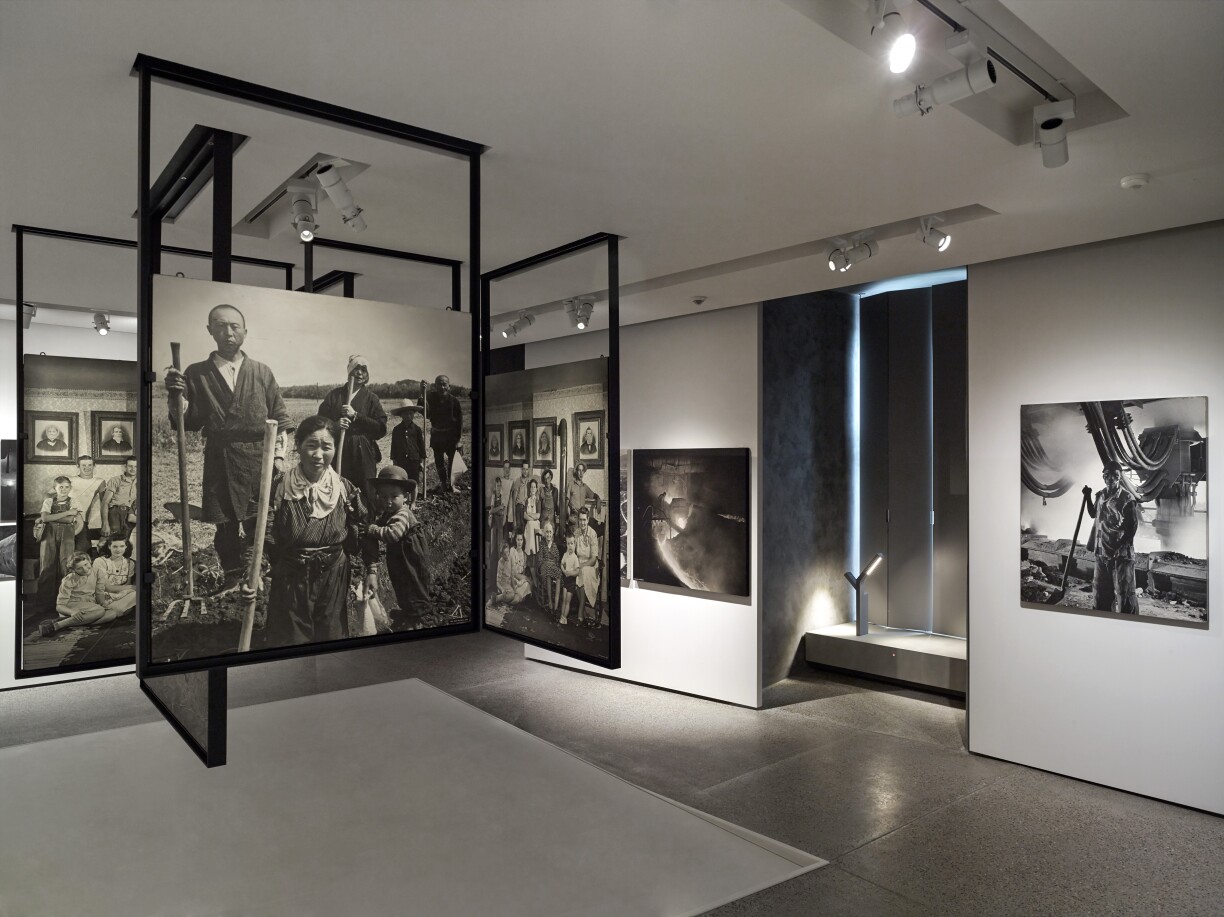
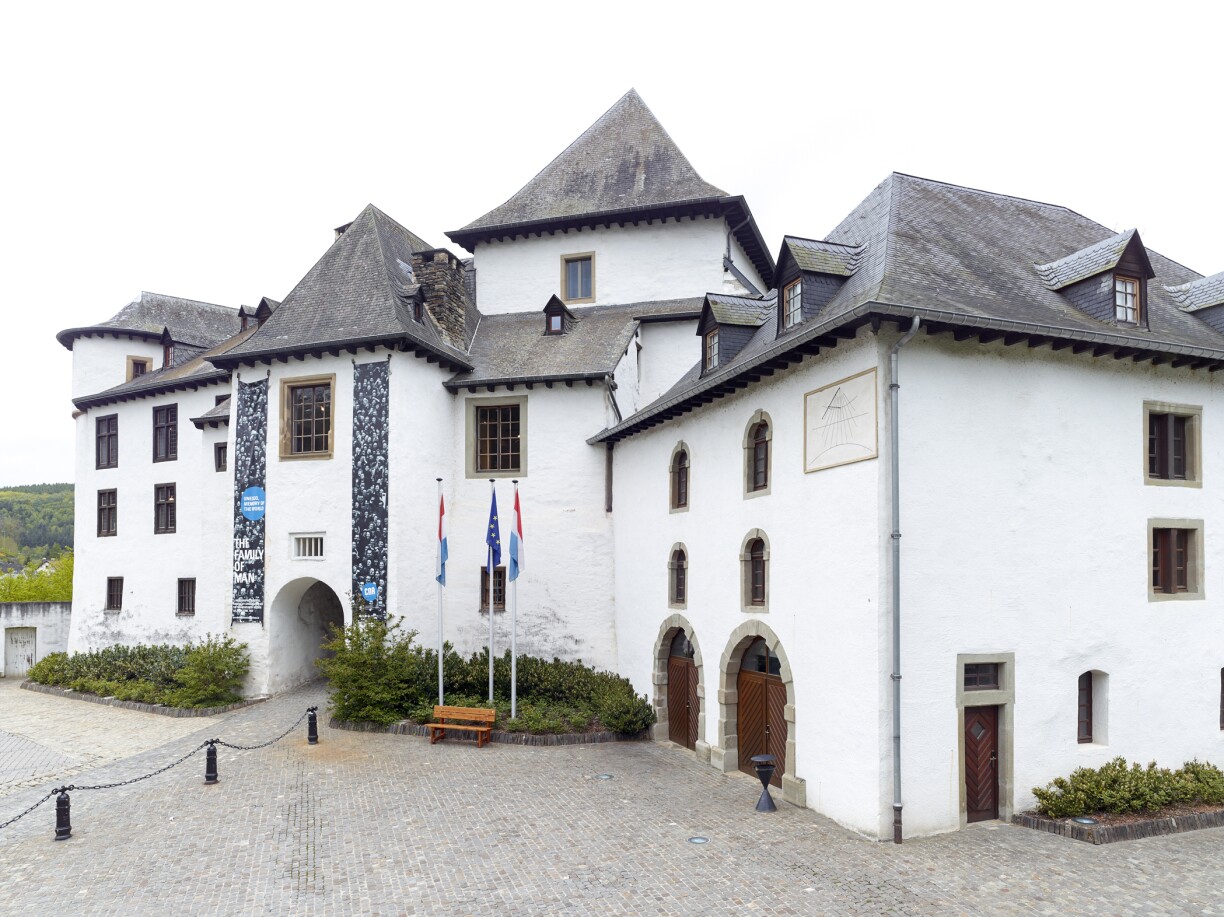
The photographs in the exhibition “The Family of Man” in Clervaux – a UNESCO World Heritage site – were exposed to high humidity levels for much longer than claimed by Minister for Culture Eric Thill of the Democratic Party (DP).
In an interview with RTL Radio on 11 April, Thill discussed issues related to the exhibition’s air conditioning system, among other topics. He stated that certain critical thresholds had been crossed, but only for very brief periods. At the time, he assured that such short-term exceedances were not a cause for concern, as long as they did not last for extended durations. Thill insisted that this had not been the case, reiterating that the thresholds had been exceeded for mere “minutes”. He added that his ministry would assess how to prevent similar incidents in the future.
The minister also noted that he was relaying information provided by his “experts” at the National Audiovisual Centre (CNA), acknowledging that he himself was “neither a heating technician nor a specialist for air conditioning systems.”
In early March, Thill responded to a parliamentary question from MPs Stéphanie Weydert and Jean-Paul Schaaf of the Christian Social People’s Party (CSV). He stated that during maintenance of the air conditioning system in July 2025, it was confirmed that one of the system’s two compressors was defective and beyond repair. On 25 July 2025, four additional dehumidifiers were installed to stabilise hygrometry, Thill explained, and monitoring was intensified to detect and analyse any fluctuations instantly.
On 11 March, Thill and CNA Director Gilles Zeimet took part in a meeting of the Parliamentary Culture Committee at the Chamber of Deputies. The meeting was not livestreamed due to technical issues. According to Marc Baum, an MP for the Left Party (Déi Lénk), Zeimet explained during the meeting that critical thresholds had been exceeded over the course of several days – specifically, that they had been slightly exceeded over eight days, based on an average of all exhibition rooms combined.
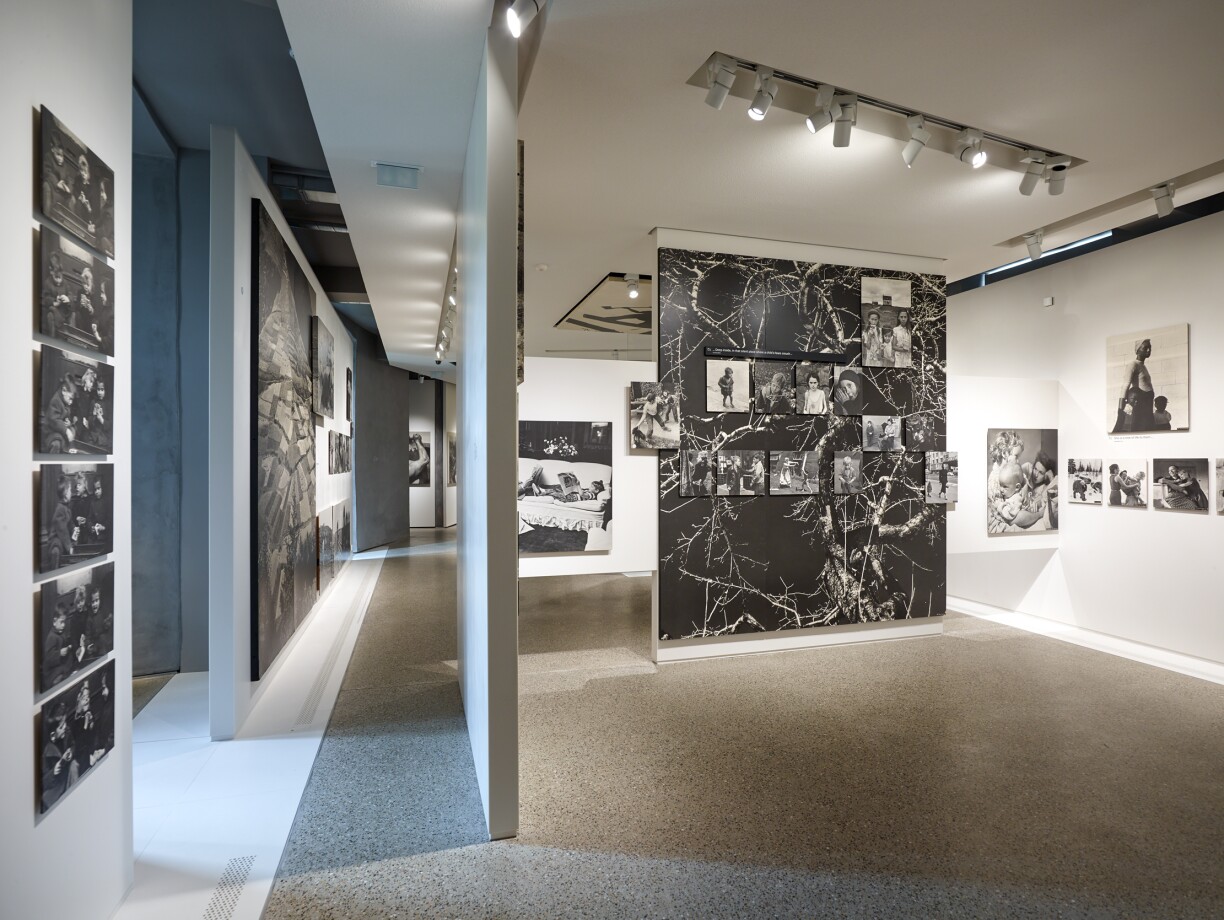
RTL has since independently verified the measurements from the exhibition covering June 2025 through March 2026 – amounting to hundreds of thousands of data points. The evaluation of this data paints a different picture from the one presented by CNA Director Zeimet before the Chamber of Deputies.
It is true that, based on average values across all rooms, the thresholds were exceeded for only a few days. However, this average obscures – or worse, conceals – the actual conditions in individual rooms and, therefore, the environment to which the photographs were actually exposed. In several individual rooms, thresholds were significantly exceeded over extended periods. According to RTL’s own calculations, there is virtually no room in the exhibition where thresholds were not exceeded. This holds true even when looking at the average readings of a single sensor in a room, as shown in Graph 1.
For instance, in Room 0607, humidity exceeded the upper thresholds on 95 days (Graph 3). Humidity in this room regularly spiked above 70%. On 25 July – the day the minister said dehumidifiers were brought to the exhibition – humidity rose to nearly 80% before noon (Graph 2), creating almost tropical conditions. This is problematic: such high humidity can cause the gelatine on the photographs to swell and poses a risk of mould.
Another example is Room 10 in July 2025. Over several days, Measurement Point 6 shows humidity that never drops below the maximum threshold (Graph 4). Beginning on 13 July, humidity remains above 55% until 18 July, when it abruptly drops over a few hours. This pattern repeats on subsequent days. Such sudden fluctuations are also harmful to the photographs, as they cause material fatigue.
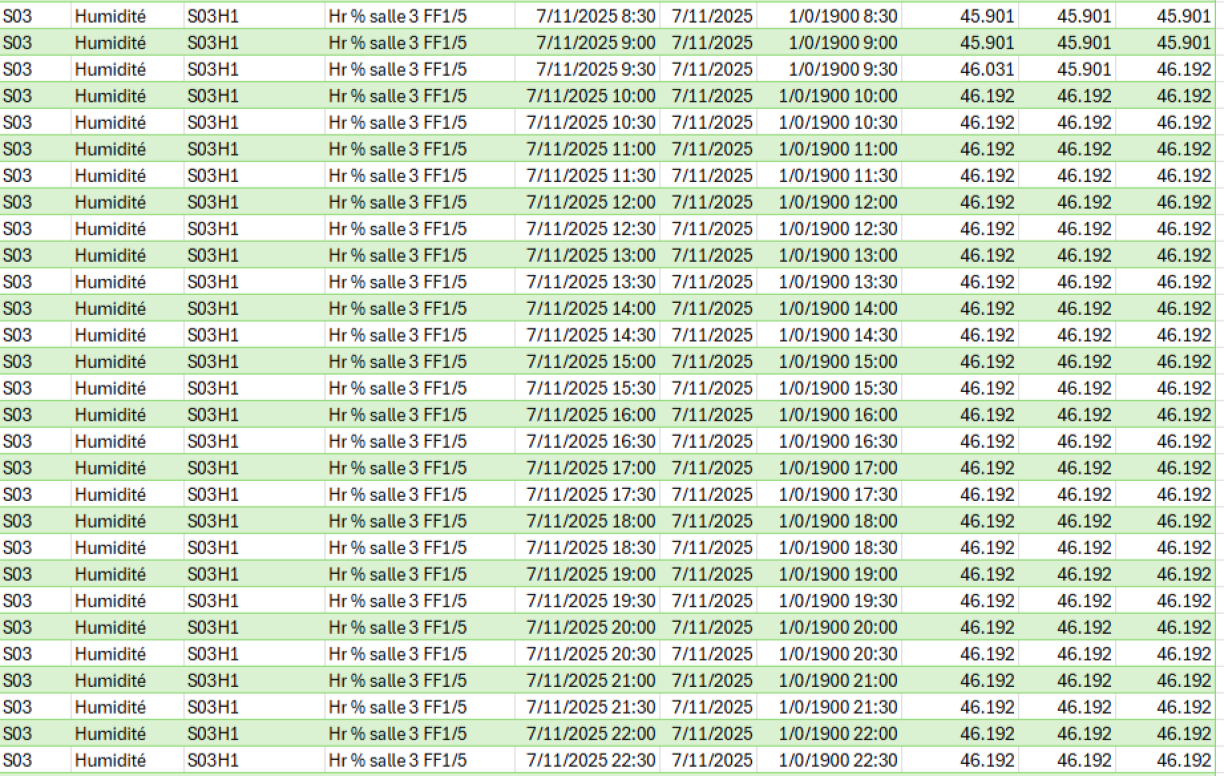
The data analysis also reveals issues with the measurements themselves. In some cases, sensors recorded identical values for hours. This occurred, for example, in Room 3, where a sensor became stuck starting at 10am (Illustration 5). This indicates a malfunction and suggests that conditions were not being monitored during that period.
In general, however, conditions were constantly monitored. As early as June, considerable discrepancies were already present in some rooms. The real question, therefore, is how this data was processed and reviewed.
In any case, the evaluation shows beyond any doubt that the claim made by Minister Thill during his RTL Radio interview – that thresholds were exceeded for mere “minutes” – is patently untrue. The newspaper Tageblatt had already reached the same conclusion last week.
Additionally, it is now clear that Minister Thill had access to the data prior to his radio interview. MP Marc Baum had requested the documents from the Ministry of Culture through a formal access-to-information request and received them before the interview took place. This suggests that the ministry, like journalists and MP Baum, had the opportunity to analyse the measurements.
After reviewing the data, Baum told RTL that, for the Left Party, one of the preliminary conclusions is that CNA Director Zeimet did not tell the truth during the last meeting of the Parliamentary Culture Committee.
As a result, the Left Party has requested another meeting of the committee, which is scheduled for Wednesday at 2pm.
*Note: RTL used Claude AI to evaluate the data, but all results were verified by the editorial team based on the raw data.





