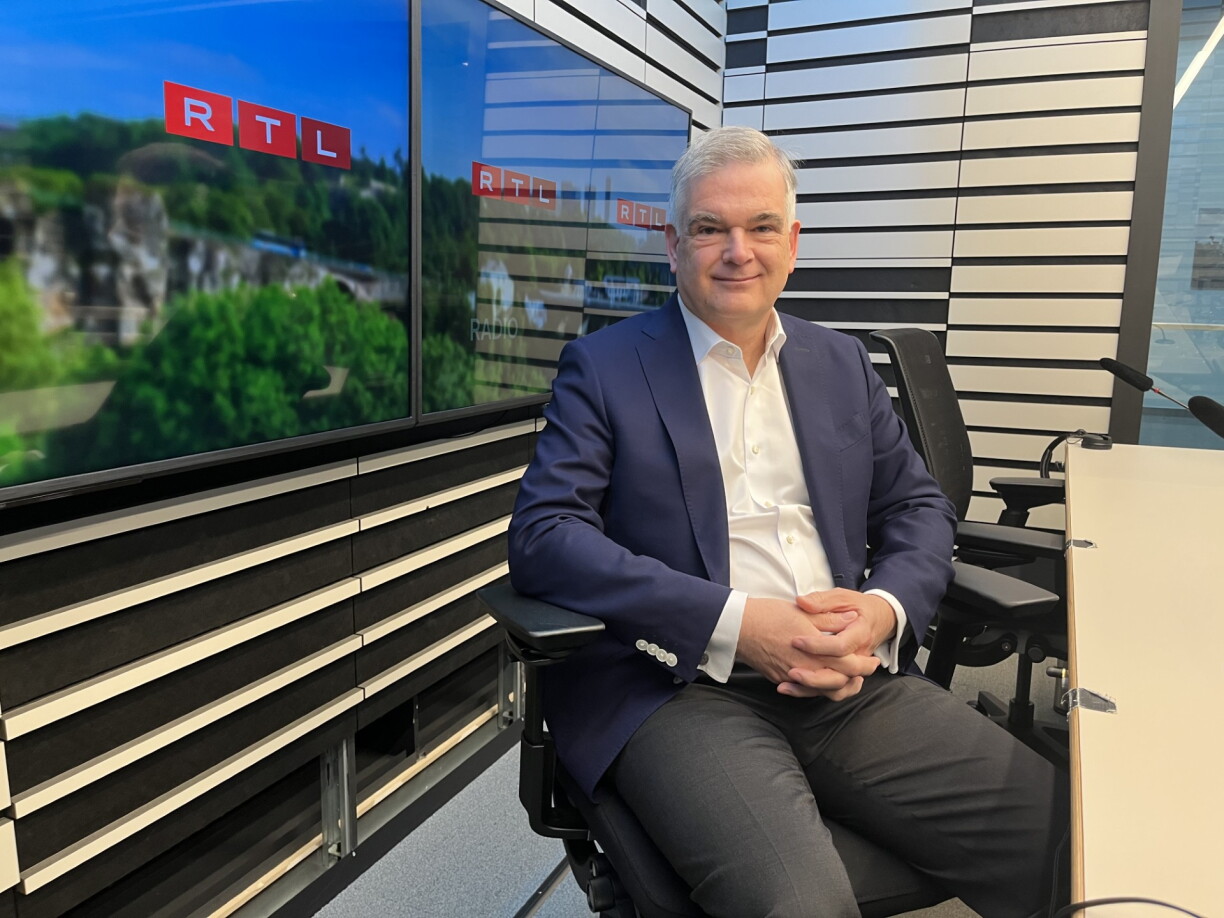
Claude Marx, director of the Luxembourg financial sector supervisory body (CSSF), has clarified that the decision not to extend authorisation for the sale of so-called Israel Bonds in the European Union after 31 August was based on European regulation, instead of political considerations.
The move, announced by Minister of Finance Gilles Roth earlier in the week, comes after ongoing criticism from groups such as Amnesty International, who have called for an end to the sale of Israeli government bonds in Luxembourg on ethical and political grounds.
Marx explains that bonds issued by a third state have to be domiciled in a European country. In this case, Israel chose Ireland as the home EU country, but later requested an exception, asking Luxembourg to validate its prospectus in accordance with EU prospectus rules for a limited time. This arrangement was always intended to last only 12 months due to the rule that the home country choice is final.
Marx emphasised that the CSSF is "not there to make rules. [It is] there to apply rules", underlining the CSSF's role as a technical supervisor rather than a political decision-maker. He further confirmed that neither the Ministry of Finance nor the Ministry of Foreign Affairs issued any new instructions or guidance, despite recent political developments and statements by Luxembourg’s Foreign Minister Xavier Bettel concerning Israel.
Addressing the broader context, Marx was asked if the authorisation of Israeli government bonds could truly be viewed as a purely technical administrative act, given the geopolitical situation and ongoing international criticism of Israel’s conduct. He explained that the CSSF would only refuse to distribute state securities in two scenarios.
The first one is if the state is put under a sanctions regime, and the other is a definitive conviction by the International Criminal Court for, for instance, genocide, neither of which is the case today.
When asked whether the episode had damaged Luxembourg’s reputation, Marx admitted that it perhaps hurt Luxembourg’s reputation "because of the way certain things were presented", but insisted that neither the government nor the CSSF should reproach themselves for anything, stressing that the CSSF merely fulfils its administrative duties.
Regarding potential benefits for Luxembourg’s financial centre from handling the bond sales, Marx noted that the distribution of securities hinges first and foremost on the prospectus regulation conditions being met. He insisted that Luxembourg is a state governed by the rule of law, which is what its decision to distribute securities is based on.
CSSF views on centralising financial supervision in the EU
The discussion also touched on EU plans for more centralised financial supervision, an issue closely watched in Luxembourg’s financial sector, which competes with other centres like Ireland's. Marx said Luxembourg is not opposed to central oversight "where it makes sense", which is not the case for many local financial products that operate in the context of local languages, laws, and tax regimes. Marx warned that centralising all financial product oversight creates a longer duration until they reach the market, ultimately making Europe less competitive compared to the rest of the world.
Finally, Marx argued that while the regulatory framework is "excessively complex", the goal is not to pursue "wild deregulation" but rather to assess whether each rule serves a useful purpose, and, if not, change or abolish it.