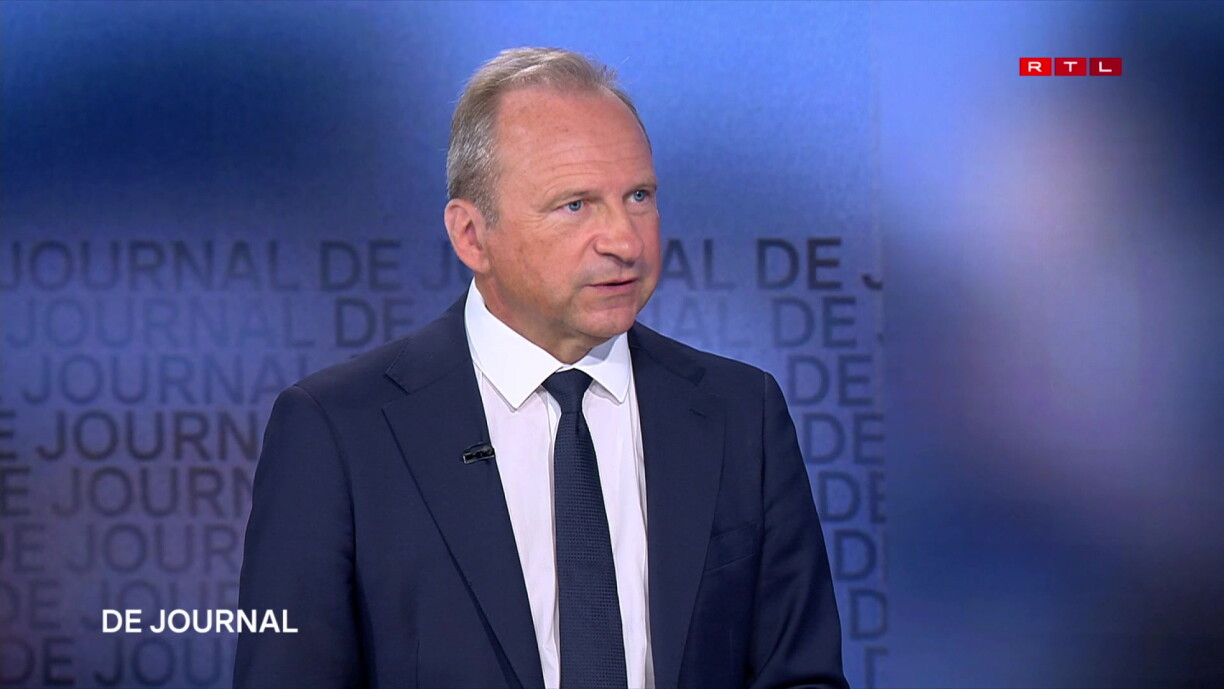
Finance Minister Gilles Roth defended the tripartite agreement as an investment in social peace. If he has his way, the major tax reform will arrive as planned in 2028 and bring further relief.
The government had not bought back social peace at the expense of the general public, said Finance Minister Gilles Roth in a live interview with Raphaëlle Dickes on Wednesday evening.
He argued that the €450 million package was well invested in social peace and stability in the country, with funds directed toward purchasing power and business competitiveness, and that the overall impact should be considered as a whole.
Roth pushed back against the suggestion that the speed of the tripartite agreement is suspicious. The accord, he said, was a compromise and a consensus between the social partners, namely employers, employees, and the government.
The measures on petrol, heating oil, electricity and gas, he added, are designed to slow inflation, with the result that indexation tranches do not fall due as quickly, which helps every company.
The minimum wage rise, deliberately delivered through a temporary tax credit, does not weigh on businesses either. People on the minimum wage will end up with more net than gross income, and according to Roth, the measure will be kept on beyond 2028, despite the measure costing the state.
The minister rejected the criticism that adjusting the tax table to inflation would benefit everyone and therefore lack social targeting. The current government, he said, had cut the tax burden for average taxpayers by an average of 20.38%, calling this a substantial drop and one driven by the goal of giving people more purchasing power.
The tax scale, he added, also has a social dimension, since the system is progressive, meaning the more you earn, the higher the rate. Social levelling through the tax scale, he argued, was the right approach.
Roth also pointed to the cap on tax progression, noting that those who earn a lot pay 42% on everything they receive, and once the solidarity tax is added, the effective burden is over 45%, which he described as socially fair.
Honesty, transparency and foresight are what one should expect from a finance minister, Sam Tanson, the Greens' (déi Gréng) spokesperson in the Chamber, said earlier that day on RTL Radio. Pressed on this, the minister countered that the additional €800 million now sitting in the state's coffers on 31 May had not "suddenly been found", but were a positive development in tax revenues from the economy.
Asked about the government's €1.4 billion deficit, Roth attributed half of it to higher military spending, which has risen from €600 million to €1.2 billion, and to additional outlays on affordable housing, where €250 million more had been put on the table willingly and knowingly.
Affordable housing, he noted, is being demanded from all sides in the Chamber, but rather than just airing complaints, solutions need to be put on the table too. So if anyone thinks the Finance Minister lacks foresight, he said, his answer is that "we have foresight".
People have been given more purchasing power, with single parents, widows and now minimum wage earners receiving relief, Roth said. In 2028, with the tax reform, the rest of the population will also see commensurate relief, in particular young people, so that they can build a good life in the country, since Luxembourg needs talent as well as social cohesion and social peace. It is not good for the government nor for the country, he said, to have 10,000 to 12,000 people standing at Place Guillaume II every month. Social dialogue, he added, is now back in order.
To plug the budget holes, the minister is counting on a dynamic economy that will deliver more tax revenue, and he said it would be a good thing if the year-on-year rise in state spending could start with a 5 rather than a larger figure. In that case, he said, the country would not be in such a bad position by the end of the year.
The major tax reform planned for 2028 remains on the agenda. If the Council of State gives a favourable opinion, the Chamber could approve the bill in the autumn. From 2028, a single tax bracket would then apply, the minister said, in order to adapt the system to "a modern society".
Many people have been calling for this for years. The Christian Social People’s Party (CSV) and Democratic Party (DP) back the change.





