Luxembourg's wage indexation system, quasi-unique in Europe, is designed to protect purchasing power. However, according to a study carried out by the OECD, "the system risks fuelling already high inflation." This argument has also been taken up President Emmanuel Macron, who does not want to import the Luxembourg model to France.
In the long run, the OECD warns that the indexation might "harm competitiveness", which Luxembourgish companies already pointed out in light of the prospect of three wage indexations in 2023. "Widespread wage increases result in financial gains that are proportionately higher for wealthy people." This is also the reason why the Independent Luxembourg Trade Union Confederation (OGBL) refrained from signing the agreement proposed during the first tripartite meeting of 2022 in spring.
The OECD thus proposes nothing short of a reform of the wage indexation mechanism "to better protect against the risks for productivity, employment, and inflation."
The central response of government and social partners to the energy crisis was to implement several aids, notably for energy prices, with those of electricity, gas, and heating oil having been capped. Additionally, the value-added tax (VAT) has been reduced.
The OECD has deemed the effort "generous" and estimates that the measures "may undermine incentives to reduce energy consumption". According to their experts, Luxembourg should rather have focused more on "temporary and targeted income support."
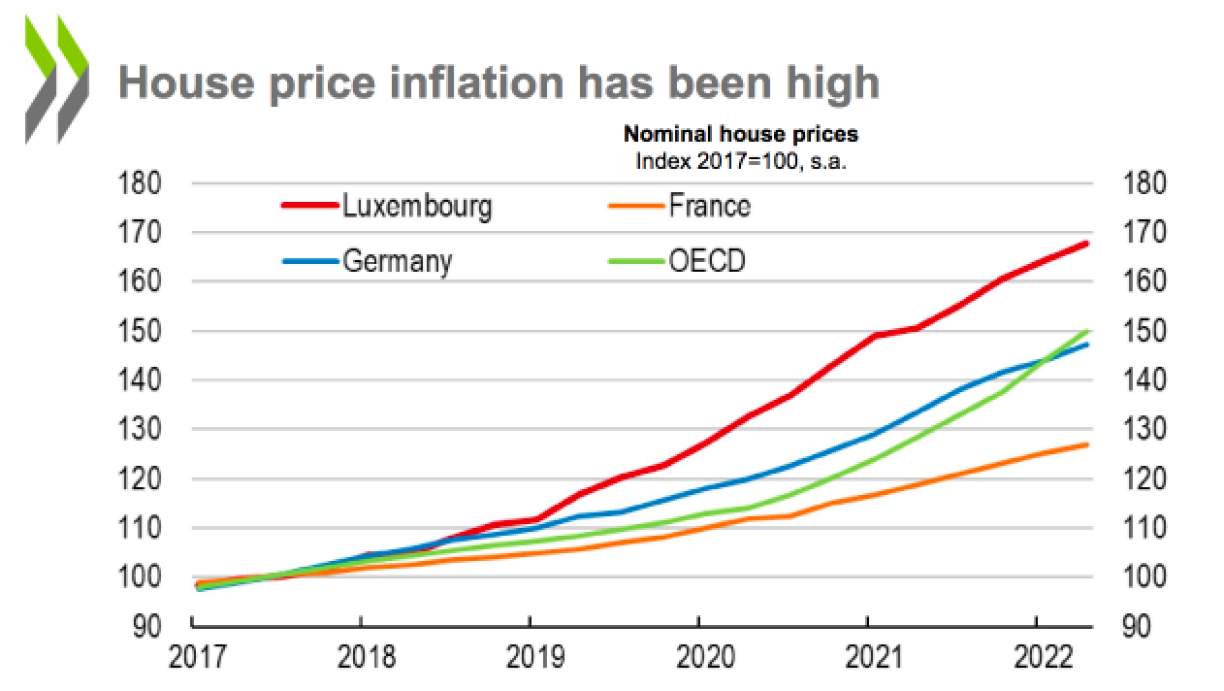
The OECD did not fail to address the number one concern of Luxembourgers in its study, stressing "the urgent need to increase the supply of housing to cope with rapidly rising property prices."
Despite a recent price decline for new flats, the market reached record highs over the past year. The OECD estimates that housing prices "rose by an average of 9.7% annually over the past five years", twice as fast as in the rest of the European Union. This situation, coupled with rising interest rates, makes it difficult for new homeowners to enter the market.
The OECD has also voiced support for new taxes on unused land and apartments.
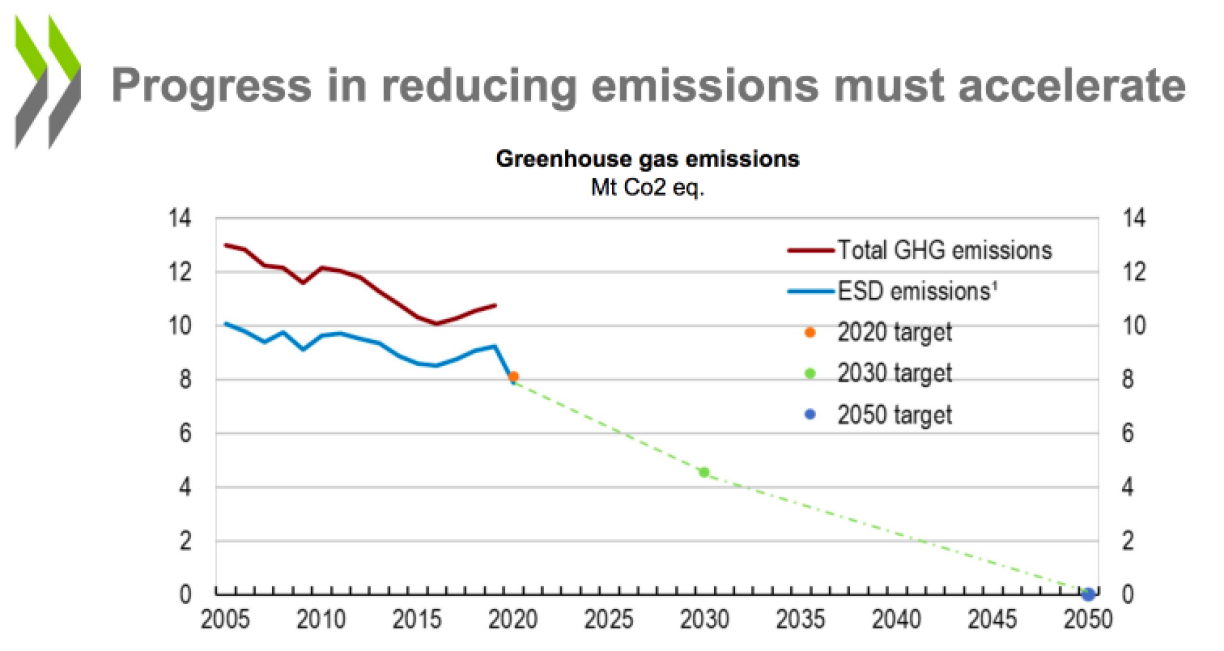
In terms of environmental protection, the OECD believes that "Luxembourg's progress in reducing greenhouse gas emissions has weakened in recent years." It therefore stresses the importance of accelerating efforts to reach carbon neutrality.
Rather than continuing with urban sprawl, experts advocate for more densification: "Policies that promote more energy-efficient housing and urban densification can help reduce energy consumption and car use."
The OECD also advises further carbon tax increases and an end to the commuter tax allowance. Furthermore, it recommends ending the tax allowance for company cars and proposes replacing them with tolls. However, Minister for Mobility and Public Works François Bausch refuses this avenue given the size of the country.
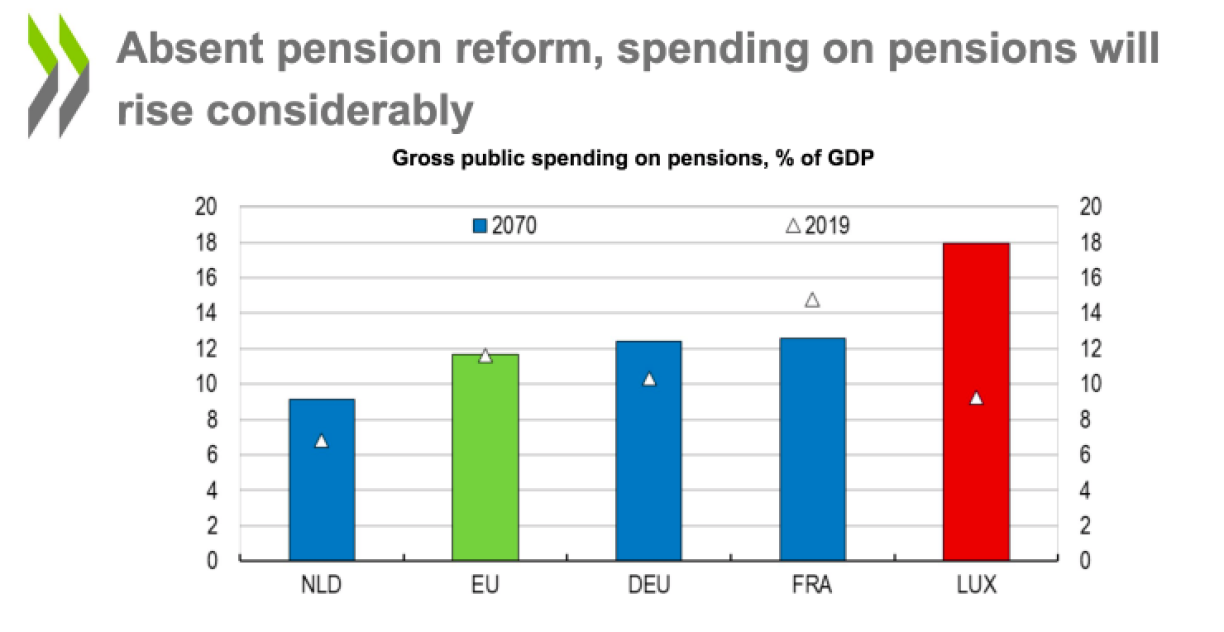
According to the OECD, spending on pensions will explode by 2070. The General Inspectorate of Social Security recently made the same observation, saying that today's arguably comfortable situation is leading to a definite imbalance.
At present, "a quarter of men retire at the age of 54 or earlier", says the OECD. It therefore proposes to extend working years by linking the retirement age to life expectancy. "This would prevent new generations from facing higher taxes and lower pensions."
Facilitating the use of part-time work and measures to encourage the hiring of older workers is one of the key solutions, says the OECD report.