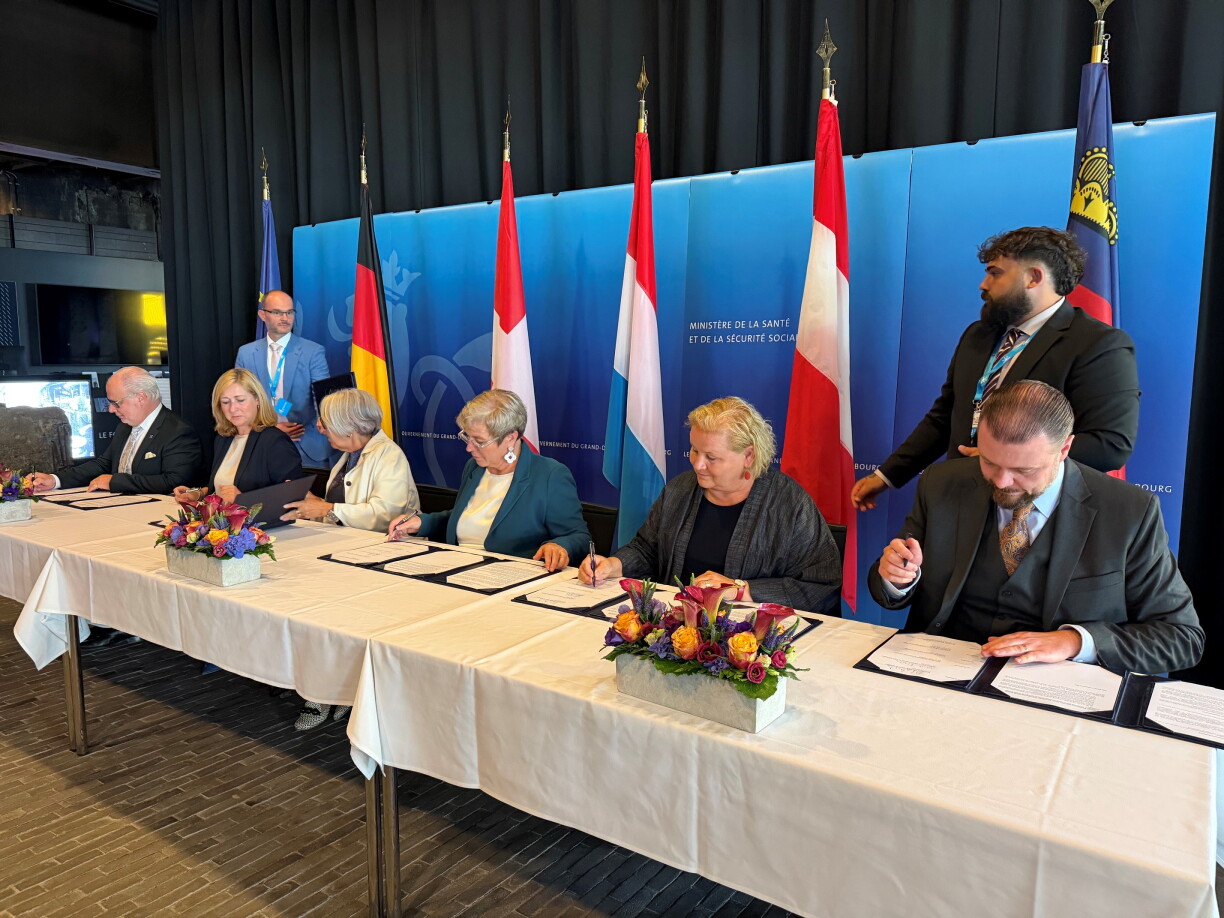
The annual meeting of the so-called health quintet, comprising Germany, Austria, Switzerland, Liechtenstein, and Luxembourg, was held this year in Esch-sur-Alzette, Luxembourg. The summit allows ministers to share experiences on current issues, learn from each other, and reinforce cooperation on pressing health and social matters.
This year's agenda counted three main topics: pension systems, workplace prevention, and neurodegenerative diseases. Luxembourg’s Minister for Health and Social Security, Martine Deprez, explained that discussions focused in particular on modernising and making pension systems more flexible. She highlighted Luxembourg’s recent reform efforts, emphasising broad public involvement through initiatives such as the 'Schwätz mat' (speak with) consultation, which aimed to include the entire population in the dialogue.
Pension reform is not only a topic in Luxembourg. Austria, too, faces upcoming changes. Korinna Schumann, Austria’s Minister for Labour, Social Affairs, Health, Care and Consumer Protection, remarked that they have a sound state pension system, but must also look at introducing reforms, especially to ensure people can remain in employment for longer, thereby easing the pressure on the pension system.
Improving workplace conditions could be a first step in keeping people employed for longer, which is why the ministers addressed the issue of workplace prevention. Minister Deprez said that prevention at work does not just concern general topics such as alcohol and tobacco, but also includes the growing levels of stress in the workplace and the need to address psychosocial issues at work.
Another major challenge highlighted in the meeting was the rise of neurodegenerative diseases. Here too, international cooperation plays a crucial role. Deprez explained that a broad research network with Germany, Liechtenstein, Switzerland, and Austria to exchange research results has already been established. Although Luxembourg is a small country, it has had a significant impact abroad by setting up an early prevention centre for dementia, with a particular focus on Parkinson’s disease, which has now expanded to cover other neurodegenerative illnesses.
The ministers also agreed that family care is central in tackling neurodegenerative diseases. Martine Deprez and her German-speaking counterparts stressed that the challenge cannot be met by institutions and structures alone: care at home and within families remains essential.







