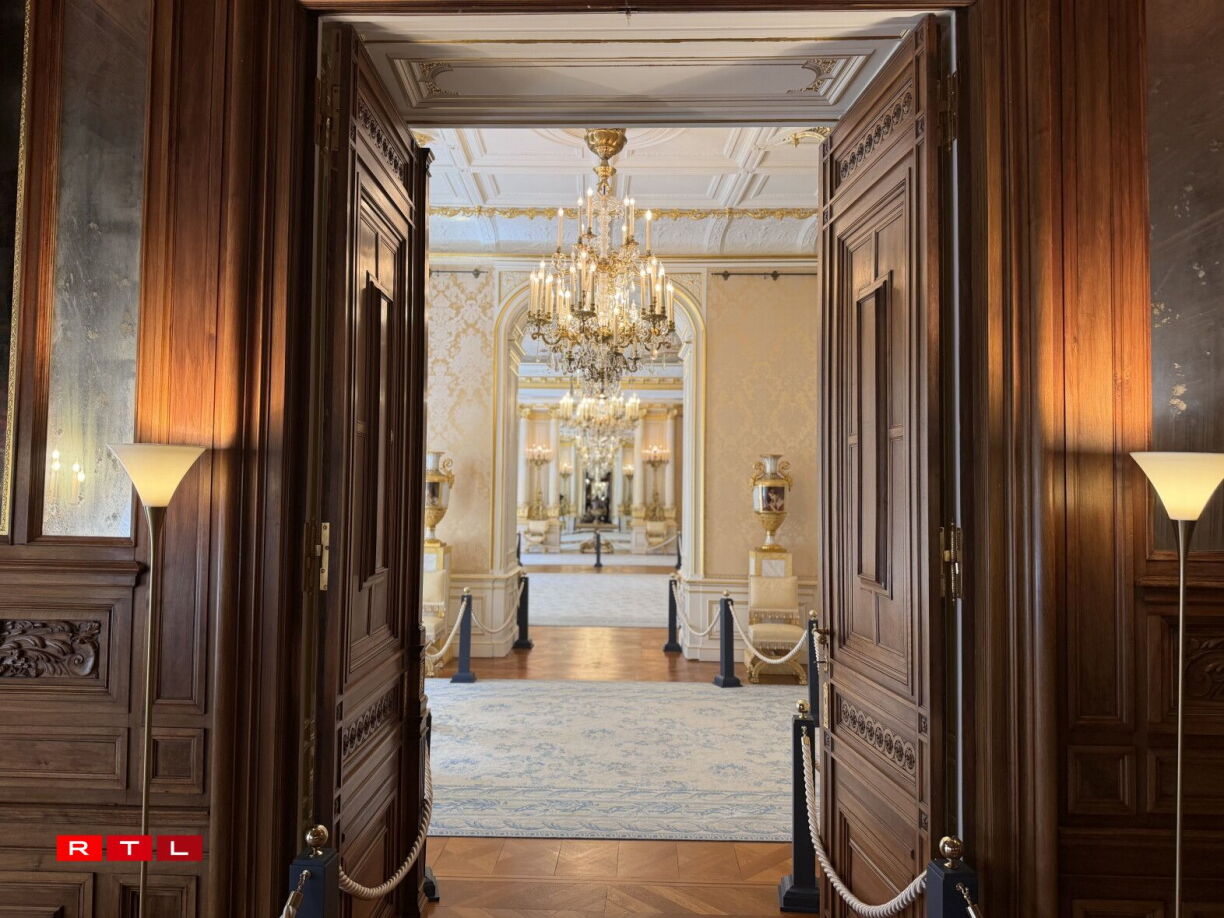
Most areas of the Grand Ducal Palace are normally closed to the public. Until the end of August, however, visitors can once again explore the official residence in Luxembourg City and the workplace of Grand Duke Guillaume.
The tour does not begin at the palace entrance, but on Place Guillaume II, where Gaby Limpach-Theis, one of the guides from the Luxembourg City Tourist Office, first introduces visitors to the history of the Nassau dynasty.
Limpach-Theis said she explains the palace's architecture, its former role as the town hall, and how it became the Grand Duke's main residence and workplace in the capital. Above all, she wants visitors to gain "a better understanding of the dynasty".
Only then do visitors enter the building through the so-called Baden wing, one of the building's historic sections. The first stop is the Salle de la Balance, where the windows bear the monograms of the grand dukes and grand duchesses who have occupied the Luxembourg throne since Grand Duke Adolphe. The tour then continues into the oldest part of the palace.
Limpach-Theis explained that visitors are shown the Salle d'Armes, with its collection of pistols and rifles, before moving on to the Galerie d'Honneur and its grand staircase. She said guests are always particularly impressed by "the beautiful green vases made of malachite".
From the gallery, visitors can look into the ballroom, dining room, and several adjoining rooms, according to Limpach-Theis. While the ballroom is usually the main highlight, she said visitors are especially eager this year to see "the new portraits of Grand Duke Guillaume and Grand Duchess Stéphanie".
Ten tours are held every day in four different languages. The opportunity to see behind doors that are usually closed to the public has proved popular with visitors.
One visitor said they had already hoped to attend the previous year but had been unable to secure tickets. After obtaining the last available tickets this year, they took the opportunity and found the palace "fascinating to see".
Another visitor said they were particularly impressed by the architecture and the many works of art, while another visitor also expressed excitement at new details about Luxembourg's succession rules. They especially appreciated that the tour included "so much of Luxembourg's history".
Around 40 guides are involved in the tours, which last approximately 75 minutes. Their training takes about a year, as they must be able to explain both the history and the present-day role of the palace in several languages.
Tickets for the guided tours are sold through the Luxembourg City Tourist Office. Once again this year, part of the proceeds will be donated to the Grand Duke and Grand Duchess Foundation, the charitable foundation of the grand ducal family.