Price stabilisation, normalisation of activity, and new tax measures could lead one to believe that things are beginning to fall into place in Luxembourg's housing market.
Communications from the Housing Observatory and the government are intended to be reassuring. However, on the ground, the situation remains very complicated and risks even worsening "if we don't act very quickly", says David Syenave, partner at EY-Parthenon.
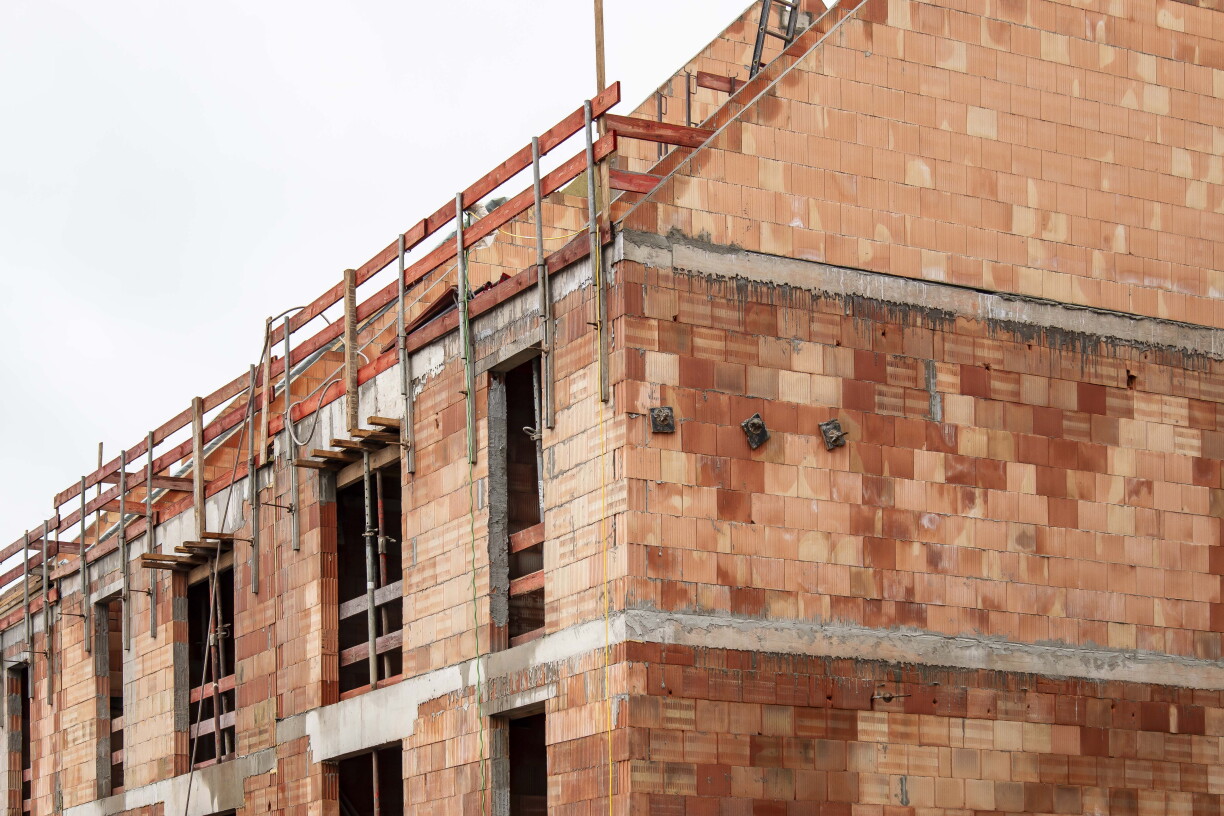
While activity has picked up on existing properties, off-plan (VEFA) sales remain at particularly worrying levels.
According to official figures from the Luxembourg Housing Observatory, activity in off-plan sales fell by 35.5% in the second quarter of 2026, compared to the same period in 2025. This represents just over 200 transactions, half of which are attributed to the Luxembourg government's property buyback programme.

The market is therefore on life support and, despite everything, remains well below pre-crisis averages: down by 68% according to the Housing Observatory.
"The government is helping the market stay afloat", says Syenave, who, while not rejecting the initiative, raises the question of the buyout conditions. He says that in this type of transaction, "builders or developers barely break even".
Meanwhile, thousands of conventional housing units are not being built due to a lack of solvent demand and a lack of demand altogether. The off-plan sales market is experiencing a terrible crisis of confidence, linked to the bankruptcies that have plagued the property development/construction sector in recent years.
To unblock the situation in the private market, housing must be built, said minister Claude Meisch in a recent interview with RTL Infos. But certain things seem to have been forgotten or ignored.
"Luxembourg is such an agile country, why isn't it when it comes to real estate? I'm still waiting for the announcement of a (downward) revision for VAT."
Syenave cites the example of demolition works, currently taxed at 17% in the Grand Duchy. "If we reduced this rate to 6%, it would be a real breath of fresh air for the construction sector", he suggests. A similar initiative introduced in Belgium in July 2025 has kept the sector afloat and led to the creation of new properties.

Things are likely to get complicated again in European real estate markets, as the ECB announced another rate hike in September and could repeat the operation in the near future, depending on inflation. In this uncertain environment, only one thing is certain in Syenave's eyes: "Variable interest rates will continue to rise in the coming months."
"Many of us believe that 2027 and 2028 will be very difficult years" for the Luxembourg real estate market, he says. He believes the banks will need to contribute. "Taking out a 35-year mortgage loan isn't the solution" for making households financially viable, he says.
He points out that mortgages are generally cheaper across the border. "You can save up to 100 basis points" in Belgium, which proves that there is room for manoeuvre in the Grand Duchy.
Syenave also took the opportunity to raise the issue of housing density in Luxembourg, as building more on the same surface area can help lower prices. "The fact that five-story buildings have been constructed on some avenues in Kirchberg is completely incomprehensible. Luxembourg will not remain a village indefinitely. Densification will be necessary sooner or later."

At the end of October, EY-Parthenon published a report confirming a significant slowdown in the Luxembourg real estate market at the start of 2026. However, the figures for 2025 (the reference year for this report) were inflated by the imminent end of government subsidies included in the latest housing package. In spite of this, the overall picture remains the same.
While a surge in transactions might be expected due to the stimulus package announced by the government this summer, it's clear that not all the measures have yet been fully understood by the public, and even by some professionals in the sector. This surge could therefore be delayed, especially since interest rates have risen twice since last June.
The EY-Parthenon report highlights several trends, notably the drop in apartment transactions (-20.1%), particularly in off-plan sales (-28.1%), houses (-19.2%), and building plots (-9.8%). Filip Kaukiainen, who contributed significantly to the report, points out that the figures are still "well above the averages recorded at the height of the crisis (2023-2024)".
But the news isn't good. Construction costs continued to rise between October 2025 and April 2026 (+1.5%), which obviously doesn't bode well for off-plan property prices. This is especially true given the continued population growth (+1.3% as of 1 January 2026). Supply pressure therefore remains high, even as rents reach record highs throughout the Grand Duchy.
An interesting trend is highlighted in this report: the impact of the increasing number of room rental offers in Luxembourg. This phenomenon, while not new, appears to be gaining momentum with the growing presence of co-living in the Grand Duchy. "Rents per square metre are increasing faster than monthly rents", the report states.
This lifestyle is bound to grow in response to market demands. In particular, the lack of housing for young professionals is undeniable. "It's a problem for the Big Four", admits Syenave. Recruitment has become significantly more complicated in recent years: "If they can't get housing in the country, why should they come?"
This is a question to which Luxembourg has clearly not found an answer, as evidenced by the daily commute of hundreds of thousands of cross-border workers.