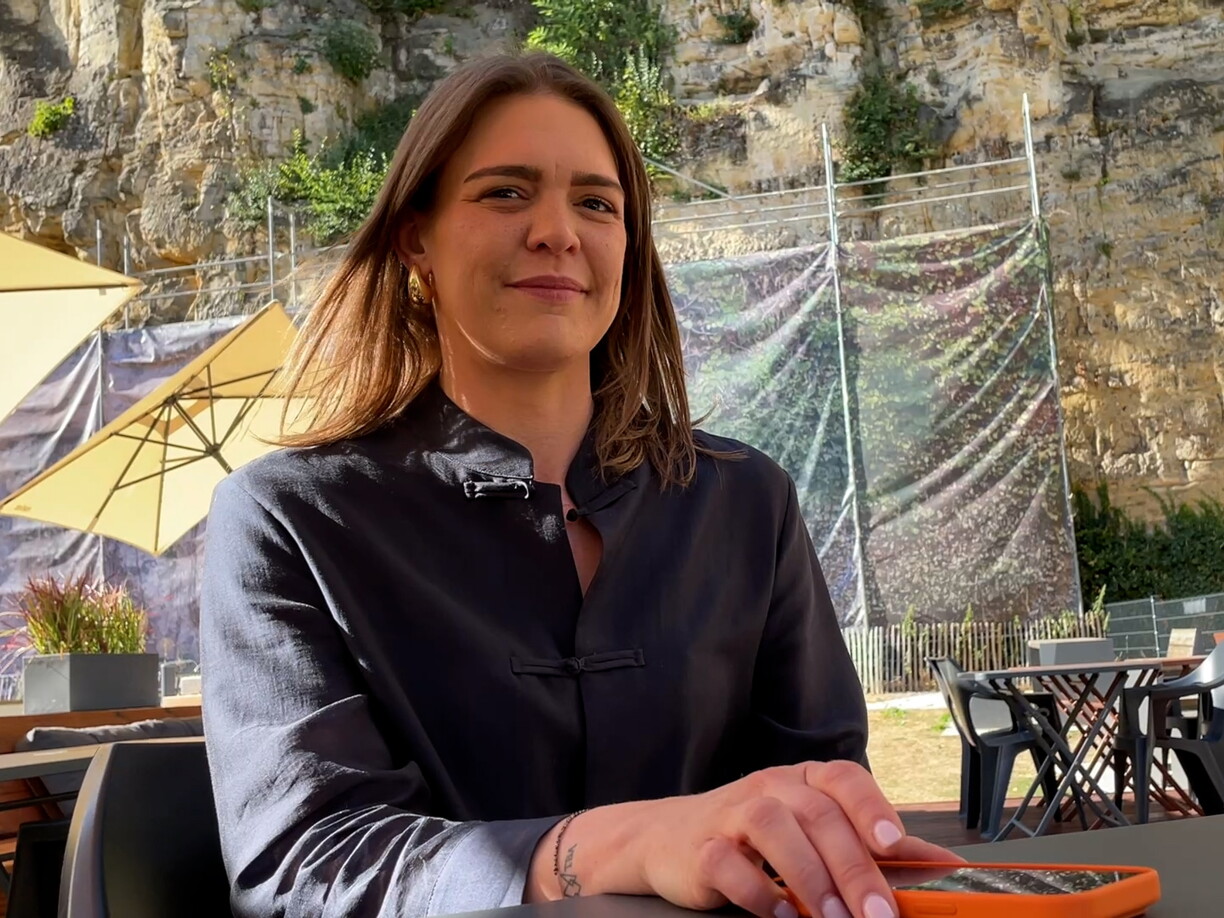
Seven parties are currently represented in the Chamber. In RTL's Summer Interview series, each party's president is invited to talk about more personal themes alongside the political events of the day. The series opens with Luxembourg Socialist Workers' Party (LSAP) co-chair Maxime Miltgen.
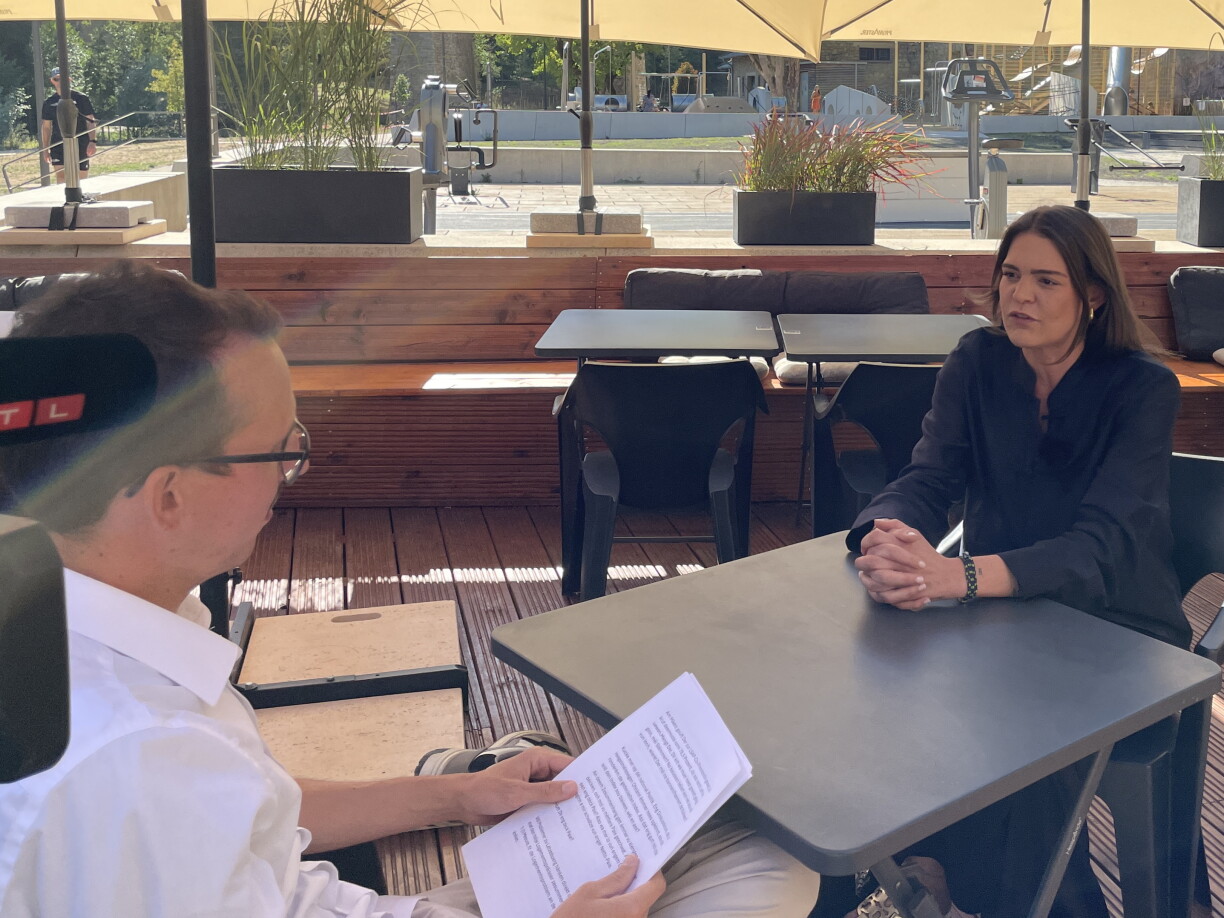
The interview took place on the terrace of the kiosk next to the mini-golf course in Luxembourg City's Grund. Miltgen picked the spot because the Grund, in her view, offers a good mix of nature, culture and restaurants. In the park, she added, people can also come together without having to consume anything, and simply exist as human beings.
Asked whether the newfound good mood between the social partners after the tripartite deal is, in effect, bad news for the LSAP, since the union front of the Independent Luxembourg Trade Union Confederation (OGBL) and the Luxembourg Confederation of Christian Trade Unions (LCGB) now has less scope to put pressure on the Christian Social People's Party (CSV) and the Democratic Party (DP) government, Miltgen waved the question away.
You cannot, as the LSAP, be unhappy that a tripartite proved successful, she said, and that the outcome meant workers received something on top of the minimum wage. That was not something to be viewed as bad – quite the contrary. What should not be forgotten, however, is that the recent success can only really be booked as a small win, since the first tripartite, or first social dialogue, had ended extremely badly, because no real dialogue and no genuine consensus had been reached.
Another topic on the table was the differences between MP Liz Braz and parliamentary group chair Taina Bofferding on the LSAP's position on the asylum and migration package. Miltgen did not want to sign up to the idea that mistakes had been made on one side in that instance.
She said the question was not really one of mistakes at all. What mattered was that the party continued to stand by the principle that different opinions can and do exist within the LSAP, and that dialogue is held in extremely high regard. The lesson to draw from the episode, she said, is that when differences of view emerge, particularly on very important social issues, the party has to give itself the necessary time and space to debate them and then leave with a common line built on consensus.
Asked who the lead candidate should be at the 2028 general election if she had to choose between Taina Bofferding and her co-party president Georges Engel, Miltgen declined to name a preference.
The reason, she explained, is that the party has taken a very clear political decision to focus first on the content. The party wants a lead candidate who fits and can embody that content, rather than picking a lead candidate first and then tailoring the content to that person.
That is why there is by no means any certainty that the lead candidate will be either Bofferding or Engel.





