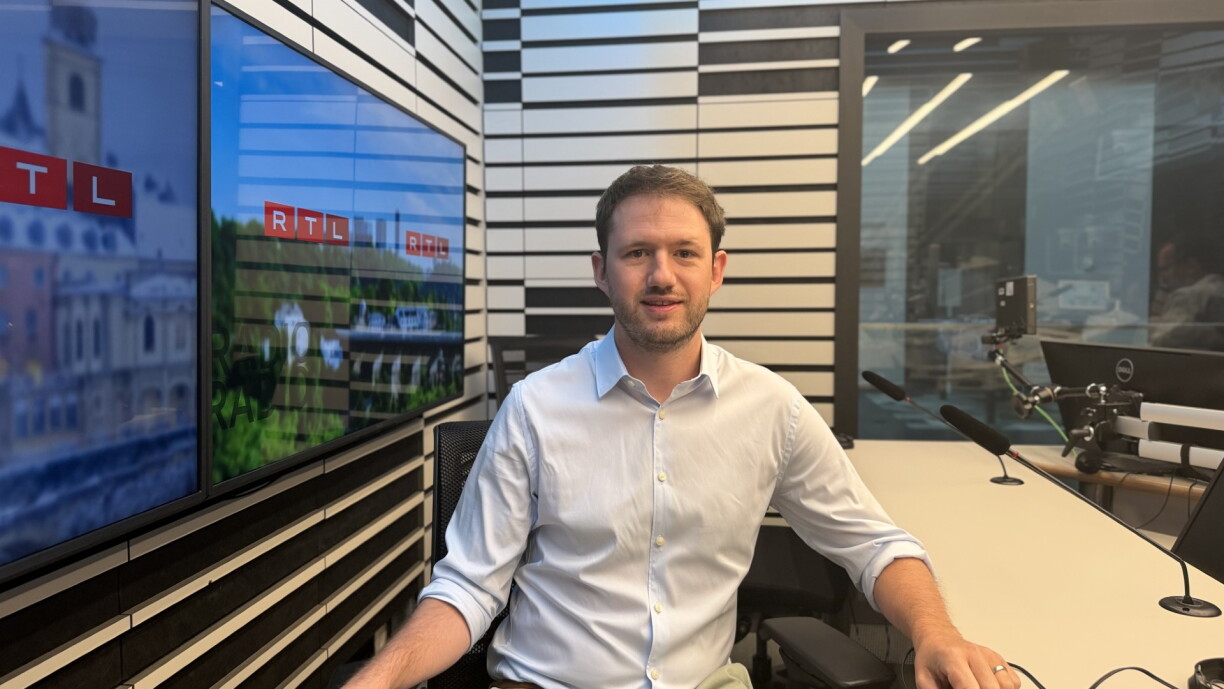
Last year, Max Pesch and four other councillors voted against the Bech municipal budget and later supported a motion of no confidence against the previous mayor, Jill Goerges. Explaining the decision, Pesch stated that the situation had become untenable and that "things could not go on as they did".
Changing leadership was ultimately necessary, the new mayor argued, as significant interpersonal disagreements hindered effective governance.
The political shake-up in Bech was part of a broader trend across several municipalities, with similar changes in leadership in Contern and Wiltz.
In Bech, the shift was made possible when councillor Emile Bohnenberger switched allegiance from the previous majority to the opposition, a move that Goerges later criticised.
Pesch is a longstanding member of The Greens (Déi Gréng) and previously held local political office in Echternach.
When asked about criticisms that he sought influence in Bech after not succeeding in Echternach, Pesch responded that his political approach has always been guided by the principles of sustainable policy and a positive outlook on people and society, where the "most important thing is to always find compromise".
Moreover, Pesch highlighted that during the 2023 municipal elections, he ran on a citizens' list that included people from four different political parties. This diversity, he said, led to constructive debate and the building of solid policies focused on the community's best interests.
Especially in a small municipality like Bech, he noted, party affiliation is less important than the ability to work together for local residents.
After the motion of no confidence, both former mayor Goerges and then–deputy mayor Nathalie Wohlfahrt resigned quickly, necessitating supplementary elections to fill vacant council seats. Soon after, councillor Bohnenberger also stepped down, but it was too late to elect a full replacement council.
Bech's municipal council currently has eight members, following the last supplementary vote.
Pesch stated that the decision on whether to hold another vote to fill the ninth seat would be made collectively in the coming council session, scheduled for September. This would "make us more able to make decisions than before", according to him.
He acknowledged the arguments both for and against new elections. On one hand, more residents could become involved, but on the other, participation in the last round was low and holding more elections creates extra work and costs for the municipal administration.
Pesch described the 50% voter turnout as a "warning sign" and said he would present all facts to the council to make an informed and inclusive discussion.
One of Pesch's main priorities has been to restore calm and foster respect on the municipal council after a turbulent period. He pointed out that he has emphasised open and respectful dialogue and places importance on "meeting people as equals, involving them, and listening to them".
He cited recent council votes as evidence of improved cooperation, with all but one decision passing unanimously. Where disagreement remained, compromise was found, according to the mayor.
Pesch also described successful community events, such as the inauguration of a new festival hall, as moments that built solidarity between associations and residents in Bech and neighbouring villages.
He said council members are now "more able to make decisions" and that the municipality is working to ensure all projects are visible and residents are kept informed.
Turning to substantive policy matters, Pesch said his administration's immediate priorities include improving mobility and local infrastructure. Rather than large projects, such as bypasses or tunnels, Pesch is focusing on traffic-calming measures, public transport connectivity, and even parking issues.
"This may sound small, but you really have to develop concepts, ideally together with residents", he explained.
He stressed the importance of securing safe routes to school for children, which marks a particular challenge in Bech, as the primary school is located in the neighbouring municipality of Manternach. For Bech families, the "safe school route" means ensuring safety from home to the bus stop, and Pesch stated that these issues would be tackled this autumn.
On the topic of housing, Pesch addressed the controversy over a social housing project in Altrier, where opposition from some residents had been reported. He said the project was ultimately scaled down after lengthy discussions and that much of the tension happened because "communication was lacking and rumours spread quickly".
He also believes that most residents have since accepted the project, which is set to open in autumn, and expressed confidence that new residents will be warmly welcomed.
Finally, Pesch commented on longstanding discussions about a possible merger between Bech and neighbouring Manternach. He said this issue is not high on his list of priorities, as his focus is on helping Bech stabilise after a period of political turbulence.
"My first priority is to help Bech find calm; it is not the right moment to open the issue of a municipal merger", he explained.
While he is aware of the arguments for and against, he said any such step would require thorough discussion with all those involved. Pesch concluded that the council, and the municipality, must remain focused on practical cooperation and the well-being of residents rather than political headlines.