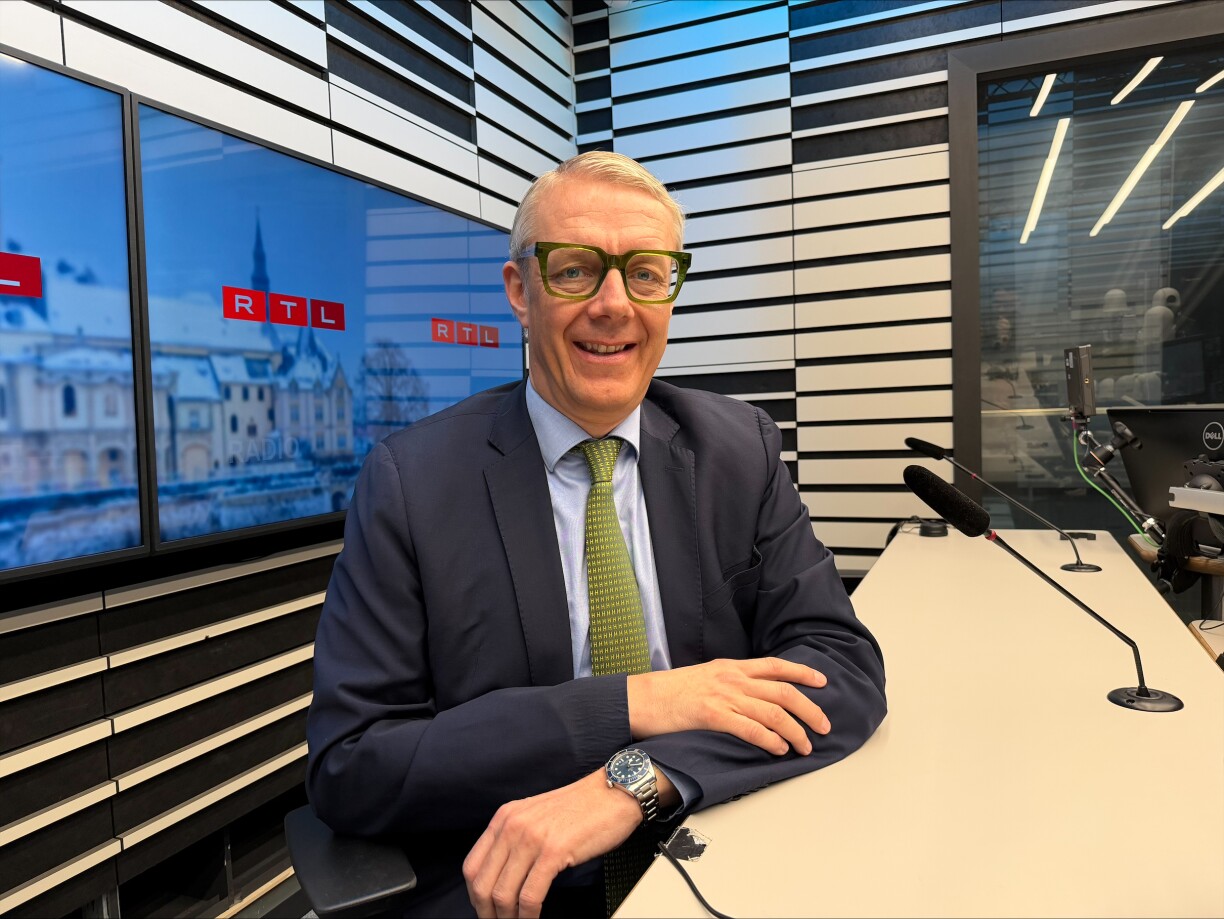
On Tuesday morning, businessman and Luxembourg Retail Federation (LRF) president Robert Goeres spoke with RTL Radio about the state of the retail sector, discussing in particular the findings of the latest Retail Report.
Retail encompasses both online commerce and physical shops, covering everyone from bakers to jewellers who sell products to consumers.
Goeres acknowledged that the retail landscape is undergoing significant change, stressing that shop owners must enhance their online offerings to remain competitive. Throughout the interview, he repeatedly emphasised the need for balance between traditional brick-and-mortar stores and digital platforms.
Despite the challenges facing the sector, Goeres had encouraging words for those considering entrepreneurship, describing the current climate as "more than fun" for starting a business. He pointed to several support mechanisms available to newcomers.
Among these, he highlighted the Ministry of the Economy's "primo-création" programme, which provides €2,000 to first-time business owners during their initial six months of operation. The House of Entrepreneurship, he noted, offers assistance in drawing up business plans. Meanwhile, the Chamber of Commerce's mutual guarantee scheme can help entrepreneurs gather the deposits required to obtain bank guarantees.
Goeres also mentioned Localyze.lu, a Luxembourg Confederation initiative that maintains a register of all shops across the country. The platform provides an overview of where businesses are located and where specific customer bases exist – a tool Goeres regretted had not been available years ago, but which he nonetheless welcomed as a valuable resource today.
Goeres noted that the retail sector is highly diverse, with vastly different situations across its various subsectors.
In the food sector, for example, 110 new shops have opened since 2019, representing an increase of approximately 20%. Growth has been particularly pronounced among discounters, whose retail space has expanded by 40%.
By contrast, the retail space occupied by artisans such as bakers and butchers has decreased by 15%. This disparity, Goeres suggested, indicates that larger enterprises are better equipped to navigate the significant administrative burden imposed by regulation. He called for greater political will – both at national and European level – to support small enterprises in this regard.
Goeres acknowledged that clothing stores are facing particular difficulties, with customers increasingly turning to online shopping and local shops competing against major international chains. Nevertheless, he expressed confidence that new niches would emerge for entrepreneurs to fill.
He stressed that online shops cannot replicate the sensory experience of fragrance, taste, and touch that brick-and-mortar stores offer – an advantage physical retailers should leverage.
The luxury segment – in which Goeres himself operates – is also undergoing significant transformation. Many renowned brands, from Rolex to Cartier, are increasingly favouring mono-brand stores, meaning shops that exclusively sell a single label rather than a variety of different ones.
As an employer, Goeres has adapted to this trend, committing to a single Swiss supplier for three of his stores. While he acknowledged that this arrangement comes with obligations to the brands in question, he prefers to view it as a partnership. According to Goeres, the key lies in remaining innovative and striving to be a pioneer. He noted that he maintains a certain balance, operating both multi-brand luxury stores and mono-brand boutiques catering to "passionate customers."
Turning to the situation in Luxembourg City, Goeres described the outlook as one of a glass half full rather than half empty. He noted that vacancy rates have stabilised and that car parks are frequently full – indicators which, for business owners, suggest that the capital continues to attract shoppers.