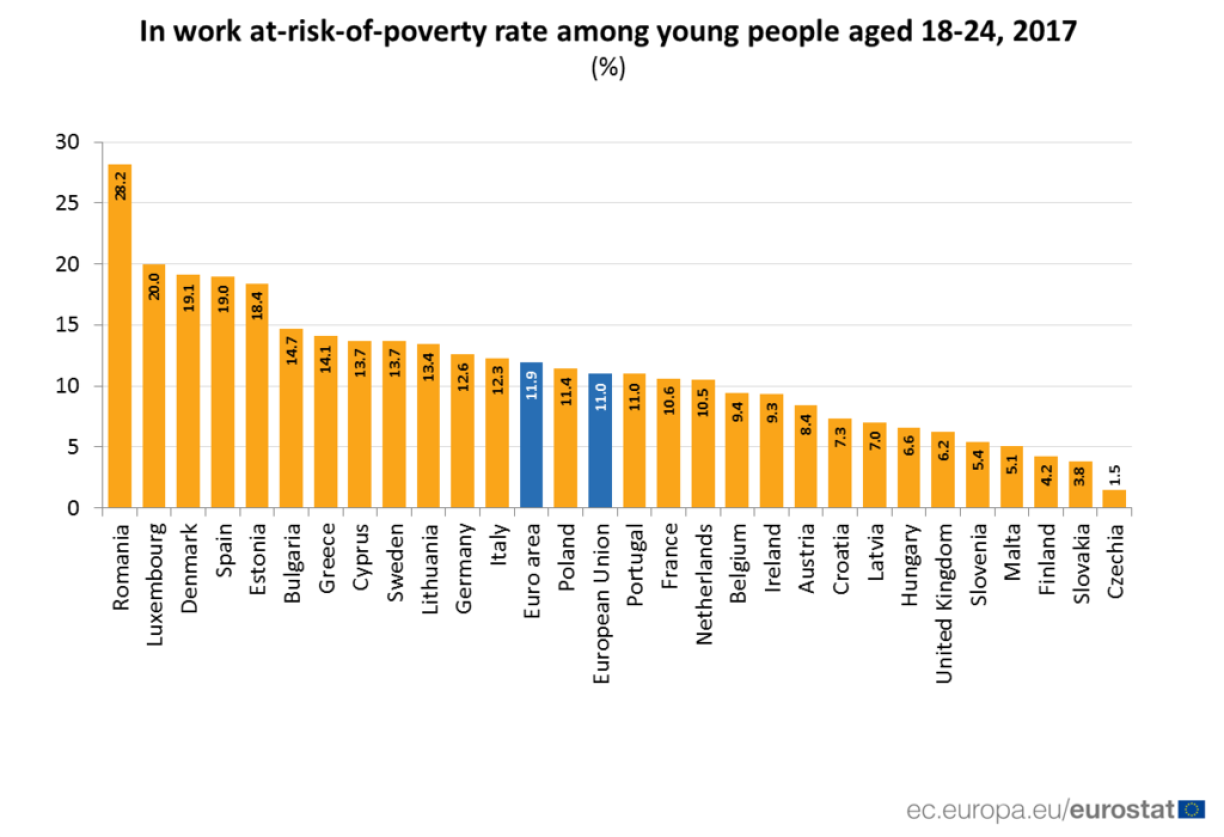
On Wednesday, the parliamentary commission on employment also discussed Eurostat's worrying revelation. At the same time, Minister of Labour, Employment, and the Social and Solidarity Economy, Dan Kersch, presented the government programme in terms of employment.
Members of the opposition aired a number of issues relating to Kersch's presentation and youth poverty.
The Left's Marc Baum complained that the government's programme lacked specific details. Highlighting the introduction of the additional vacation day, Baum explained that there is a lack of specificity in what this will look like, especially in terms of collective agreement. He expressed his disappointment that the status quo would remain for people with more precarious work, such as those in the construction sector. The construction sector collective agreement means that these employees would not benefit from an additional day off.
The CSV expressed its support for the Europe Day bank holiday on 9 May but highlighted the need to emphasise European subjects on this day.
When asked about the poverty risk amongst young people, Kersch stressed that the minimum wage raise is a concrete measure to try and combat this poverty risk. Those aged 18 and above would be able to benefit from the minimum wage.
Baum again praised the minimum wage raise, but believed that 0.9% is a minimal difference. Baum claimed that the amount is so little that it does not count as a structural raise.
As for reducing unemployment, Kersch outlined expanding professional development courses. He explained that the working world constantly changes and employees need to be able to adapt. He would hope to introduce a legal framework for this.
In Luxembourg, Eurostat believes those taking home less than €1,800 a month risk living in poverty. As Robert Urbé from Caritas explains, this means effectively living on the edge of society. With €1,800 per month, these young people have less than 60% of what the average Luxembourger takes home. Urbé explained that this causes significant disparities between these young people and the average earner.
According to Urbé, it effectively means that these young people cannot afford the same lifestyle, or afford to join the same unions, and generally they will feel excluded by society by their inability to enjoy aspects that others feel are a given. He believes this is the striking aspect rather than whether or not this constitutes 'true' poverty.
However, Urbé was unsurprised by the statistics. In fact, Urbé was more surprised that Germany, France, and Belgium all had significantly lower statistics than Luxembourg rather than the fact that the risk of poverty is so high for Luxembourg's working young.
Poverty: Luxembourg's working young at second highest risk of poverty in the EU





