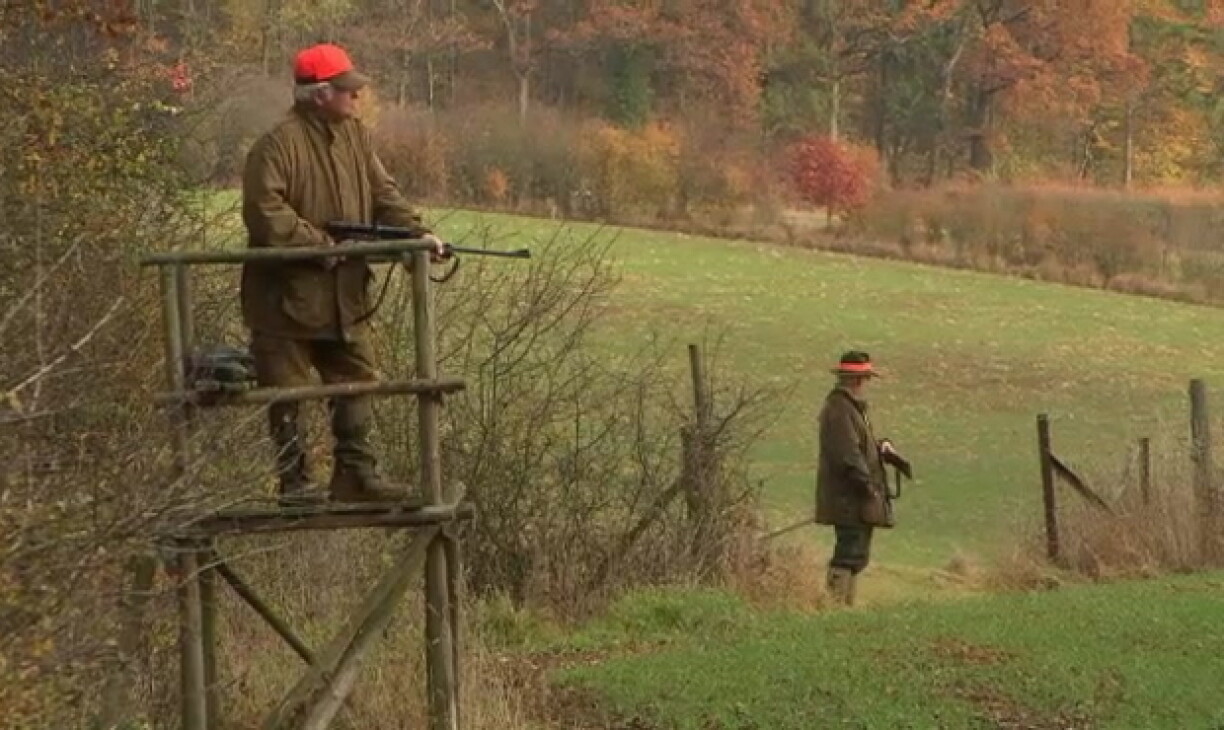
Jacob's stance was that he is in no way concerned that the government will ban driven hunting. The future of driven hunting has arisen following Goergen's question to Minister of the Environment Carole Dieschbourg. The minister explained that she will investigate the practicalities of driven hunting.
Poll - parliamentary question: Will driven hunting be banned?There were 901 registered driven hunts last year and 700 in 2015. The number of driven hunts may have risen over the last few years, but the format of the hunt remains divisive.
Mike Wagner, a representative of the Ministry of the Environment, highlighted that the examination of driven hunting should be done in partnership with the hunters' association, in order to discuss aspects such as the quality of the hunters' education, the way they hunt, and other aspects.
The ethical dimension is also there and likely to come up in the open debate in the Chamber of Deputies. As Wagner explained, laws must reflect society's values, which are ever changing. He believes reexamining the laws concerning hunting and society's opinion of hunting is a good exercise.
Luxembourg's hunting legislation is the most modern in all of Europe, but does it need improvements?
According to Jacobs, the entire discussion arose after a mistake. In November, the wild boar hunt drove animals onto the A7 and caused the closure of the motorway.
Jacobs is adamant that it is wrong to say that hunters drove the wild boars towards the motorway, explaining that the boars had already run onto the motorway before the hunt began. He claims it is a frequent occurrence for wild boars to run onto motorways.
Jacobs believes driven hunting is the best way to regulate wild animal populations. Between 2017 and 2018, 17,000 wild animals were shot in Luxembourg.
Wild boars on A7: Hunters' federation: "Hunters not to blame"
A7 closure: Wild boar hunt drives animals onto motorway
Martin Jonsson: More clarity is needed on hunting in Luxembourg





