
Your Weekly RecapSchool violence action plan, Romanian police to support Luxembourg, and Iran not rebuilding nuclear programme

Alannah Meyrath
Your Weekly Recap for 16–20 March 2026.
© AFP, RTL

Here are five things you should know at the end of this week:

  • Romanian police join Luxembourg patrols to target organised begging
  • Government prepares action plan to tackle school violence
  • PFAS debate in Luxembourg deepens as lawmakers split on ban versus restrictions
  • Fatal meningitis outbreak in UK leaves two dead and dozens infected
  • US says Iran not rebuilding nuclear programme, contradicting Trump’s war claim

1. Romanian police join Luxembourg patrols to target organised begging

© RTL

  • Romanian police officers will join Luxembourg patrols from 1 May for six months, working alongside the Grand Ducal Police to tackle organised begging and related networks.
  • The deployment, confirmed by Léon Gloden, aims to improve communication with Romanian nationals and trace criminal structures linked to human trafficking.
  • While unarmed and operating under Luxembourg law, the officers will also exchange expertise with local forces, particularly in cybercrime and organised crime investigations.

Joint patrols – From 1 May, around half a dozen Romanian police officers will be deployed in Luxembourg, operating under the authority of the Grand Ducal Police for an initial six-month period. The move follows a bilateral agreement signed between Luxembourg and Romania, allowing closer cooperation in tackling organised begging and human trafficking.

Targeting networks – Authorities say the focus is not just on individuals begging in public spaces, but on identifying and dismantling the networks behind them. The presence of Romanian officers is expected to help build trust and improve communication with Romanian nationals, making it easier to gather information and trace organisers.

Broader cooperation – The collaboration is not one-sided, with Luxembourg police also looking to benefit from Romanian expertise, particularly in cybercrime. The visiting officers will remain unarmed throughout their deployment and must fully comply with Luxembourg law while taking part in joint operations.

2. Government prepares action plan to tackle school violence

© AFP archives

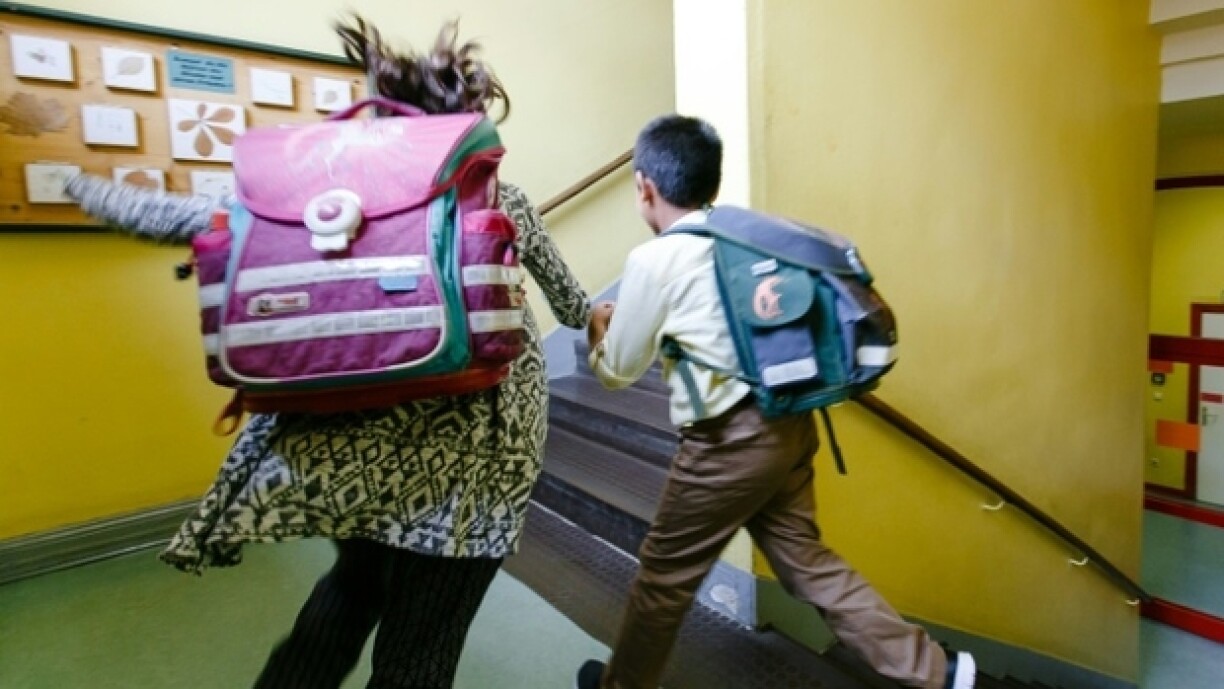
  • Education Minister Claude Meisch confirmed that a national action plan to tackle school violence will be presented in the coming weeks following recent violent incidents in Luxembourg schools.
  • MPs across parties agreed schools must be safe spaces, calling for clearer crisis responses, stronger support for teachers, and better coordination between stakeholders.
  • The debate also highlighted rising socio-emotional issues in children, with screen exposure identified as a key factor and discussions ongoing around a potential social media ban for under-15s.

Action plan in progress – The announcement follows political pressure after several concerning incidents, including repeated violent behaviour by primary school pupils in Dommeldange and a stabbing involving a 14-year-old at Lycée Michel Lucius. MPs broadly agreed that both protecting victims and ensuring proper handling and reintegration of offenders are essential. The government now aims to outline concrete measures in the coming weeks.

Calls for clarity and support – A central issue raised during the debate was the lack of clear responsibility in handling school violence. Claude Meisch acknowledged that Luxembourg’s crisis response needs improvement. Proposals included giving teachers more tools to manage difficult situations, with one suggestion to introduce legal protection for teachers who physically intervene, while others emphasised the role of family and extracurricular stability.

Broader concerns emerging – Beyond immediate safety, discussions pointed to a rise in children with special needs and socio-emotional difficulties. The minister linked this partly to screen exposure in early childhood and stressed the need for better coordination between education, health, and justice sectors. Measures under consideration include strengthening support staff in schools, awareness campaigns for parents, and reforms to inclusion services, alongside ongoing talks on restricting social media access for younger users.

3. PFAS debate in Luxembourg deepens as lawmakers split on ban versus restrictions

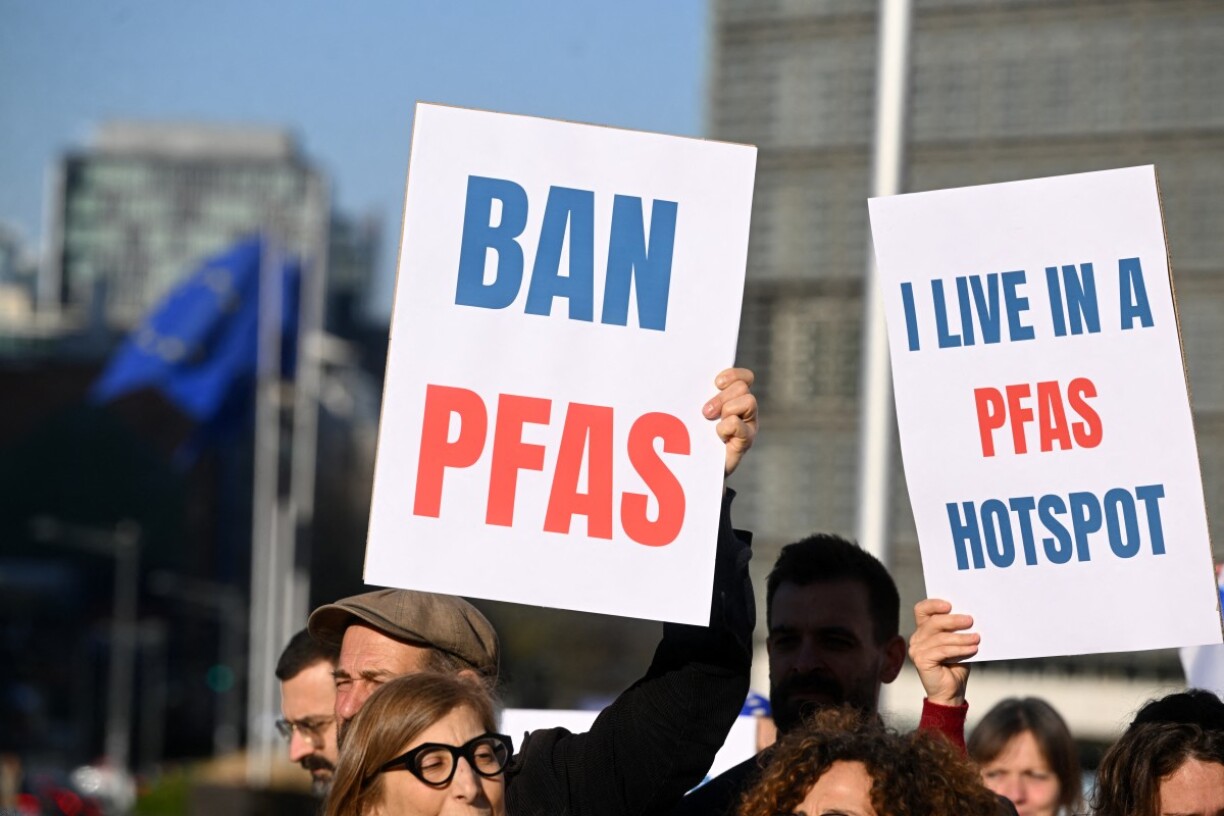
Ëmweltaktiviste protestéiere virun der EU-Kommissioun géint den Asaz vu PFAS.
© NICOLAS TUCAT/AFP

  • Luxembourg lawmakers are divided over how to tackle PFAS, with some pushing for an outright ban while others favour targeted restrictions due to the complexity of their use.
  • Concerns centre on the chemicals’ persistence in the environment and human body, with potential health risks including cancer, liver damage and hormonal disruption.
  • The government points to existing measures and stresses the need for coordinated EU-level action, while acknowledging the scale of the issue is only recently becoming clear.

Growing concern – PFAS, known as ‘forever chemicals’, are used in a wide range of everyday products due to their resistance to water, grease, and heat. However, that same durability means they do not break down, accumulating in the environment and in human bodies over time. Much of this pollution spreads through rainwater, leading to widespread exposure across the population.

Health risks debated – LSAP MP Claire Delcourt pushed to highlight the human impact, warning that most people already carry traces of PFAS in their blood. She pointed to risks such as liver damage, hormonal imbalances, and certain cancers, with children seen as particularly vulnerable. She also criticised current European limits, arguing they may still allow excessive exposure in some cases.

Balancing action – Not all lawmakers agree on a full ban. DP MP Luc Emering warned that restrictions could have unintended consequences, citing examples like higher PFAS levels in free-range eggs due to environmental exposure. Meanwhile, the government highlighted steps already taken, including drinking water limits and ongoing national strategy work, while stressing that any effective response will need to be coordinated at European level.


4. Fatal meningitis outbreak in UK leaves two dead and dozens infected

People wearing medical scrubs and face masks walk across campus at the University of Kent in Canterbury which is the centre of a deadly, unprecedented outbreak of meningitis
© AFP

  • UK health authorities are investigating 27 meningitis cases, including two deaths, linked to an outbreak centred on the University of Kent and a nightclub in Canterbury between 5 and 7 March.
  • The outbreak, described as unprecedented due to its rapid spread, is believed to stem from close-contact transmission at Club Chemistry, with many cases involving students and at least nine linked to the MenB strain.
  • Officials have launched urgent contact tracing, antibiotic distribution, and a targeted vaccination campaign for 5,000 students, while maintaining that the overall risk to the wider public remains low.

What it isMeningitis is an infection that causes inflammation of the protective membranes surrounding the brain and spinal cord and, in severe cases, can lead to sepsis. The bacterial form, seen in this outbreak, is rarer but far more dangerous than viral meningitis and requires urgent hospital treatment.

Rapid spread – The outbreak was first detected on 13 March and quickly escalated, with cases rising sharply within days and spreading across university halls, schools in Kent, and even reaching France. Health experts believe the speed and clustering point to a superspreader event, unusual for a disease that typically appears in smaller, contained groups.

Student impact – Many of those affected are young people, particularly University of Kent students, prompting widespread concern on campus. Hundreds queued for vaccinations, while others isolated or sought antibiotics after potential exposure, as anxiety grew over how suddenly the situation unfolded.


5. US says Iran not rebuilding nuclear programme, contradicting Trump’s war claim

US President Donald Trump speaks after signing executive orders in the Oval Office on March 6, 2025
© AFP

  • US intelligence has found that Iran is not rebuilding its nuclear enrichment programme, contradicting President Donald Trump’s justification that an imminent threat prompted ongoing military action.
  • Director of National Intelligence Tulsi Gabbard told Congress that Iran’s nuclear capabilities were “obliterated” in 2025 and have not been restored, while also confirming the regime remains in place despite heavy attacks.
  • The findings have fuelled political criticism and internal dissent, with officials and Democrats questioning the rationale for war and warning of broader global risks, including tensions in Ukraine and China’s ambitions toward Taiwan.

Conflicting narrative – US intelligence assessments presented to the Senate indicate that Iran has made no effort to rebuild its nuclear enrichment capabilities since they were destroyed in a 2025 US-led attack. This directly challenges Trump’s repeated claims that Iran posed an imminent nuclear threat requiring urgent military action, a justification not supported by the UN watchdog or most observers.

Political fallout – The testimony has intensified criticism in Washington, with Democrats accusing Trump of contradicting his own stance against foreign intervention and overstepping into global policing. The resignation of a senior counterterrorism official, who argued there was no imminent threat, further highlights divisions within the administration itself.

Wider tensions – While Iran’s leadership remains intact despite sustained attacks, US intelligence warns the country could rebuild its military over time. At the same time, assessments point to Russia maintaining the upper hand in Ukraine and China strengthening its military posture toward Taiwan, underscoring growing global instability beyond the Middle East.

Cost of war – The conflict is proving costly, with early estimates putting the first days at over $11 billion and total spending potentially reaching $200 billion. Officials defend the scale, while experts highlight the expense of weapons and operations, alongside rising oil prices following disruptions in the Strait of Hormuz.

The best of... 📚

  • Business & Tech – Nvidia plans to extend its artificial intelligence infrastructure beyond Earth by developing technology to power data centres in orbit.
  • Science & Environment – Unusually strong winds and warm ocean water likely drove a rapid plunge in Antarctic sea ice in recent years, scientists said on Wednesday, shedding new light on a puzzling event.
  • Entertainment – China’s snaggle-toothed Labubu dolls will soon come alive on the big screen after flying off the toy shelves, with maker Pop Mart announcing a collaboration with Sony Pictures.
  • Sport – All teams participating in a women’s tournament organised by FIFA will be required to have a female head coach or assistant after football’s governing body passed ground-breaking regulations at its council meeting on Thursday.

And in case you missed it... ⚠️

  • Unavailable state aid – At a moment when the government is promoting electromobility and energy independence due to the conflict in Iran, the subsidy for home charging points has lapsed, leaving prospective buyers unable to claim financial support.
  • Noticeable feature – In Luxembourg, personalised licence plates are becoming an increasingly common sight. While traditional plates consist of randomly generated numbers, many motorists are opting for custom combinations.
  • War and soaring prices – As Ramadan ends today, millions across the Middle East are entering Eid al-Fitr under the shadow of war, with displacement, air raid sirens, and rising hardship replacing what is usually a time of celebration.
  • Hurtful remarks – Workplace bullying can destroy lives and, in the worst cases, have fatal consequences. Mobbing ASBL works to support those affected, so they do not have to suffer in silence or face it alone.

Your Weekly Recap is published every Friday at noon.

Read earlier versions here.

Back to Top
CIM LOGO