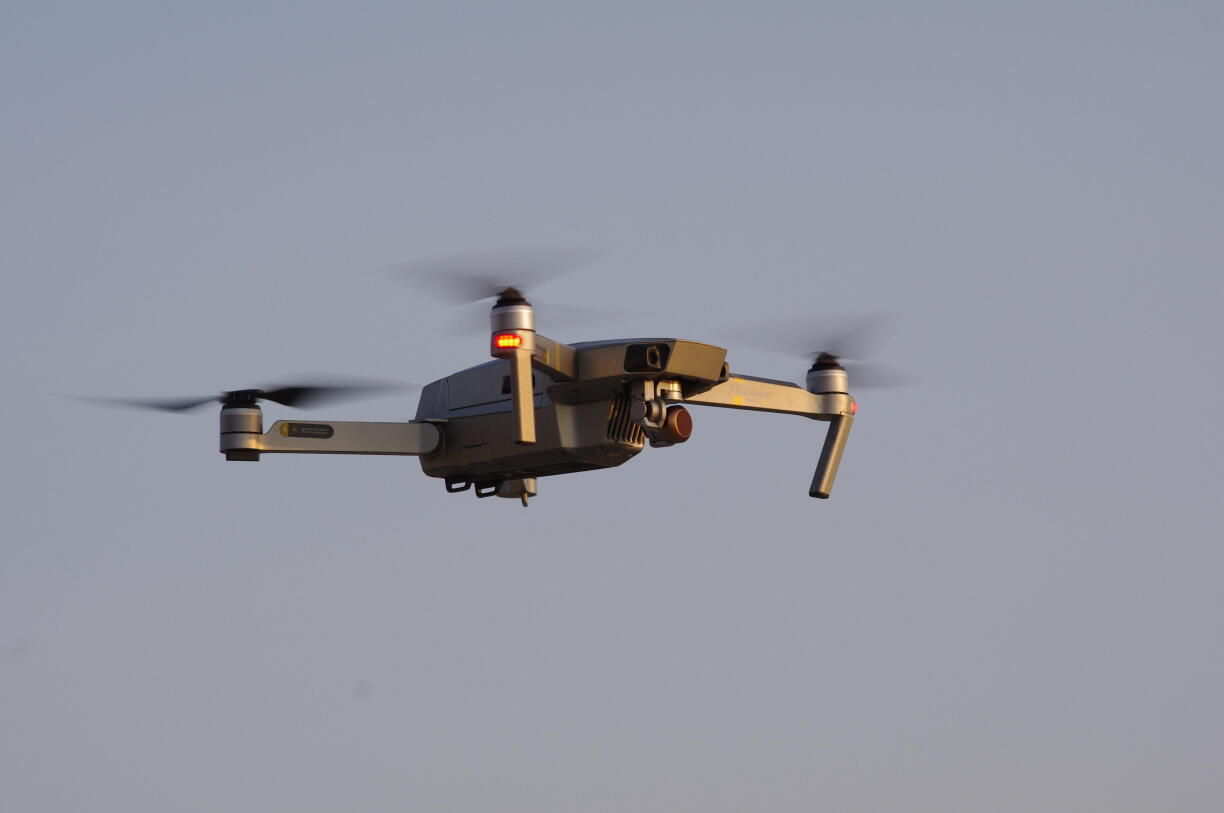
Authorities remain tight-lipped regarding recent reports of unidentified drone activity near Medernach, with the government declining to comment further following Friday’s Cabinet meeting. Prime Minister Luc Frieden offered no new details, while the ongoing investigation is being coordinated by the High Commission for National Protection (HCPN), Luxembourg’s national crisis management body.
The seriousness of the recent incident remains unclear. Nevertheless, aviation authorities issued an official notification to pilots on Friday, instructing them to immediately report any suspected drone activity in the vicinity of Findel Airport to the control tower.
Such notifications are standard procedure for communicating with pilots, explains Gilles Rock, President of the Luxembourg Drone Federation. However, he notes that he is not aware of any recent "notice to airmen" at Findel specifically related to drone incidents.
Findel Airport is designated as a permanent no-fly zone for drones, one of several fixed zones across the country. In contrast, Medernach is outside of any such permanent restriction. Rock points out that dynamic no-fly zones are frequently introduced for events like the Tour de Luxembourg or large marathons; these temporary restrictions are clearly visible on drone maps during those periods.
Outside these special zones, drone activity is notably high, especially among professional operators. Rock observes that they are mainly aware of people using drones for professional reasons, and yet he remains surprised by how many drones fly in the air every day. On top of that, countless private and recreational drone flights take place, although there is no reliable data on their frequency. Overall, Rock emphasises that professional use accounts for a surprisingly large share of daily drone flights in Luxembourg.
According to his experience, members of the public often express concerns even when operators are fully compliant with regulations. He reassures that while people always assume the worst – that someone is infringing on data protection or flying illegally – that is rarely the case. Rock reckons that all professional operators go to great lengths to stay within the law
The drone evaluation unit was only established in March this year and met for the first time this week. It is therefore a new tool in monitoring and responding to drone activity.
Regulations vary depending on the weight and use of the drone. For drones weighing up to 250 grams, no special licence is required under aviation law, but operators must always respect the privacy of people nearby, says Rock.
For heavier drones, up to 25kg, operators must obtain an online licence to fly them outside urban areas. If flying over people or buildings in towns for purposes such as inspections or surveys, a different licence is needed, which requires theoretical study and an exam at the Directorate of Civil Aviation.
In principle, drones can be flown up to 120 metres in altitude, ensuring they stay clear of aircraft. Most applications fall within this limit, but higher flights require special authorisation.
For further details on drone regulations, visit the website of the Directorate of Civil Aviation.





