At RTL City in Kirchberg, an exhibition aimed at the wider public and at school classes opens from Tuesday, focused on the themes of information, journalism, and the media.
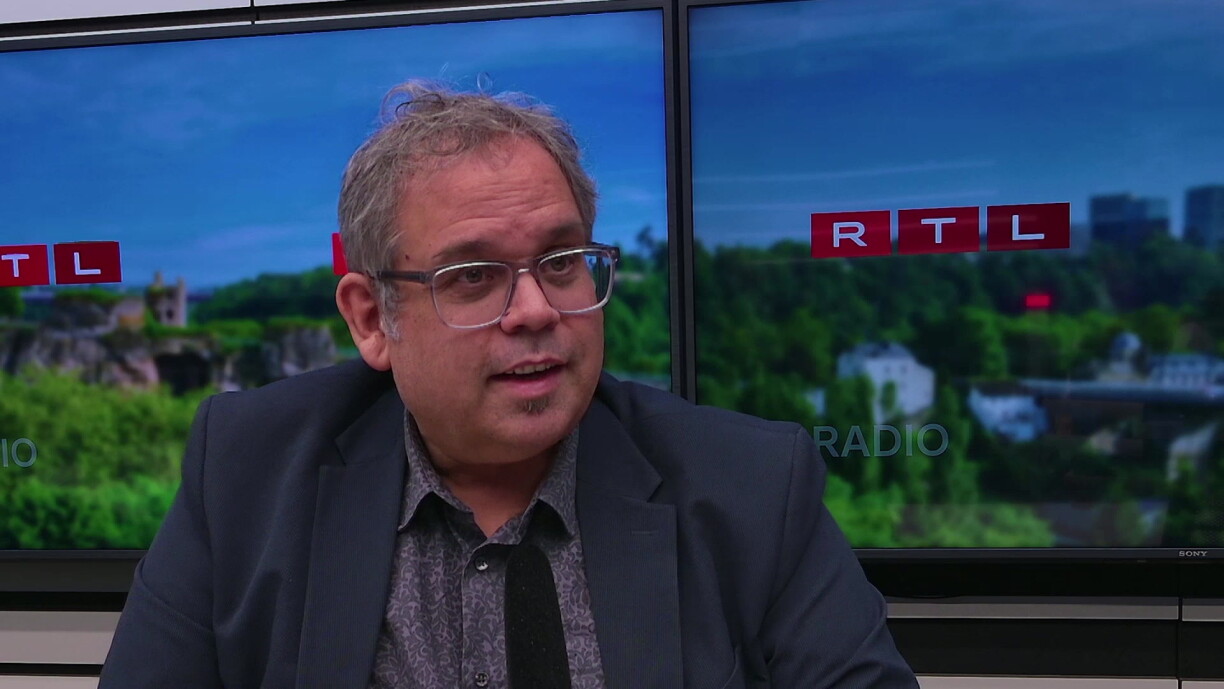
"In search of the truth: journalism and us", is designed to help visitors sharpen their awareness of information and of its sources, as Sascha Helsper, head of the MediaCentre at the University of Luxembourg, who worked on the project, explains.
The aim is not just to show how journalism works, but also to push people to question where a given piece of information comes from, and how they can go about assessing whether it is credible.
Nowadays, Helsper points out, we live in a world of information pluralism and media pluralism, but one heavily tilted towards social media. That means people mostly receive content served up by an algorithm.
The right question to ask, in his view, is whether a given piece of information is also confirmed by other sources, and who might have an interest in it being spread.
Especially important, he says, is the classic question "cui bono?", who stands to benefit.
Media education draws on what is known as inoculation theory, a concept originally borrowed from medicine. The idea is to confront people, in advance, with weak or simplified forms of disinformation, so that they can later recognise more easily when they are being exposed to fake news or deepfakes.
It amounts, in effect, to a kind of vaccine against fake news, Helsper explains. There is also a risk, however: someone who is made too sceptical may end up doubting information altogether.
Artificial intelligence makes it even easier to produce fake images, videos, and other content. At the same time, large volumes of manipulated activity can be generated via social media, Helsper notes, often in an effort to destabilise democracies.
He recently worked on a project looking into "fake activities", where likes and comments can be bought outright. Some 1,700 online shops were identified across Europe through which likes and comments could be purchased.
The point being, he explained, that one can buy 5,000 likes and 300 comments for a single post, and the more natural the pattern looks, the more costly it becomes.
The NGO ResetTech, he added, had discovered that posts had been generated from Nigeria on behalf of the right-wing populist Alternative for Germany (AfD) in Germany. Some 1,200 accounts had been involved, of which 236 were based in Nigeria.
Those accounts alone were responsible for the fact that 57% of all posts referring to the party leader had originated in Nigeria. The case, he said, shows just how easy it is to construct a false impression of popularity or support online.
Helsper is also on the board of the European Digital Media Observatory (EDMO), a Europe-wide network working on disinformation and fact-checking. In his view, the greatest current danger lies in social media.
Those platforms, he argued, ought to fall under the same rules as media outlets such as RTL, the Luxembourger Wort, or the Journal. That, he said, is not currently the case, and it lands everyone in trouble because there is a real lack of balance.
In this landscape, professional journalism takes on an even more important role. Traditionally, the media had always played what is known as the "gatekeeper role", checking information and evaluating sources, so that even sensitive content was not published unchecked.
Today, Helsper said, anyone can post anything on social media without real consequence. He sees this as a challenge, since the control mechanisms and sense of responsibility are not the same.
Journalistic work requires time, he urged, whether to carry out research, weigh up sources or put information into its wider context.
Helsper offers three concrete pieces of advice for the public:
Do not believe everything, Helsper adds, but do not doubt everything either.
The exhibition at RTL City is open to the public from 22 September to 30 October. Admission is free, though advance registration is required.





