Two decades after being allegedly abused by Harrods owner Mohamed Al-Fayed, Isabella heard "chillingly" similar testimonies from other women, painting a picture of a sprawling, murky network of exploitation.
Isabella, whose name has been changed, is among at least seven survivors of the late Egyptian tycoon's alleged sexual offences who were recognised by the UK's Home Office as victims of human trafficking this year.
Several told AFP they feel let down by the Metropolitan Police's ongoing investigation into Fayed's enablers, accusing officers of not going far enough to probe the "infrastructure of trafficking" -- accusations the force denies.
Like other young women in Fayed's orbit, Isabella said she was "coerced" into taking an invasive gynaecological examination and given a made-up job in the chairman's office.
"I would go into... a little windowless office, where he would try to make me take money," Isabella recounted, alleging the Egyptian billionaire later abused her in that dim room.
She only realised years later that she may have been a victim of human trafficking at the hands of Fayed -- who died aged 94 in 2023 with no charges brought against him, despite multiple complaints.
"I thought trafficking was in the back of a lorry crossing borders," said Isabella, part of a survivor-led advocacy group No One Above (NOA).
Speaking with other women, "the similarities were chilling".
"I started to understand that what had happened to me had happened to a lot of other victims... I started to see the patterns in the grooming and the recruitment and the movement," she said.
She was referred by the charity Unseen to the National Referral Mechanism (NRM), the UK's official framework for identifying victims of modern slavery, and confirmed as a trafficking victim in May.
Human trafficking involves facilitating a person's recruitment or movement, internationally or within the country, in order to exploit them.
When Isabella went to the Met in 2024, she said no one flagged potential trafficking. UK police have a legal duty to refer potential human trafficking victims to the NRM.
In a July Met briefing seen by AFP, the force acknowledged it was "not prepared" initially for the scale of the investigation when it launched Operation Cornpoppy in 2024.
To date, 163 victims have reported allegations to the police of sexual assault, rape, sexual exploitation and human trafficking in relation to Fayed. The Met acknowledges they are aware of many more who have not come forward.
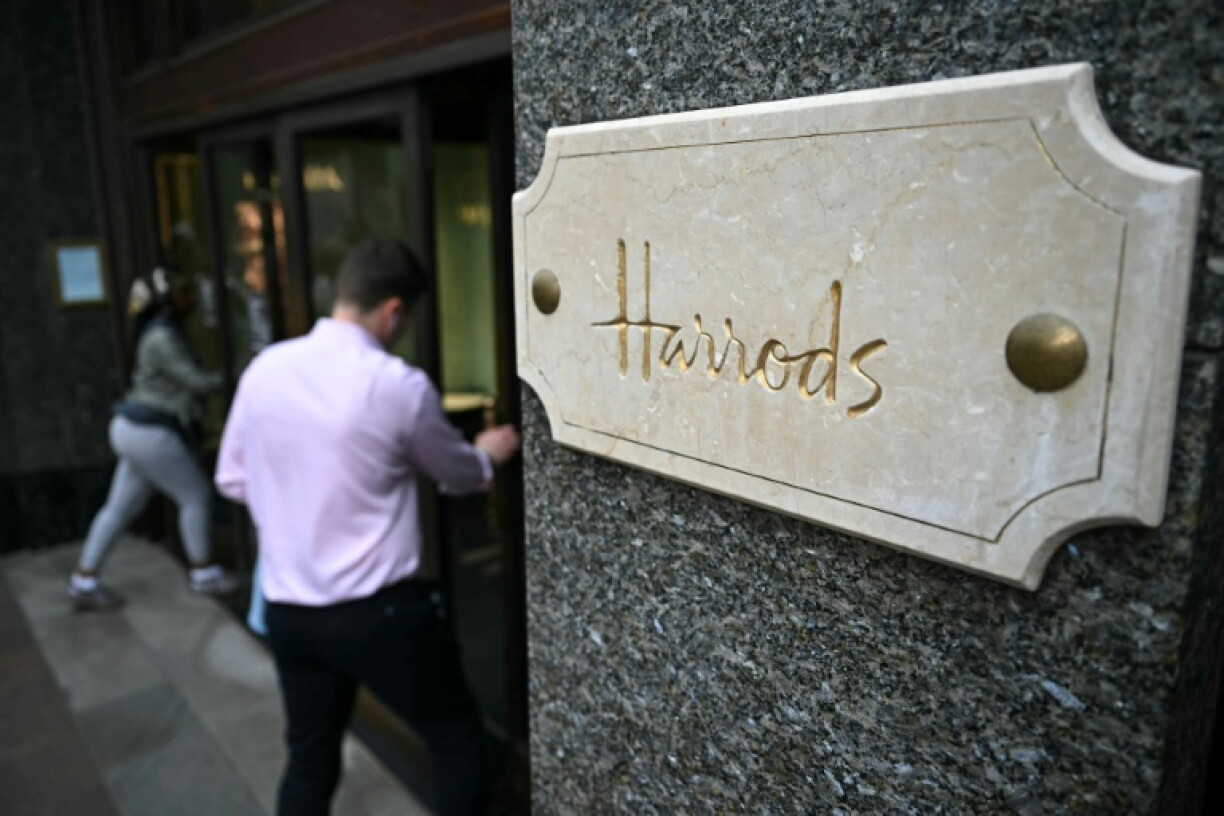
Several victims have alleged abuse at Fayed's other ventures, including central London apartments, the Ritz hotel in Paris, the Fulham Football Club and his fleet of private jets called Fayair.
The Met says it is in touch with investigators in France, where a probe into allegations against Mohamed and his brother Salah Fayed is being handled by a trafficking unit.
Joanna Brittan alleged she was taken to Harrods by her employer and a Fayed associate, the late UAE diplomat Ahmed Obaidly, in 1990, when she was 25.
She claims she was driven to Fayed's country house in Oxted outside London, where she believes she was drugged and abused.
In a police interview this year -- after first approaching the Met in 2017 -- Brittan claimed an officer told her Operation Cornpoppy needed to focus on Fayed and Harrods or it would become "unmanageable".
"I nearly exploded," said Brittan. "Trafficking involves more than one person, and if you keep your investigation focused on only one man, you won't see the trafficking."
"You won't see the bigger picture, because it's like a jigsaw puzzle... If you treat everything in isolation, you can't see it."
The Home Office recognised this year that Brittan was trafficked in London, Oxted, the Ritz and Cannes.
"Why did it take until 2026 for this formal recognition and referral to happen, when I had been reporting these circumstances to the Met since 2017?" Brittan asked.
The Met has since identified at least 70 potential trafficking victims and plans to refer them to the NRM.
It has also questioned seven people suspected of enabling Fayed, although no arrests have been made.
One serving Met officer and four ex-officers are being investigated by Britain's police watchdog for potential misconduct over their handling of allegations made between 2008 and 2013 against Fayed.
"We continue to strive to secure justice for all Mohamed Al-Fayed's victims and recognise the important role of the National Referral Mechanism," a Met police spokesperson told AFP.
"We will continue to assess all victim testimonies for evidence of human trafficking," it added.
But its track record has left survivors and experts doubtful.
"The Met still seems to be focusing specifically on incidents rather than... looking at the case as a much wider thing," said Phil Brewer, former head of the Met's human trafficking unit.
"I think in some ways that the Met just are overwhelmed by the sheer scale of the investigation," he told AFP.

Rachael Louw alleges abuse by Mohamed and Salah -- who died in 2010 -- after being recruited into a Harrods training scheme.
She became Salah's personal assistant and was whisked off on a private jet to the French Riviera.
But despite reporting to the Met twice, "they did not seem to be receptive to the trafficking elements of my case," alleged Louw.
In April she was confirmed by the Home Office as a modern slavery victim.
"A growing number of women have described experiences that raise serious questions about trafficking," said Emma Jones, a lawyer at Leigh Day, which is acting for more than 50 women including Louw.
Shanta Sundarason, who says she was abused by the tycoon when she worked as a designer at Harrods, was confirmed by the Home Office as a human trafficking victim. She told AFP she had "no faith in the Metropolitan Police or in the investigation".
On Thursday, Sundarason and another survivor Carrie Lazell delivered a letter addressed to Prime Minister Andy Burnham, calling for a public inquiry into the "institutional failures surrounding" Fayed.
"This is no longer just about Mohamed Al-Fayed," Sundarason said in a statement to AFP outside 10 Downing Street.
"It is about the institutions that surrounded him, what they knew, the warnings that may have been ignored and the opportunities to prevent further abuse that may have been missed," she added.
"This scale of abuse should never, ever happen again," said Lazell.
aks/jkb/rh