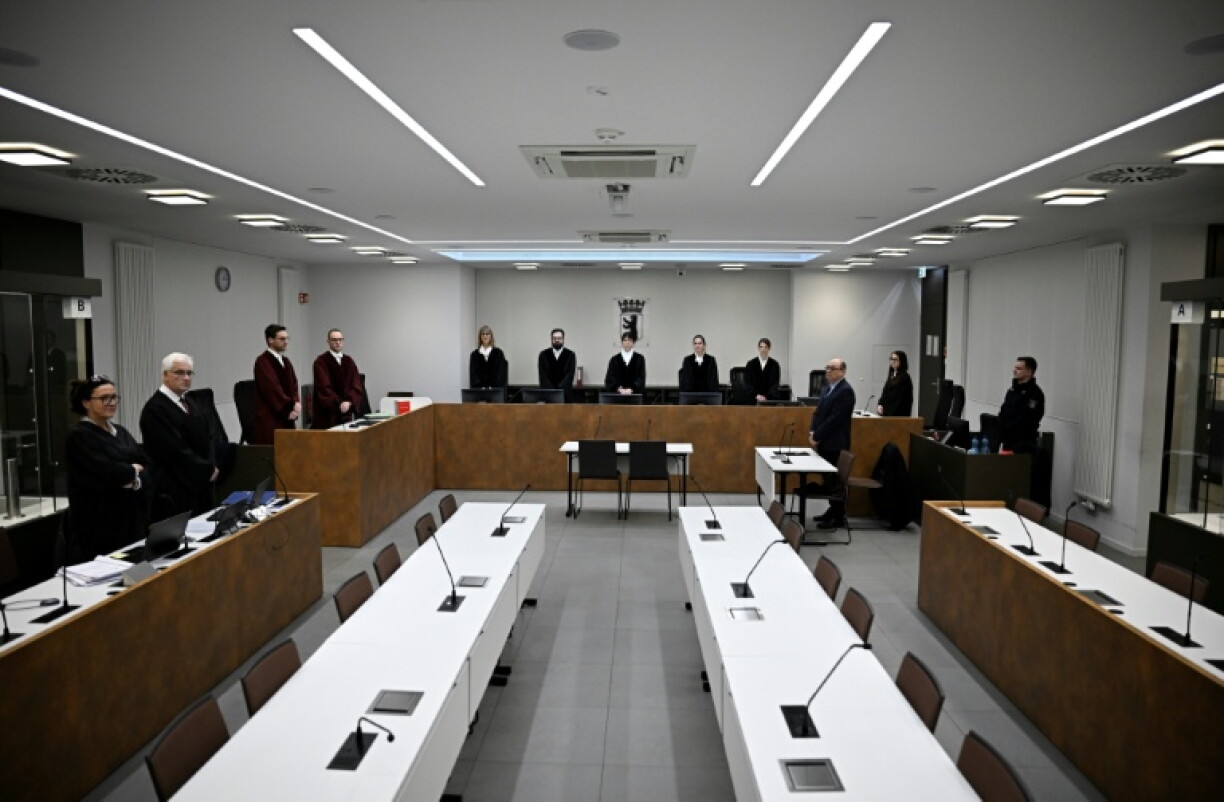
A German-Ukrainian businesswoman accused of spying for Russia went on trial Thursday on espionage charges, 10 months after her high-profile arrest sparked a diplomatic clash between Berlin and Moscow.
The start of proceedings in Berlin was postponed after the defendant reported health problems that required medical attention.
She was eventually brought into the courtroom in a wheelchair wearing dark sunglasses, where she was named as Ilona Wiener.
Her lawyers said she would not confirm her personal information and that she was still feeling ill, leading to a further delay.
Wiener, 57, is accused of using contacts with current and former German defence ministry officials to gather information about military aid for Ukraine, drone test sites and the arms industry.
In addition, "she is alleged to have maintained contact with a full-time intelligence officer at the Russian Embassy in Berlin," court spokeswoman Lisa Jani told AFP, adding: "She is said to have arranged contacts for him."
"The defendant is alleged to have been the owner of a marketing agency and the chairwoman of a lobbying association and, as a result, to have had a very good network in Berlin, which she is accused of sharing with the full-time officer of the Russian intelligence service," Jani said.
The alleged involvement of the Russian embassy drew outrage from German officials at the time of the woman's arrest in late January, including Foreign Minister Johann Wadephul, who called it a "hostile act" and "completely unacceptable".
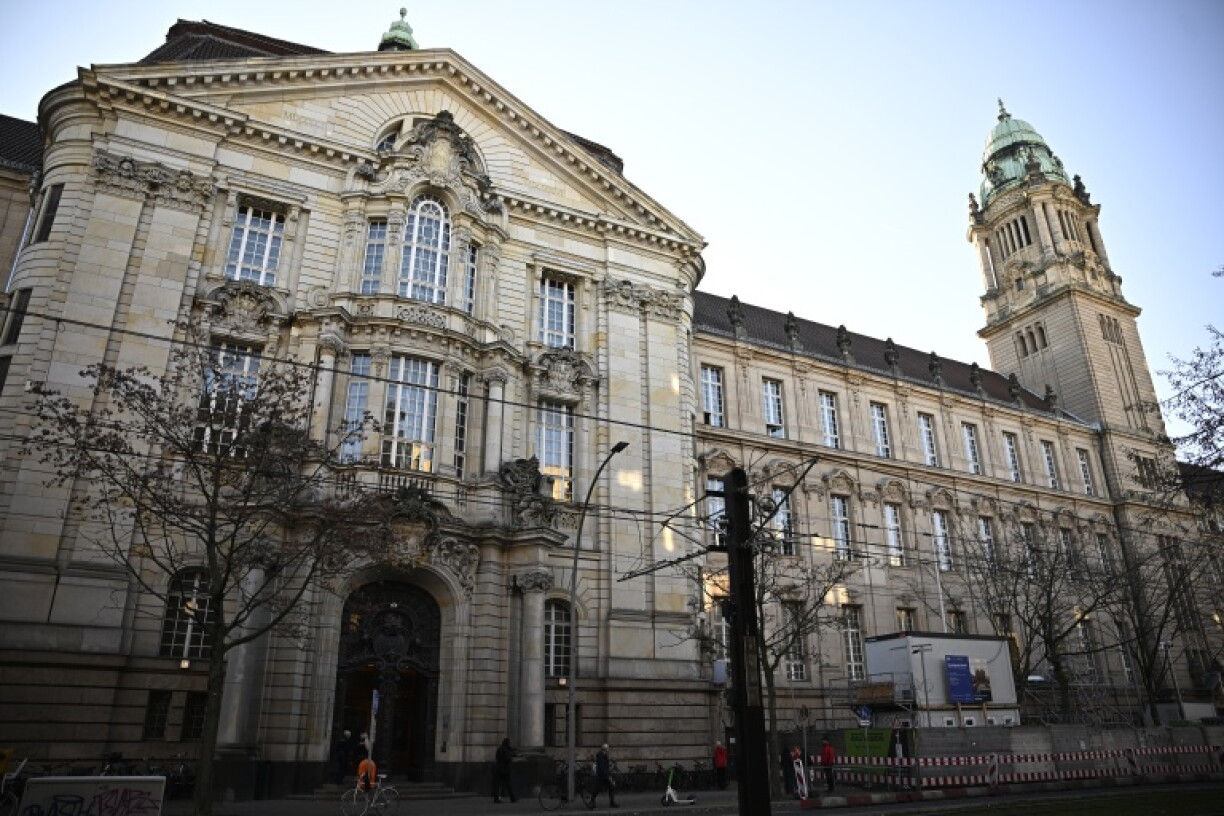
Russia's ambassador was summoned over the incident, and the handler -- the embassy's deputy military attache, Andrei Mayerov -- was expelled from Germany.
According to prosecutors, Mayerov was actually a colonel in Russia's GRU military intelligence agency and was using his diplomatic cover at the embassy -- along with Wiener's help -- to build an espionage network in Berlin.
Wiener had for years led an advocacy group that called for international cooperation, particularly around relations between Germany, Russia and Ukraine.
Prosecutors say she had started spying on behalf of Russia by October 2023, or possibly even earlier.
According to prosecutors, Wiener's work provided her with extensive connections within military and political circles and helped her gain access to events around the German capital.
In the charge sheet read out in court, prosecutors said she gave her Russian handler tips about dinners and other functions to attend and on several occasions helped him gain access under false identities.
Among the events the attache allegedly went to with Wiener's help was a German-Ukrainian economic forum also attended by German Chancellor Friedrich Merz and Ukrainian President Volodymyr Zelensky, and a gathering of German military reservists.
She is also alleged to have taken part in a function organised by MPs of the far-right Alternative for Germany (AfD) and then told her handler which lawmakers were travelling to Moscow.
Wiener is also suspected of passing on information about the visit of the Ukrainian defence minister to Berlin.
Her lawyers sought to call the attache in question, Mayorov, as a witness, indicating that he would testify he was only an officer in the Russian air force and he and Wiener were merely friends.
Legal proceedings are also ongoing against two former German defence officials who knew Wiener and are suspected of giving her information.
In an interview with AFP this week, Russian ambassador to Berlin Sergei Nechayev flatly denied Wiener was known to the embassy.
"The Russian embassy has no connection whatsoever to this woman, and even if she happened to cross paths with one of our representatives -- perhaps at some reception -- that means absolutely nothing," Nechayev told AFP, adding he may have seen her himself at an event.
"But she is not a Russian citizen and, as far as we are aware, has no ties to Russia," he said. "She is a German and Ukrainian citizen, and, frankly, we do not associate with such individuals here."
The trial is expected to run until May 2027.
bst/jsk/eab