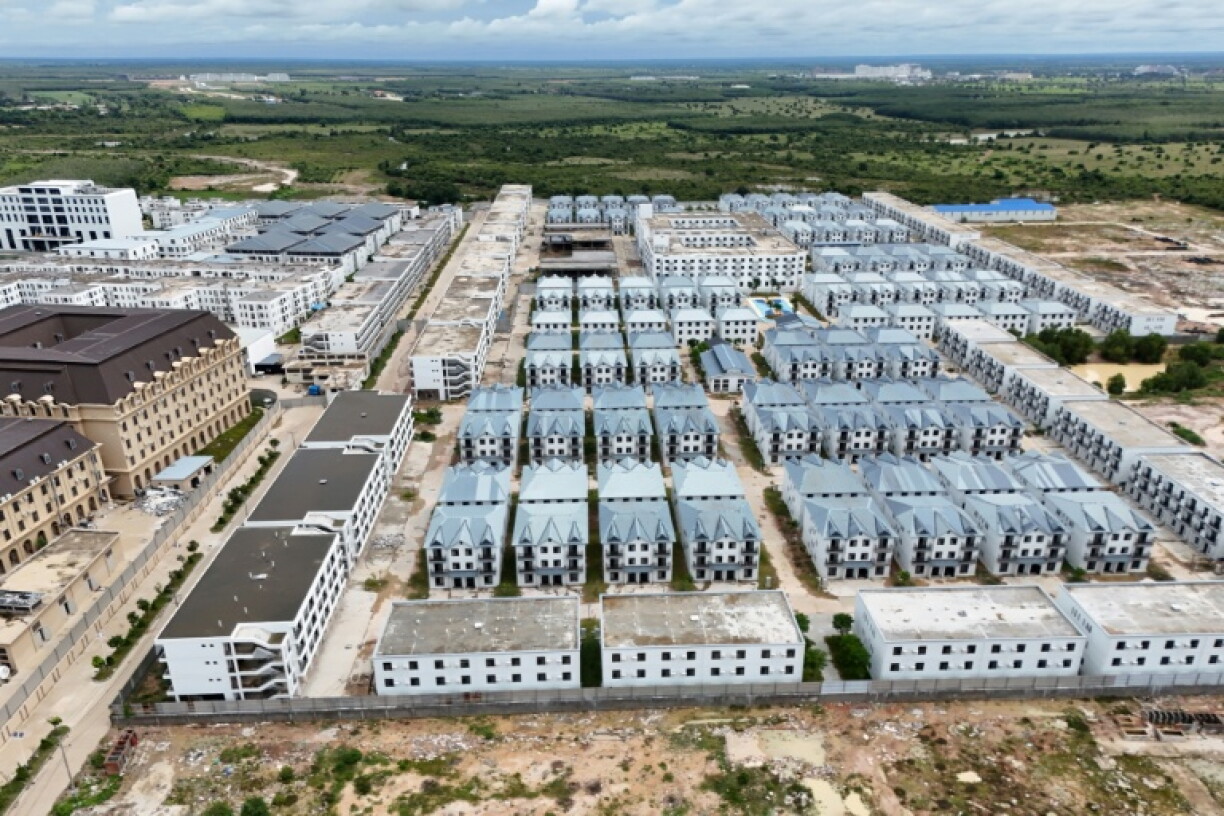
Cambodia's reputation has been damaged by the scam industry in the country and it should have acted sooner to regulate cryptocurrencies, the central bank governor told AFP on Friday.
The Southeast Asian country has become a hub for transnational organised criminal groups running online romance and investment scams that defraud victims around the world of billions of dollars annually, researchers and law enforcement agencies say.
Under pressure from foreign governments to combat the illicit industry, Cambodia has touted a crackdown on large-scale scam centres, which campaigners say were allowed to thrive for years.
"With the experiences that we went through, these issues of scams and et cetera, I think it has impacted our reputations," National Bank of Cambodia governor Chea Serey said in an interview in the capital Phnom Penh.
She said the government should have acted earlier to regulate the use of cryptocurrencies, which have been a key tool for scammers to launder assets and move funds across jurisdictions.
"Something that we can share and we have not done well is in the area of the cryptocurrency," said Chea Serey, who succeeded her father as central bank chief in 2023.
"Cambodia, at the beginning, has chosen not to regulate it and actually not to allow it to be traded publicly.

"That, in a way, has also enabled these bad actors to use the cryptocurrency space to do a lot of activities. So now, this is a lesson learned."
Authorities were looking to adopt a new law on virtual assets by the end of this year, she said.
"When you see it in hindsight, you would always say, 'I could have done this, I should have done that.' And I think it's, as we say, it's better late than never."
Chea Serey spoke to AFP ahead of the Black Swan Summit on financial inclusion organised by her central bank alongside a Francophonie summit that Phnom Penh is hosting from Sunday, which French President Emmanuel Macron is due to attend.
Officials say several scam bosses have been arrested and thousands of foreigners accused of perpetrating scams deported from Cambodia.
Critics say the arrests and deportations of alleged scammers, from dozens of nationalities -- some trafficked, some willing participants -- have not stamped out the fraud networks.
Instead, scam operators have decentralised and shifted locations, within Cambodia and neighbours Myanmar and Laos, as well as further afield in Asia and Africa.
Analysts say elite protection networks and the financial and physical infrastructure of the scam industry remain intact, raising concerns that operators could regroup.
Chea Serey said the country's notoriety has had direct impacts on the wider economy.
"Mostly tourists from the region are not coming here because of this scam reputation," she acknowledged, while hoping numbers would pick up towards the end of the year.
Tourist arrivals to Cambodia plunged 44 percent on-year to 2.46 million during the first nine months of 2026, according to the tourism ministry.
The border conflict with Thailand is another factor keeping visitors away.
Cambodia is home to the spectacular UNESCO-listed archaeological complex of Angkor, and tourism is a major driver of the economy, but at current rates it might receive little more than three million visitors this year, less than half the 2024 figure.
sdu-sco/slb/lkd/mjw/lga