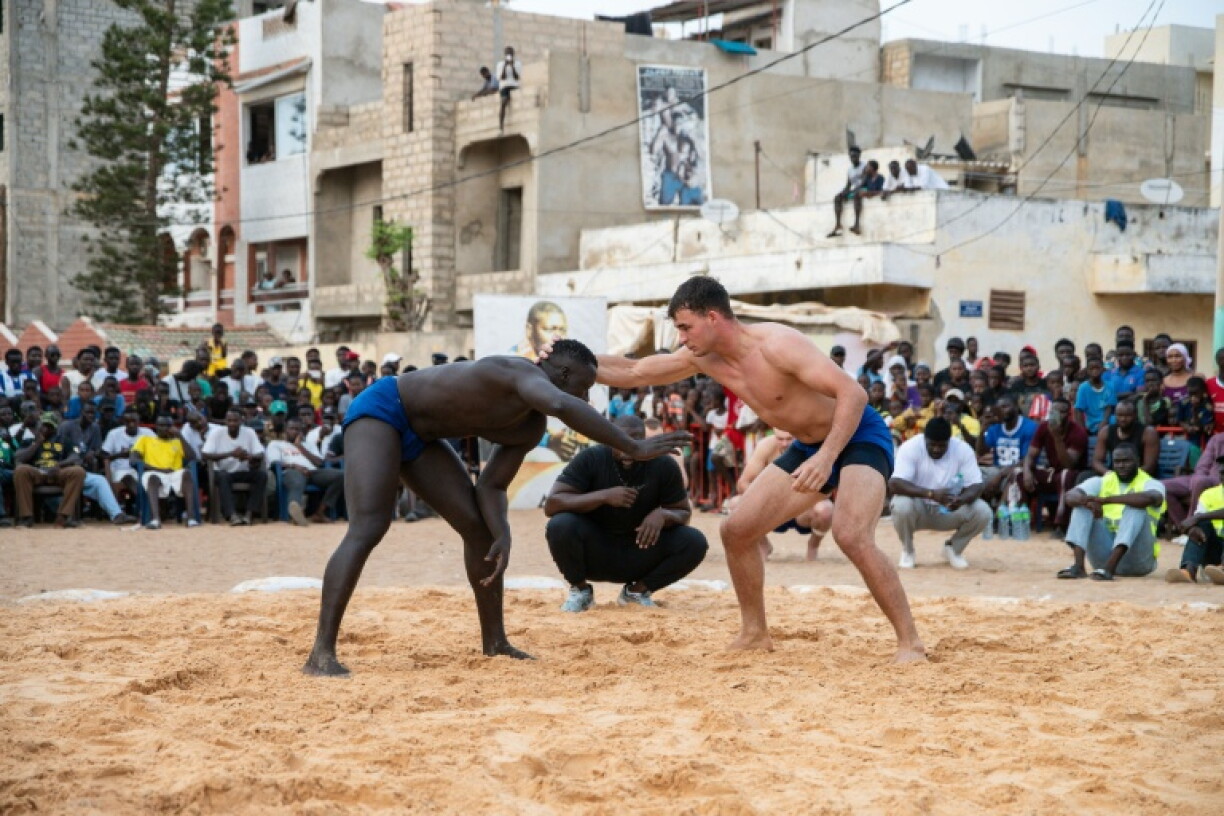
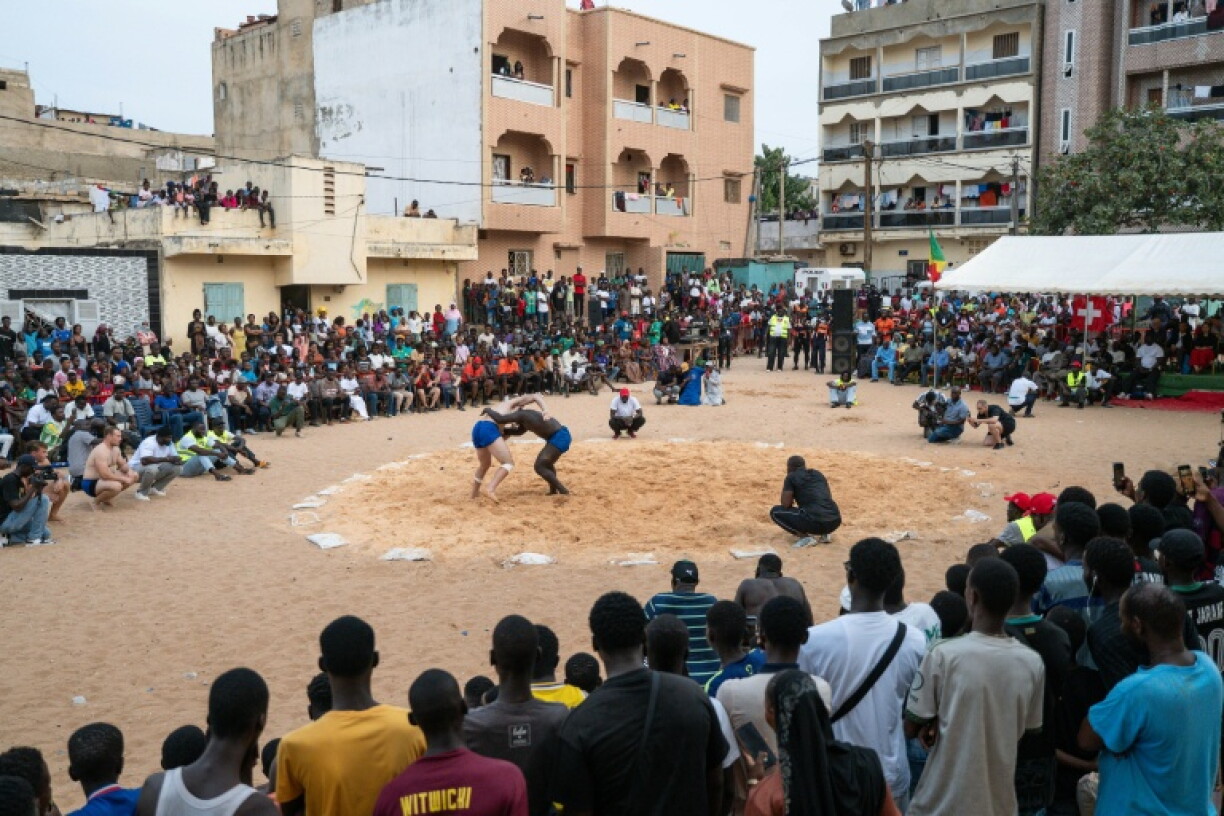
At the entrance to a dirt field between buildings in a Dakar suburb, a Senegalese guide scatters salt into the air, then onto the ground ahead of Swiss wrestlers who one by one break into a run.
As part of a cultural exchange, three Senegalese and three Swiss wrestlers faced off Sunday in Dakar, mixing their own ancestral wrestling traditions.
The event was organised on the sidelines of the Youth Olympic Games which opened in Senegal on Saturday, marking the first ever Olympics on African soil.
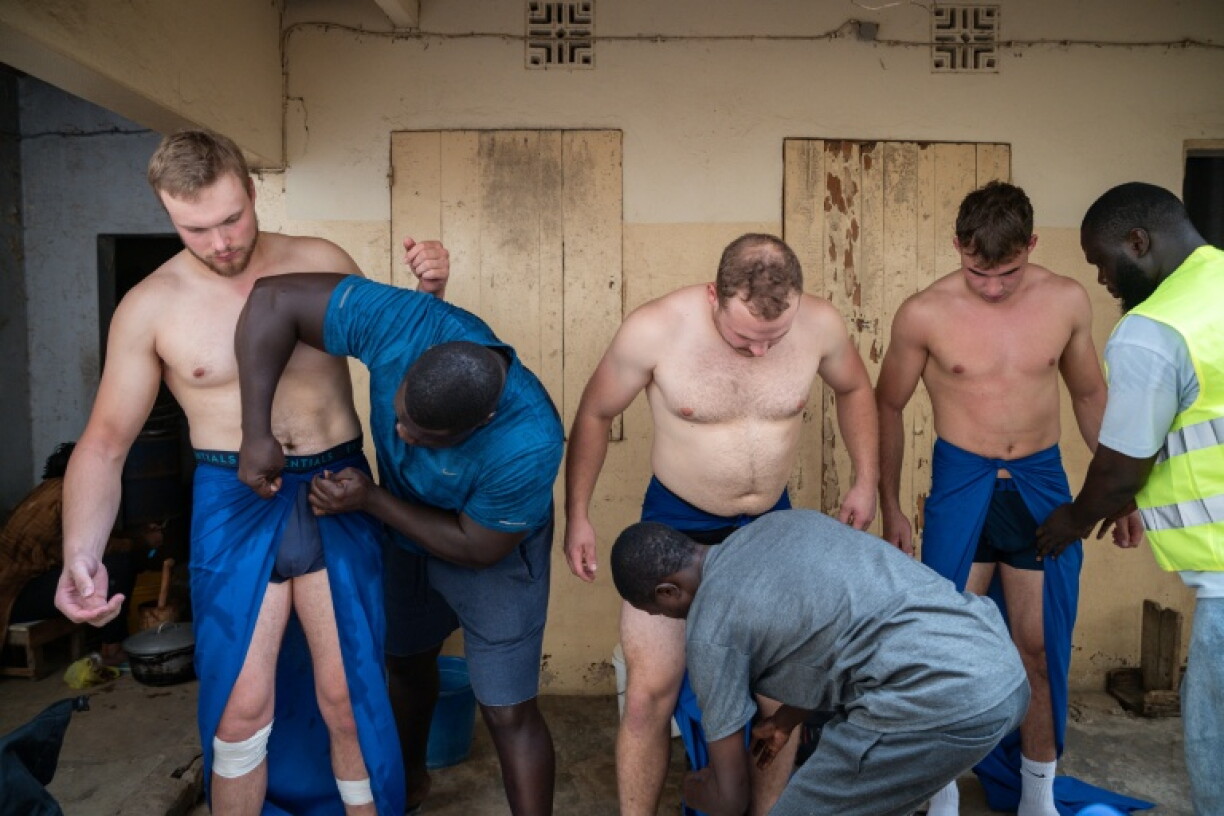
The encounter started with the Swiss wrestlers trading in their usual getups for Senegalese wrestling attire.
In Switzerland, traditional wrestling known as "Schwingen" is practised wearing thick sackcloth shorts over trousers, with a wrestler grabbing hold of an opponent's shorts in an attempt to throw the fighter off balance and pin the person to the ground.
In Dakar, the wrestlers encountered a different attire.
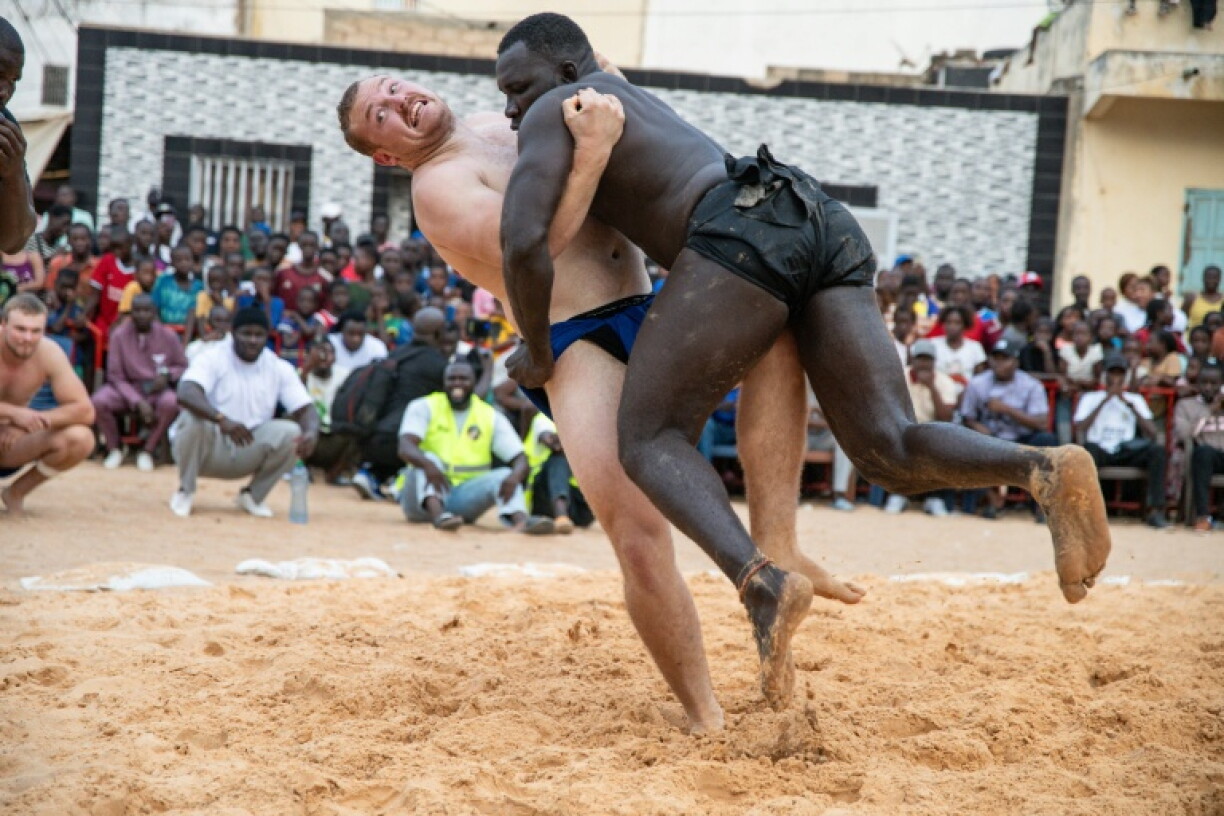
Senegalese wrestling, known as "laamb", is performed bare-chested and in a loincloth, with the participant often adorned in "gris-gris", charms and amulets believed to offer protection.
To ensure their loincloths were tied correctly, the Swiss wrestlers received help from a Senegalese wrestling star, Emile Francois Gomis, known as "Franc".
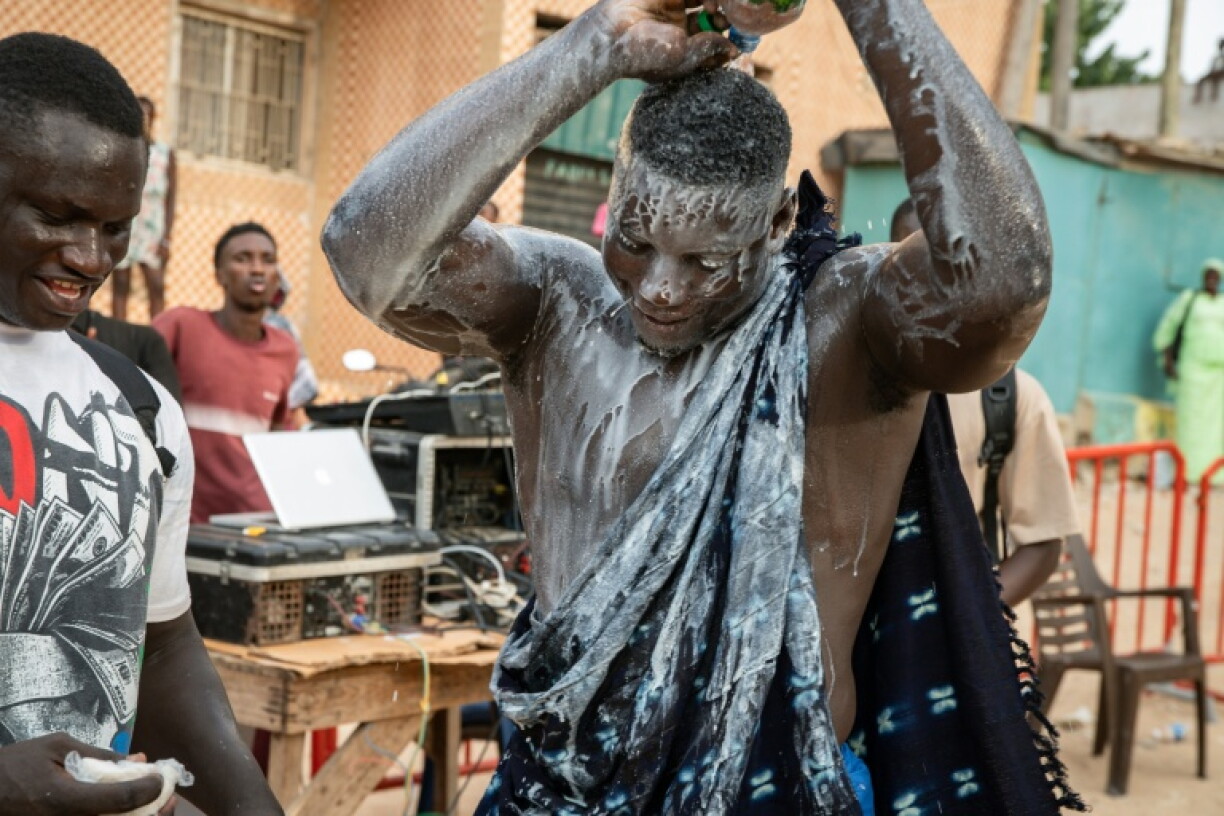
Next came a mystical bath ritual: a little bit of water poured over the body, part of a protective tradition that some Senegalese wrestlers undergo.
Then drums started to beat and the singing of traditional songs began.
The Senegalese wrestlers entered, draped in traditional "leppi" cloth wraps.
The initial rounds featured young wrestlers, with the crowd cheering them on.
Then Modou Lo, a Senegalese wrestling legend and local resident, appeared to shouts and applause.
Together with his proteges, he performed a dance to the beat of percussions, and the Swiss wrestlers joined in, drawing further applause.
Then came the laamb matches, with the Senegalese naturally prevailing.
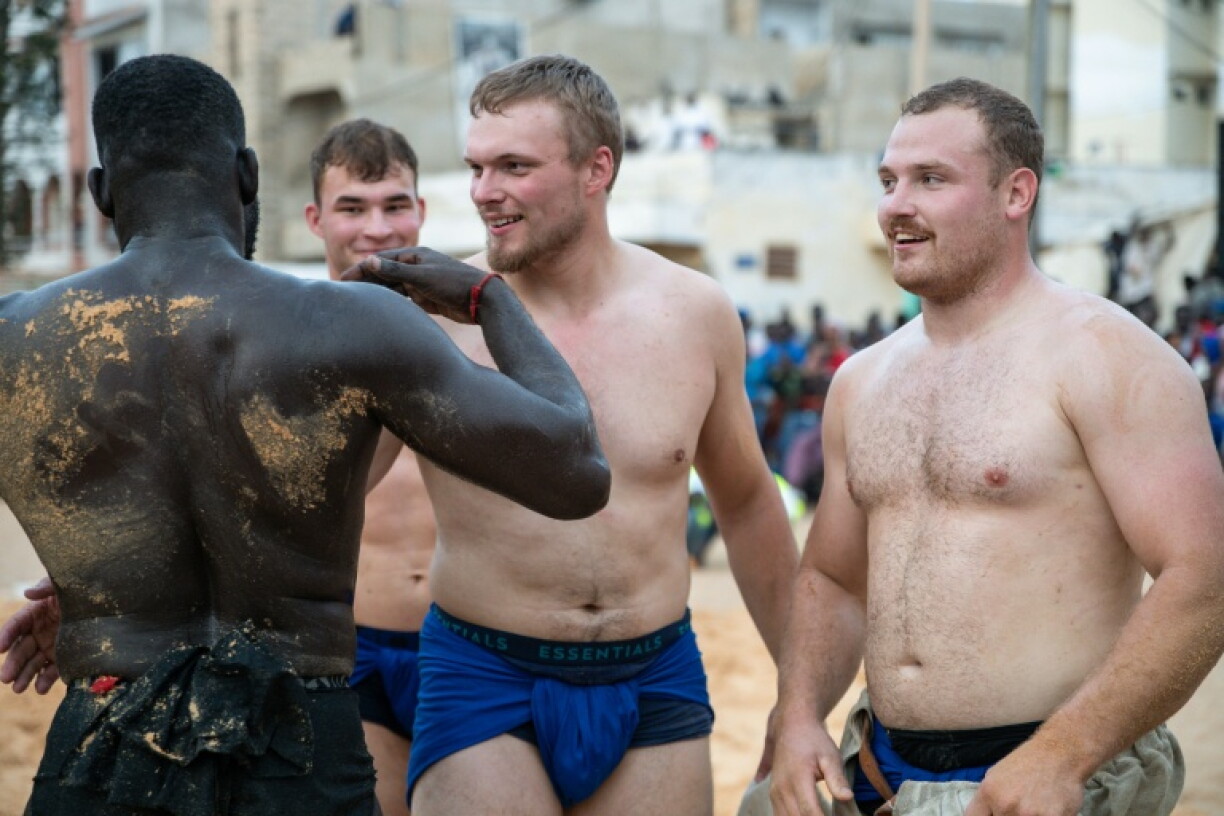
Swiss wrestler Matthieu Burger said his opponent "does it all the time, for me it's the first time. And he was stronger".
But he described the match as "great fighting, conducted with mutual respect".
The main difference, in his opinion, was that Swiss wrestling entails maintaining a constant grip on one's opponent, whereas there is more distance between wrestlers in Senegal.
Burger said he was confident the experience would prove useful in his own traditional wrestling.
Next, the roles were reversed: Senegalese wrestlers put on traditional burlap shorts to try their hand at Swiss wrestling, with the Swiss avenging their earlier defeat.
For "Franc", who initiated the event, the mission was accomplished: "This is what we wanted, to come and show Senegalese culture, our pride. Wrestling, it's our sport," he said.
The Senegalese style, with its raw power and rituals, and Swiss style, with its rigour and centuries-old history, serve as a "cultural and sporting bridge", said Aboubacar Djamil Sane, mayor of Dakar's Parcelles Assainies municipality, where the event took place.
On the Swiss side, Patricia Danzi, a former Olympian who is representing the Swiss government at the Youth Olympic Games as the director general of the Swiss Agency for Development and Cooperation, said she was moved.
The Games, she said, "don't just take place in the stadiums, they also happen in our neighbourhoods".
ard/lp/bfm/jhb