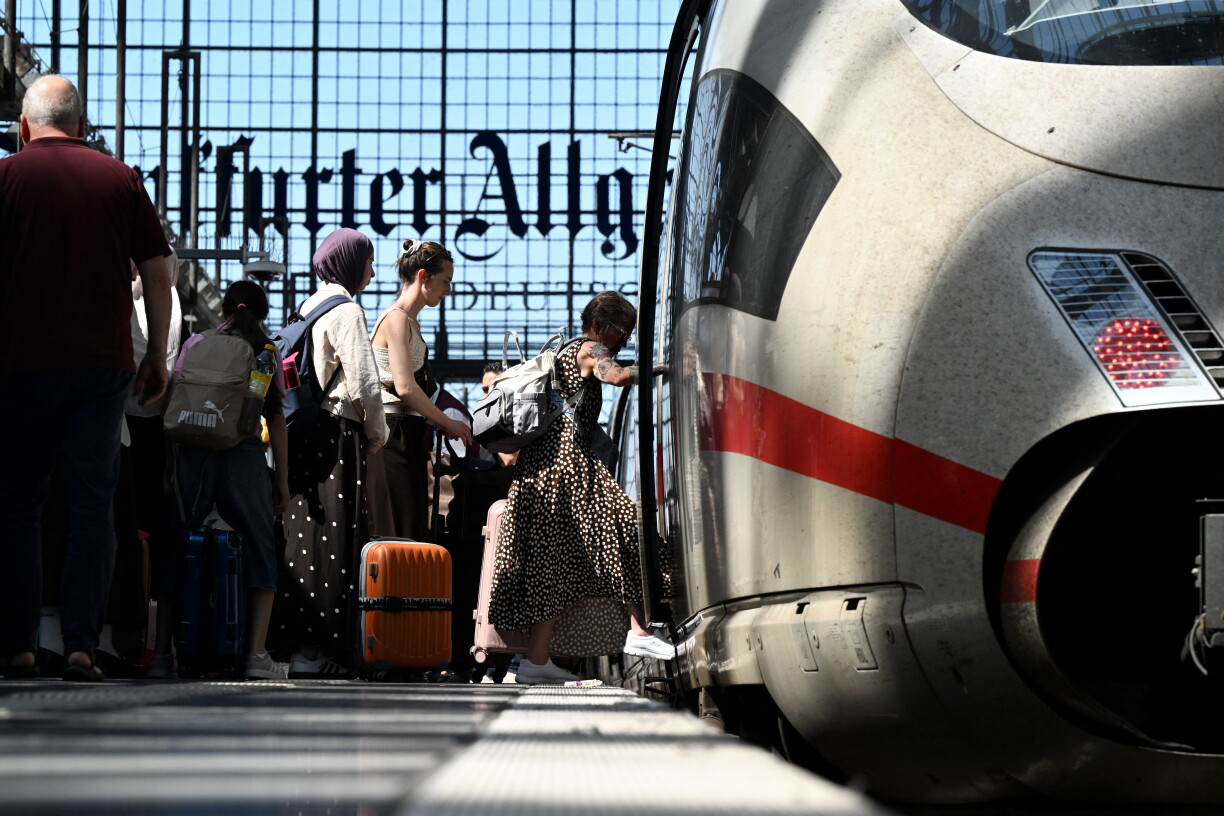
Deutsche Bahn is banning alcohol consumption at all train stations across Germany. The company announced on Tuesday that the new rule will apply nationwide and be rolled out gradually at 5,400 stations by 15 October 2026. DB CEO Evelyn Palla linked the move directly to rising violence, saying "too often we've had to find that where too much alcohol flows, violence also increases."
Speaking to German newspaper Bild, Palla said the company wants more order and safety at stations and on trains, citing the need to better protect both staff and passengers. The move comes days after a Deutsche Bahn employee was seriously injured in an attack on the Offenburg–Karlsruhe line on Friday evening, reportedly during a ticket check involving an intoxicated passenger, although the precise circumstances are still unclear. Palla described the incident as a brutal, senseless attack and pointed to it as a trigger for the new ban.
Alcohol restrictions already exist at around 30 major German stations, including Hamburg, Cologne and Munich, and Palla said the results there have been unambiguous: less violence, less litter. From 1 September, the ban will extend to Berlin Hauptbahnhof, Berlin Gesundbrunnen, Kiel and Braunschweig, with local rules adjusted in coordination with municipalities and authorities.
The ban applies to drinking on platforms and in station halls, though station restaurants and bars will still be allowed to serve alcohol, and passengers may carry sealed, unopened alcoholic drinks in their bags. DB security staff and federal police will monitor compliance, with violations punishable by removal from the premises or a station ban.
The Association of German Transport Companies (VDV) welcomed the initiative as a step likely to reduce conflict and improve both the perceived and actual safety of passengers and staff, while noting it should form part of a wider package of measures – including clarity on who bears the financial responsibility for enforcement.
Federal Interior Minister Alexander Dobrindt struck a more cautious tone. While broadly positive about Deutsche Bahn taking action, he flagged enforcement as a potential problem and said he intends to ask Palla what evidence or research underpins the new policy.
Police unions were more unequivocally supportive. Andreas Roßkopf of the GdP's federal police division described stations as having become crime hotspots, with round-the-clock major stations especially affected by drinking among people who have no intention of travelling. The DPolG welcomed the ban too, but warned that rules alone won't create safety without adequate staffing to back them up. Union chairman Heiko Teggatz stressed that enforcement is initially Deutsche Bahn's own responsibility, with federal police only stepping in once someone ignores an order to leave or commits a further offence.
Unlike in Germany, there is currently no general alcohol ban at Luxembourg's train stations. Drinking alcoholic beverages on platforms and in station areas is, in principle, permitted.
A nationwide ban of the kind Deutsche Bahn is now introducing at its stations does not exist in Luxembourg.
However, the general rules of public order still apply at stations, meaning police or security services can intervene if intoxicated individuals harass other people or endanger safety.