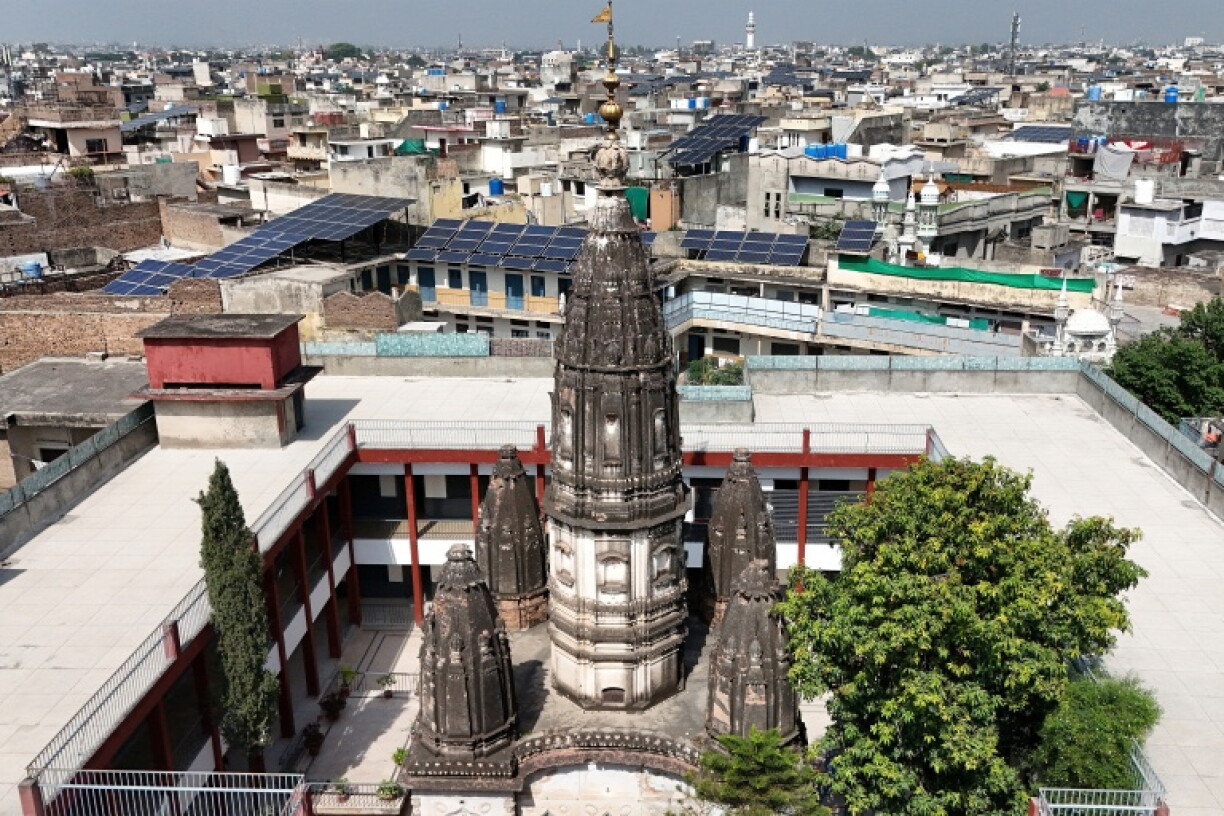
Emerging through a tangle of electrical wires and advertising billboards in Rawalpindi's urban sprawl, the towering spire of a Hindu temple is a reminder of the city's mixed religious past.
The temple in Muslim-majority Pakistan "tells us about a very different time of Rawalpindi's history when many different diverse communities used to coexist together", researcher Hassaan Tauseef told AFP.
Built in the 19th century, according to Tauseef, the facade of the temple in the city's main commercial Raja Bazaar area is crumbling. Over the honking of motorcycles jostling through the crowded streets, a jewellery maker plies his merchandise from its ground floor.
The disused shrine is one of Rawalpindi's 39 surviving Hindu temples, just three of which still serve the city's dwindling Hindu community, while the others have been converted into homes, shops and other premises, according to architectural and cultural heritage expert Tauseef.
Before the partition of British-ruled India in 1947, Rawalpindi was a religiously diverse city where non-Muslims made up the majority of the population.
The bloodshed and mass migrations of partition saw Hindus and Sikhs flee to India and Muslim refugees pour into Pakistan, permanently transforming the city's demographics.
Today, Muslims make up 96 percent of Pakistan's 240 million people, while Hindus account for just two percent -- most living in rural areas, predominantly in the south.
Discrimination against religious minorities runs deep, with a report this year by the Human Rights Commission of Pakistan warning of escalating hate speech and attacks on minority communities.
At a former Hindu temple in Rawalpindi's northern Purana Qila area, small trees sprout from cracks in the crumbling walls and original windows have been bricked up.
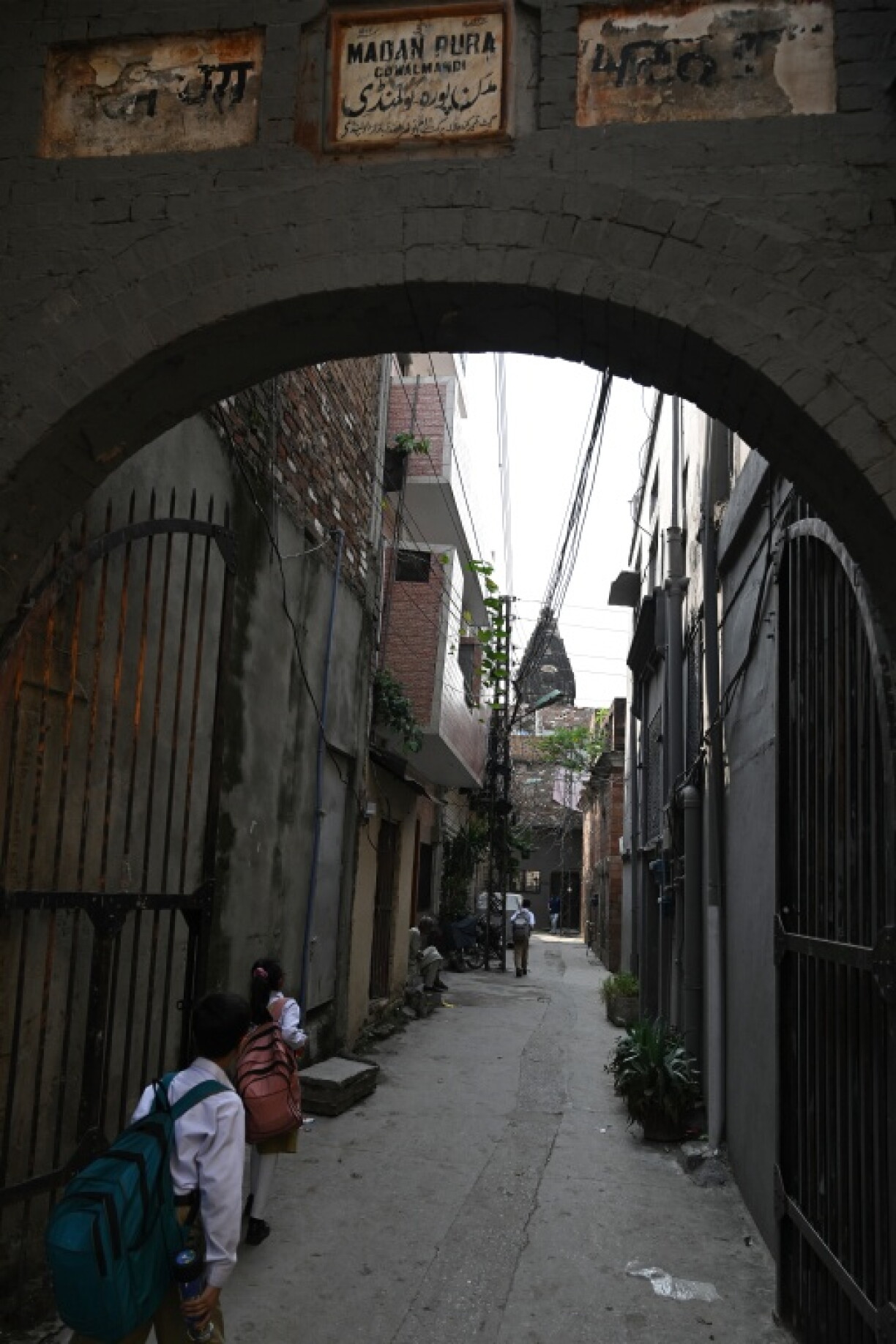
Washing swaying on a line outside betrays the temple's present use as a home. The area surrounding the structure has become a popular space to park motorcycles.
Many historic Hindu places of worship have fallen into disrepair. In addition to residences, they have also been repurposed as warehouses and schools.
"When the housing shortage became very, very large, the government started allotting a lot of these temples to these families as houses," Tauseef said.
The domed Kalyan Das Temple, built in the 19th century, now stands inside the Qandeel school for visually impaired children. On its walls, detailed carvings are still visible.
Pervaiz Akhtar, the school's principal, said there was a clear educational and cultural benefit for students by being exposed to Rawalpindi's religious past.
"For the young generation, it's important in the sense that they come to know what the mode of worship in that religion was, what their buildings were like," he said.
"As Muslims, we respect all places of worship. So, in that spirit, we show respect to this place as well," Akhtar added.
Rawalpindi's dwindling Hindu community still hopes life can be returned to their abandoned temples.
Following the demolition of the Babri mosque in India in 1992, retaliatory riots swept across Pakistan, with mobs attacking Hindu places of worship, including several temples in Rawalpindi.
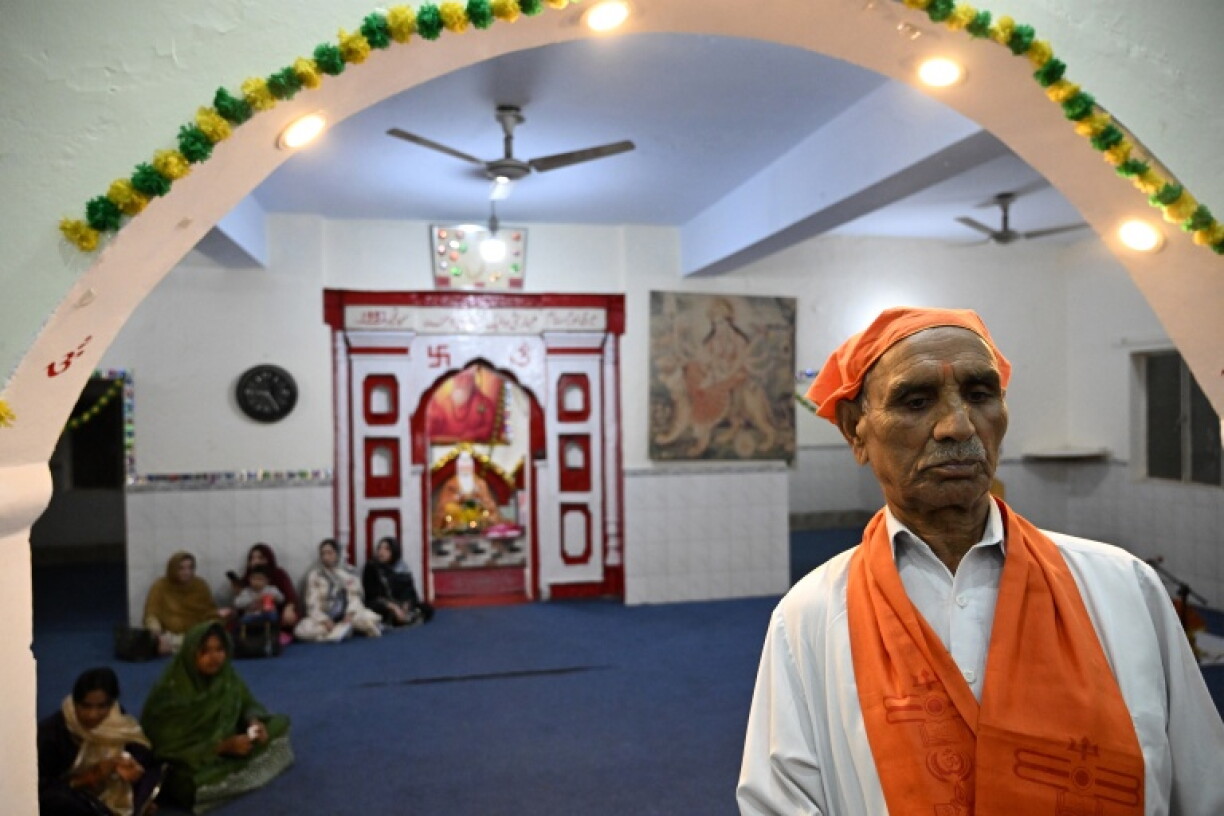
Maharishi Valmiki Temple was among those targeted, losing its spire before later being renovated and reopened.
Speaking of the disused Hindu shrines in Rawalpindi, Mir Chand Khokhar, a 74-year-old priest at the temple, said: "If the government gives them to us, we can make them functional too."
"It reminds us of a very different time, of a much more tolerant time in Rawalpindi," Tauseef said. "We fail to recognise that the other was once our brother."
"These places could become places of storytelling, could become places that raise questions, but also give us answers, and could build empathy in a time when South Asia very, very direly needs this."
bbs/csp/lga