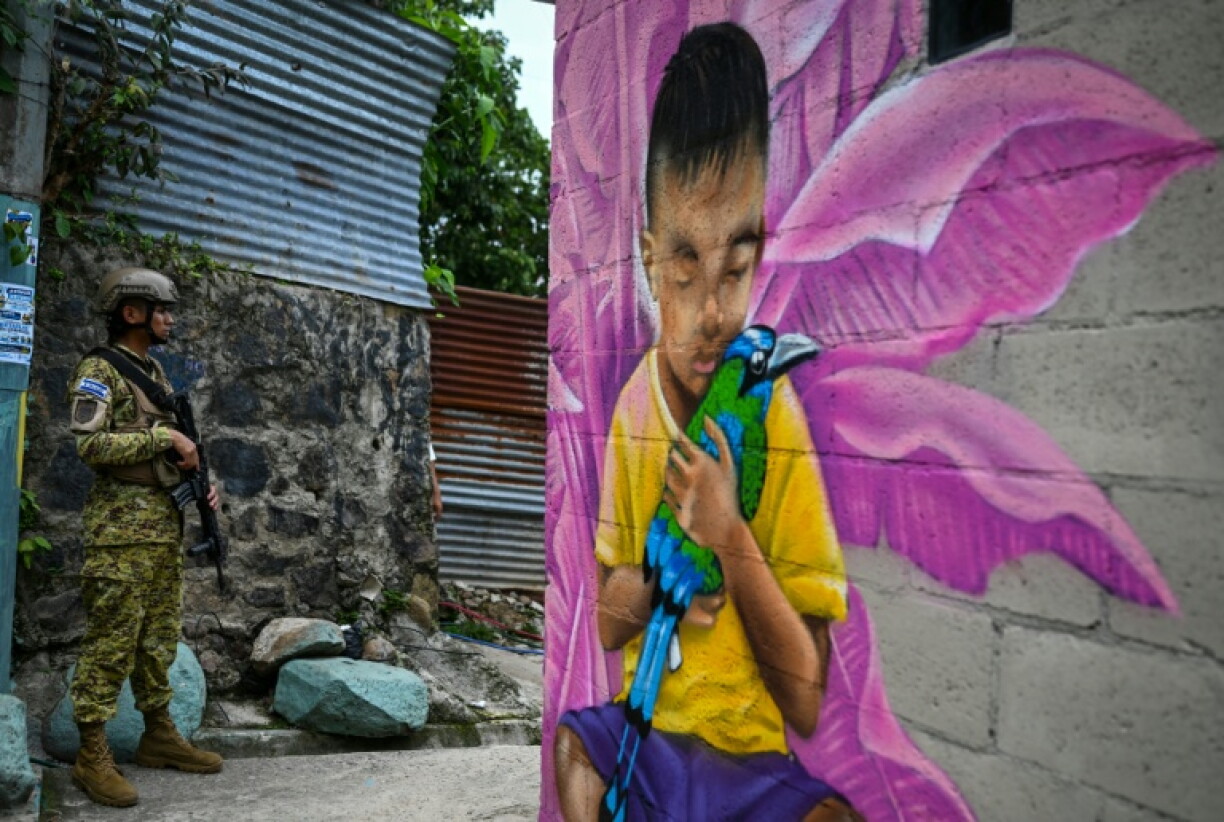
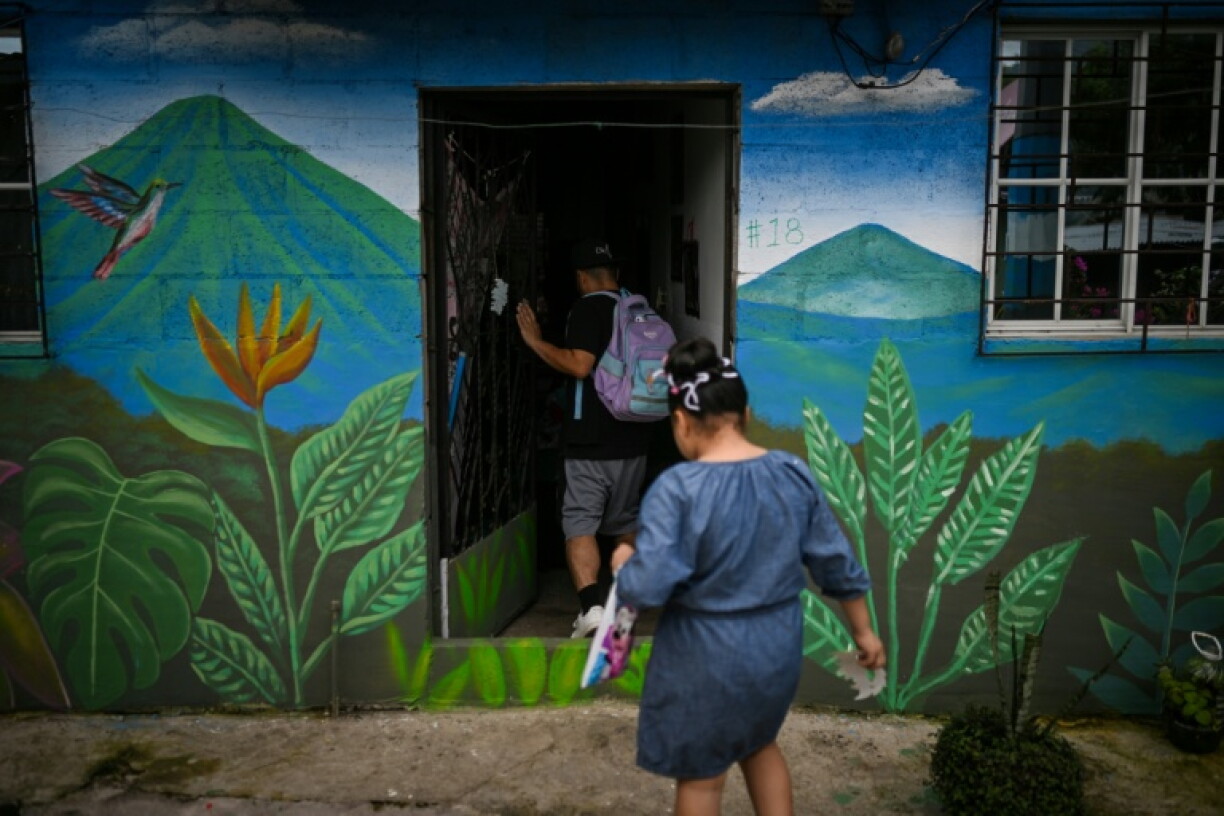
In El Salvador, walls that were once plastered with gang graffiti now feature tableaus of birds, flowers and landscapes, as artists reclaim public spaces from vanquished crime gangs.
A few years ago, Colonia 10 de Octubre district in the town of San Marcos, about 10 kilometers (six miles) from the capital San Salvador, was a no-go zone.
Only people given the nod by the brutal Mara Salvatrucha (MS-13) gang dared to enter this warren of small houses, where bodies of murder victims were dumped on the street and extortion was rife.
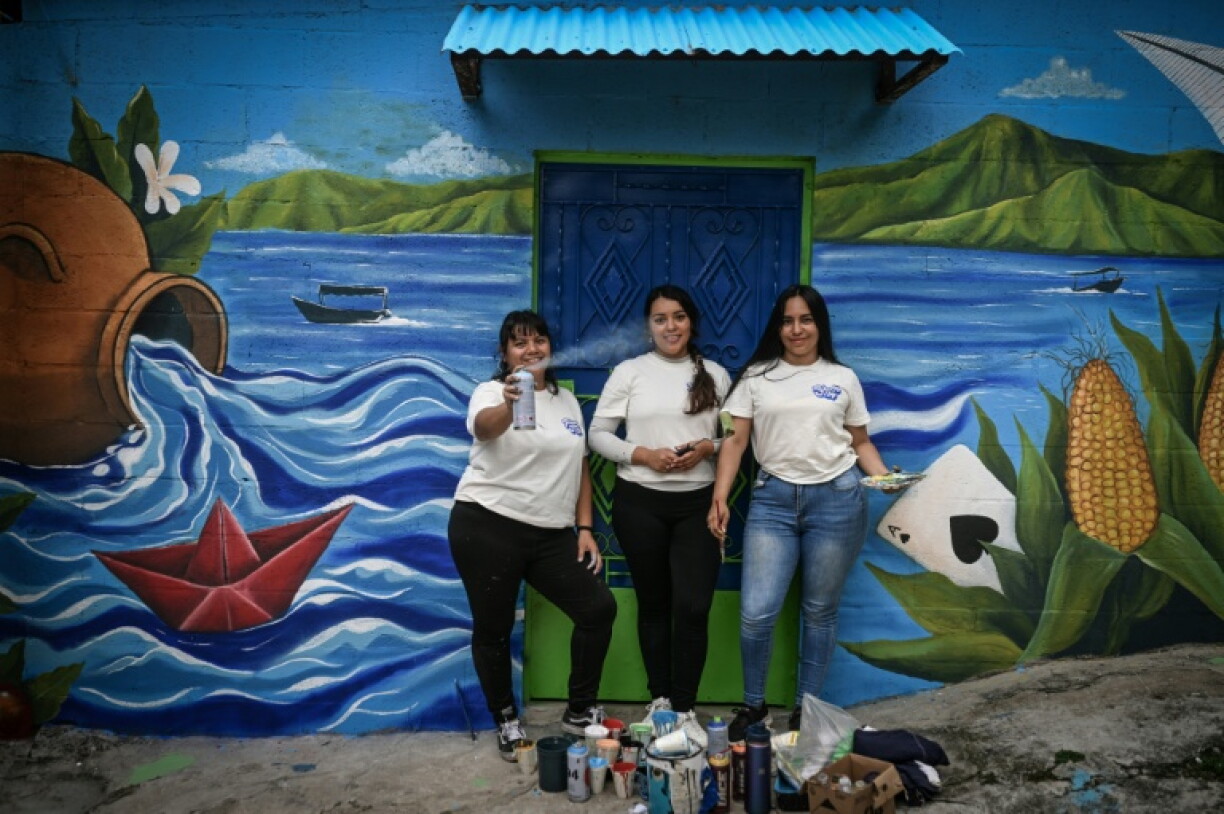
Armed with spray cans and paintbrushes, Patricia Vega, Marcela Alvarenga, and Elizabeth Guardado are giving a makeover to one of the many communities where President Nayib Bukele has cracked down on the country's "pandillas" (gangs) since 2022.
The women, two of whom teach art, were invited to help reinvent the district by a collective that promotes social inclusion through urban art.
Vega told AFP she grew up in fear of places like Colonia 10 de Octubre, named after the date of a 1986 earthquake that killed approximately 1,500 people in El Salvador, because of their brutal turf wars and violence against women.
MS-13 and its arch-rival Barrio 18 controlled 80 percent of El Salvador's territory, according to official figures, before being dismantled in Bukele's crackdown, which NGOs have denounced for serious human rights violations.
In October 2024, 10 de Octubre was locked down by police in a major anti-gang operation that resulted in hundreds of arrests.
Since then, the area has been under constant police and military patrol.
"The mural represents a before and after," said Alvarenga, 27.
On one of the neighborhood's staircases, Guardado rolls green paint over a faded wall where the word "Hollywood" is still visible.
Hollywood was the name of the MS-13 cell that held the community in a vice-grip.
In a sign of the fear that still persists in former gang hotspots, several residents stopped to admire the murals but refused to speak with AFP, for fear of being identified by the gang "remnants" they say still live nearby.
A woman whose home was daubed with graffiti showed quiet satisfaction as Guardado painted over it.
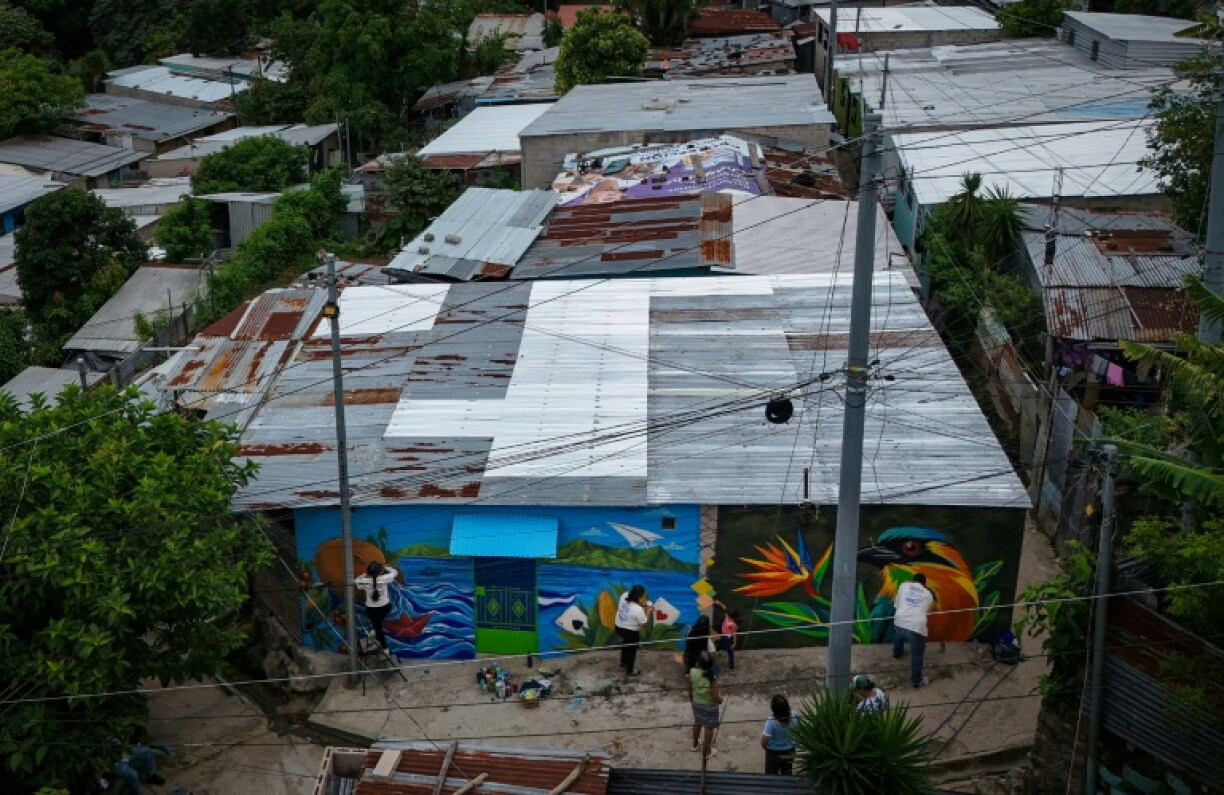
The three artists, who live in Mejicanos, a nearby town that was also once plagued by gangs, see their mission as helping El Salvador turn the page on a dark chapter in its history.
Guardado said they also aim to empower women by showing them they can be a "beacon for others."
mp/mis/cb/mdo