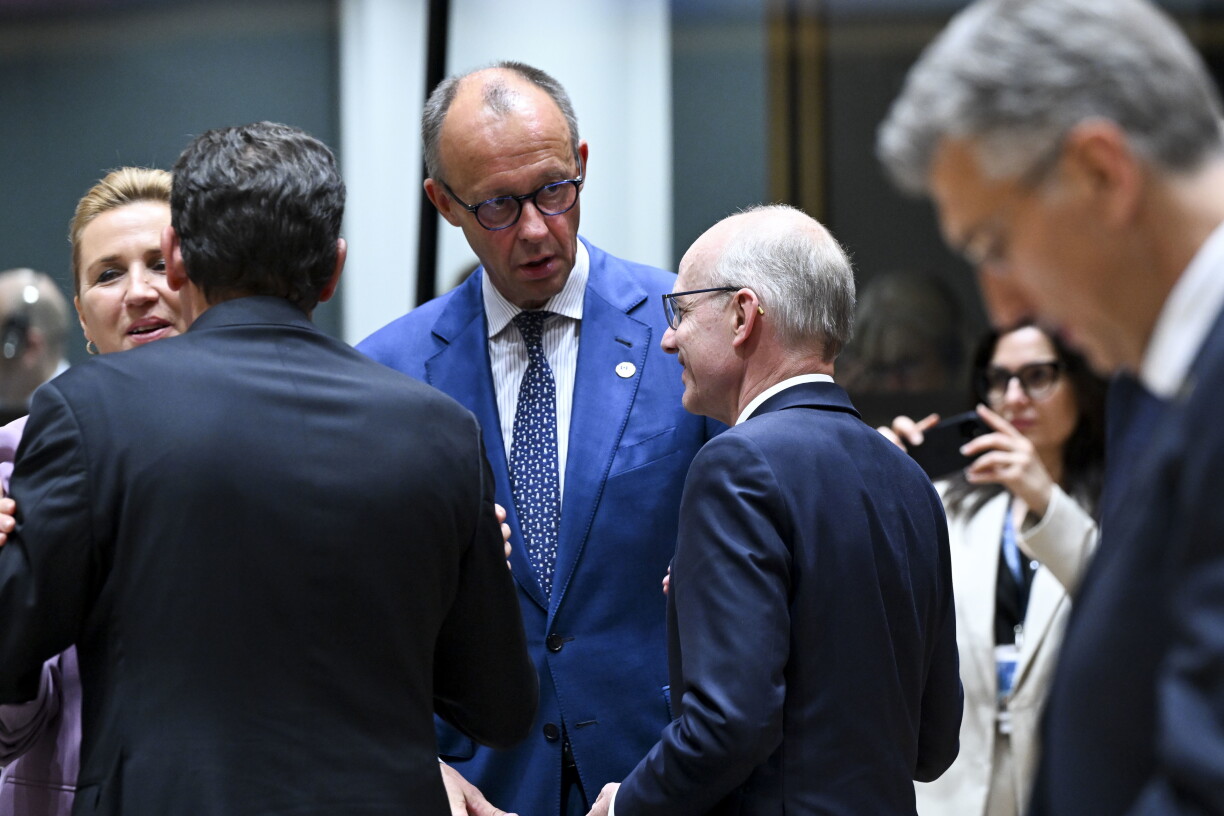
EU heads of state and government sat down together at 6pm on Thursday for a marathon two days of discussions under Council president António Costa.
On the first day of the meeting on Thursday, discussions with and about Ukraine were held. Ukrainian President Zelensky was also present in person to exchange views with his European partners on new credit financing, in the hope of ensuring progress now that Hungary will no longer veto this with new Prime Minister Peter Magyar at the helm. Ukraine's potential for EU membership is also due for discussion.
As for Russia sanctions, the 27 EU members seem to agree that the sanctions should only be extended every 12 months, and not, as before, every six months.
The fact that Council President António Costa has sought contact with the Kremlin has also been the subject of much discussion in recent days. This has not occurred at this level since the conflict began. It also break with the EU's previous line of not talking to Russia.
Luxembourg Prime Minister Luc Frieden said this upon his arrival at the summit: "Before talking to Russia, you naturally have to have a common position. It's not just about whether Mr. or Mrs. X or Y talks to Russia on behalf of Europe. First, we have to redefine our position for possible negotiations. I don't think we're at that stage yet. The fact that one or the other wants to establish a line of communication doesn't fundamentally bother me. We weren't informed about it. But these are certainly not negotiations. And they have to be well prepared first."
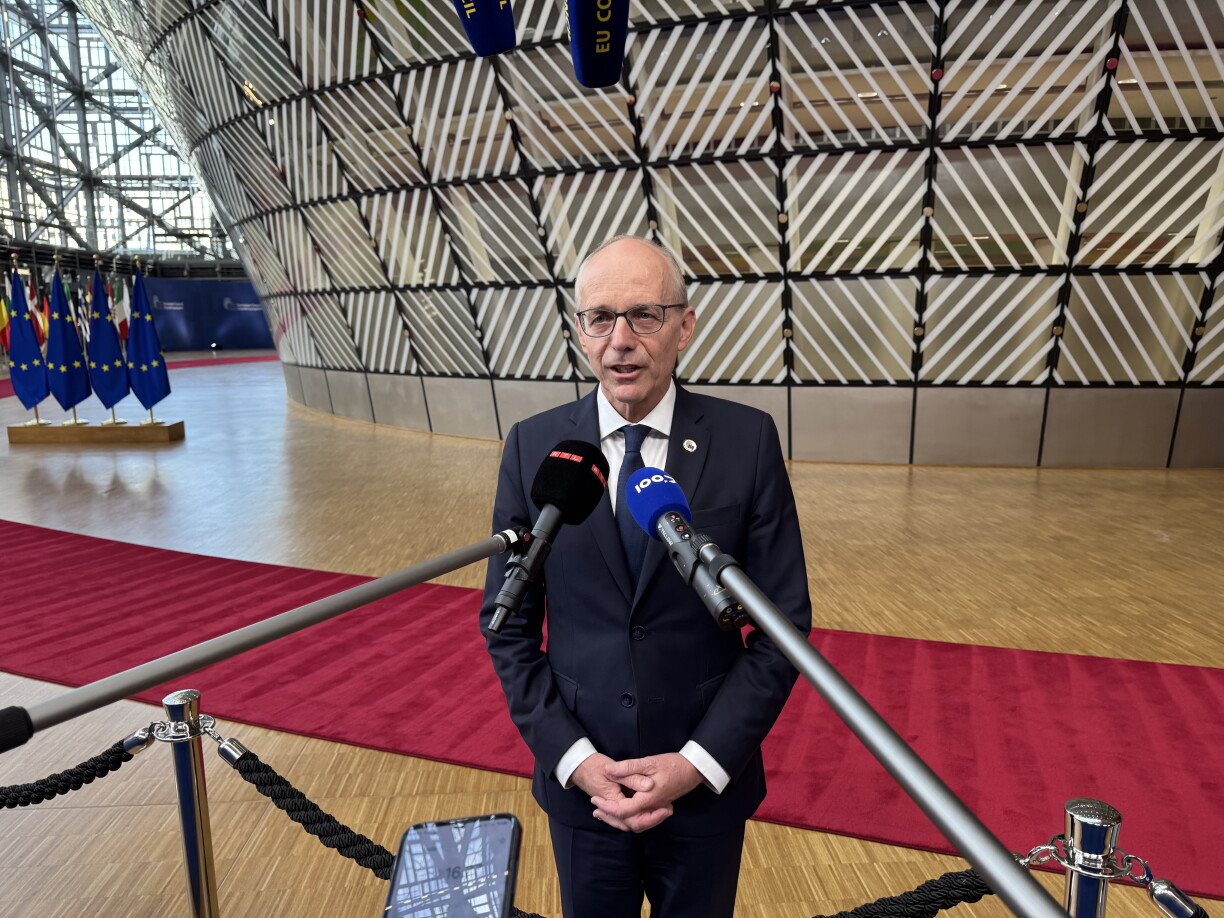
On Wednesday, the United States and Iran signed a framework agreement. Any deal that brings the war to an end would be welcomed, the Prime Minister said.
"The agreement is to be welcomed, that there is now a ceasefire, that there is a roadmap for the next two months. And it is obviously relevant to us that Iran should not access nuclear weapons. That has always been our position, it is not new. And of course we also have an interest in restoring the energy supply from that region again, so that prices stabilise and go down again."
When asked how Luxembourg could participate in peace initiatives in the Middle East, the Prime Minister admits that the Grand Duchy's resources are limited. Satellite capabilities could be useful, but this would have to be judged by military experts.
At a dinner, the 27 heads of state and government talked about what is officially known as "macroeconomic inequalities" . Behind the scenes, however, this means that they are discussing new avenues to see how to reduce the trade deficit with China , as a result of Beijing's unfair trade practices. Here, the heads of state and government gave the European Commission the task of developing new instruments to better limit these unfair practices.
It is important to have good relations with partners around the world, Frieden said. But Europe's interests, including in industry, must continue to be protected. "That is why we have to talk to all partners in the world and always make sure that we have fair trade. If there are imbalances, we have to address them in a respectful way and see if we can take measures to regulate one or another product in such a way that it does not lead to job losses in Europe. And that is our approach, not only towards China, but also towards other trading partners."
Finally, the negotiations on Friday will discuss the budget that will be made available to the EU from 2028-2034. Member states' views on this can differ strongly. Costa has set himself the ambitious goal of finding an agreement by the end of the year.
For Frieden, it is important to find a balance. Budgets are always difficult, Europe must make progress in important areas such as research and competitiveness and therefore provide itself with the necessary means. At the same time, subjects such as agricultural policy are also important, the Prime Minister concluded.