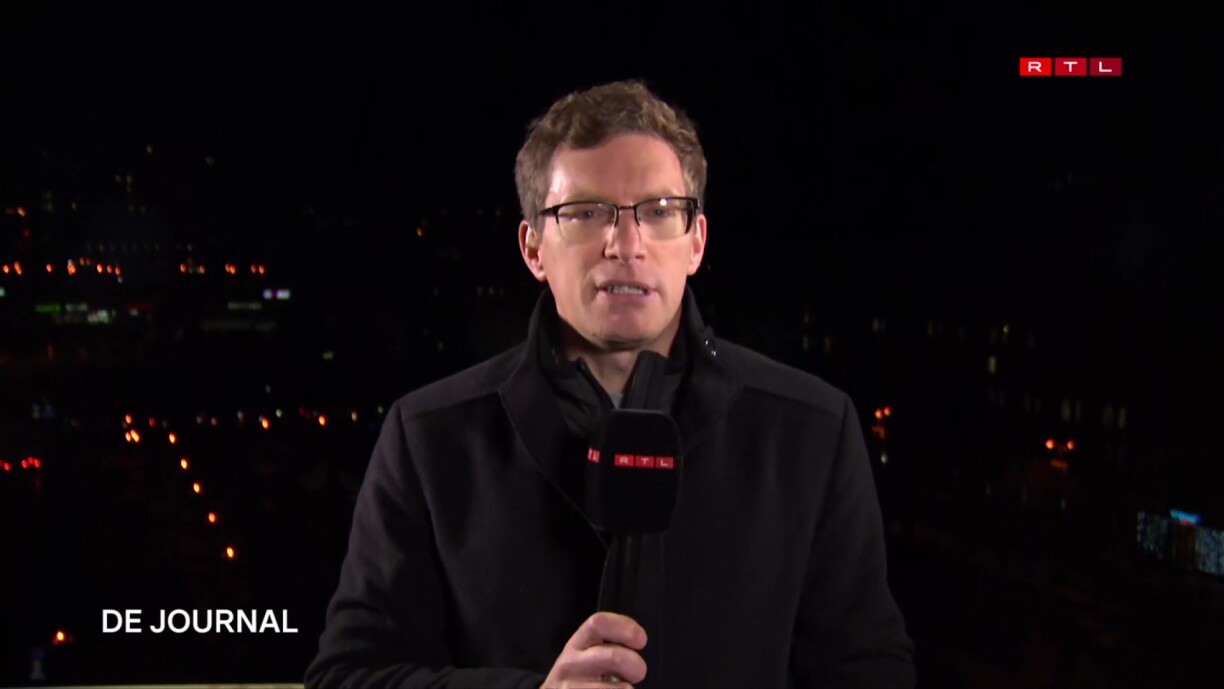
At first, there was hope that the war would not last long. Four years on, one can still feel the resilience of Ukrainians despite the front lines having become deeply entrenched, reflects RTL foreign correspondent Philip Crowther. A sentiment reflected in Ukrainian president Voloymyr Zelenskyy.
"He repeatedly stresses in video messages, press conferences, and [on Tuesday in Kyiv] that Ukrainians should be proud of what they have achieved as a nation", Crowther explained. Naturally, Zelenskyy had also paid tribute to soldiers and civilians killed in the war, but he also vowed that what Ukraine has achieved so far would not be abandoned.
Currently, Ukraine controls around 80% of its territory, while Russia occupies roughly 20%. However, Ukraine wants it all back, explains Crowther; it remains a clear promise of the government.
Although Russia is increasingly targeting critical infrastructure in harsh winter conditions – what Kyiv describes as an "energy terror" campaign –, Crowther senses "renewed energy" among Ukrainians.
When asked what it is like to witness such strikes on infrastructure, the journalist explains: "Russian strikes on Ukraine's power grid continue almost every evening. People feel it very directly. It's cold, it's difficult; and yet there that new energy."
In his conversations with residents, one message stands out in particular: they want peace and for this war to end. "First a ceasefire, and of course a lasting peace", he adds. "But at the same time, they are not willing to give up territory. They want all Ukrainian land back and all Russian troops out."
Last week, new US-mediated peace talks held in Geneva ended without results once again. Russia maintains its demand that Kyiv withdraw troops from the Donbas, something Ukraine categorically refuses.
How is an agreement ever reached then? Crowther's simple answer is that at the moment, it cannot. "The two sides are just too far apart."
But, Crowther stresses, that does not exclude further rounds of negotiations in the future. Nonetheless, he is not anticipating major breakthroughs, regardless of whether the talks take place in Switzerland, Abu Dhabi, or elsewhere. Notably, neither Zelenskyy nor Putin have participated directly, "there is no good reason for them to attend".
"Their positions remain exactly as they were at the beginning of the war four years ago. Russia seeks full control of the Donbas region; Ukraine insists on the complete withdrawal of Russian forces, including from territories occupied since 2014, such as Crimea."
Negotiations might continue, and expectations remain low, but one figure that could potentially shift the dynamics is US President Donald Trump.
"He wants an agreement before the summer," the journalist notes. With midterm elections approaching in the US, Trump would like to announce that he succeeded in bringing both sides together and secured some kind of deal.
Whether this is realistic remains unclear, it seems unlikely to Crowther. "But with sufficient political pressure from Washington, something could still happen."
President Zelenskyy has repeatedly sought to involve European allies more closely in peace efforts. While Putin continues to reject European participation, EU leaders once again showed support in Kyiv this week:
European Commission President Ursula von der Leyen and European Council President António Costa visited the Ukrainian capital in what was described a highly symbolic show of solidarity.
The visit, however, fell short of expectations as EU leaders had hoped to announce a 20th sanctions package against Russia, as well as a substantial new financial support package for Ukraine. No agreement was reached, largely due to opposition from Hungary and Slovakia.
It is a difficult moment for Ukraine, Crowther notes, and the EU is not displaying the unity Kyiv is hoping for.
And this comes at a time when confidence in the US has also shifted. On the war's first anniversary, then-US President Joe Biden travelled to Kyiv – much has changed since then.
While not only trust in the US has diminished, disappointment in the EU is also going up, as internal divisions over Ukraine become more visible.





