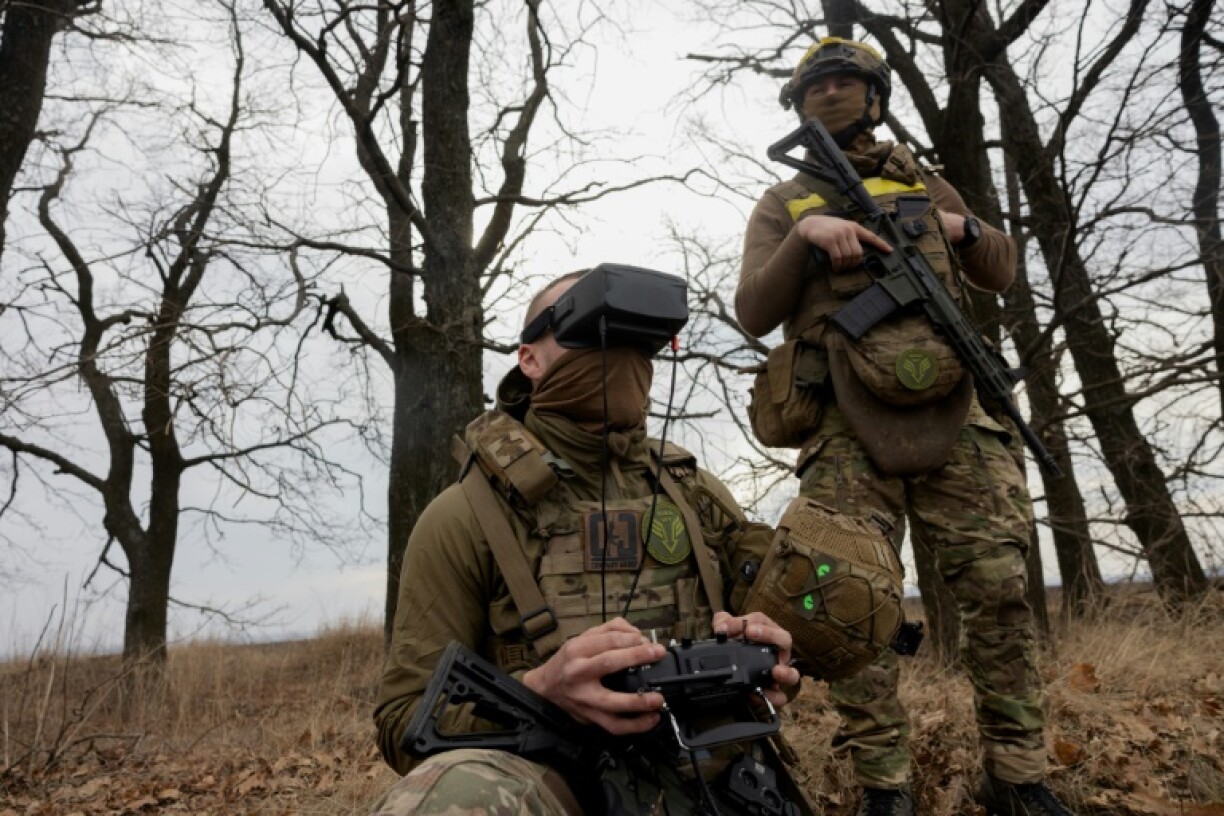
Tens of thousands of drones are deployed in Ukraine every day to observe enemy troop movements, guide artillery, identify targets and deliver explosives. For many analysts, 2025 was the year of the drone.
At the start of the war, drones were primarily used for surveillance. Today, virtually every brigade operates its own combat drone unit. Small detachments use them to detect enemy movements, to which combat drones can then respond.
Both along the front line and deeper behind enemy positions, first-person-view (FPV) drones have become essential; conventional combat aircraft have become increasingly vulnerable due to dense air defence systems, making drones a cheaper and more flexible alternative. These devices can carry explosives over distances of up to 20 kilometres to strike targets such as tanks or armoured vehicles.
According to Benjamin Wolba from the European Defence Tech Hub (EDTH), drones have "fundamentally changed the cost equation of war". Despite their cost ranging only from a few hundreds to a thousand euros, they are capable of destroying expensive and difficult-to-replace equipment including tanks, fighter jets, and helicopters. Military analysts estimate that FPV drones are now responsible for between 70% to 80% of battlefield losses, with artillery, infantry weapons, and mines accounting for the rest.
This shift has also changed military tactics: Wolba argues that large troop formations are now considered highly vulnerable, as they are easy targets for drone operators, citing the example of the North Korean military mission in Kursk. Instead, Ukrainian and Russian soldiers now move in smaller groups of two or three to reduce visibility and limit casualties if struck. "When they do hit, there are two to three casualties, not 50."
Electronic warfare has also become central: Traditional analogue drones can often be jammed or redirected by enemy interference. While both Russia and Ukraine are developing digital systems, they have also turned to fire optic technology as an "ingenius, cheap, and effective solution". Such drones are connected to operators by fibre optic cables, sometimes extending up to 50 kilometres, allowing them to maintain control without relying on radio communication that can be jammed. The only limitation is the physical risk of the cable breaking or snagging.
Another aspect in the new form of warfare is the so-called interceptor drone – designed to intercept enemy drones and neutralise them while still in the air, before they reach their target. Cost also plays a considerable role here because interceptors can be deployed much faster and more flexibly, and are considerably cheaper than rockets from conventional air defence systems.
Drone warfare has also extended beyond Ukraine, with Russian drones reportedly deployed across parts of Europe last year, largely as a show of the Kremlin's capability. Wolba says these incursions have both practical and psychological consequences. Drones entering restricted airspace have disrupted operations at airports including those in Munich, Copenhagen, and Brussels, while also raising public concerns over whether governments can adequately protect civilian infrastructure.
The next phase of drone warfare is already being developed in Ukraine, with systems incorporating artificial intelligence. These next-generation drones can identify and engage targets autonomously, removing the need for constant communication with a human operator.
As military experts increasingly note, the most effective defence against drones may now be drones themselves, many of which cost less than a single artillery shell.





