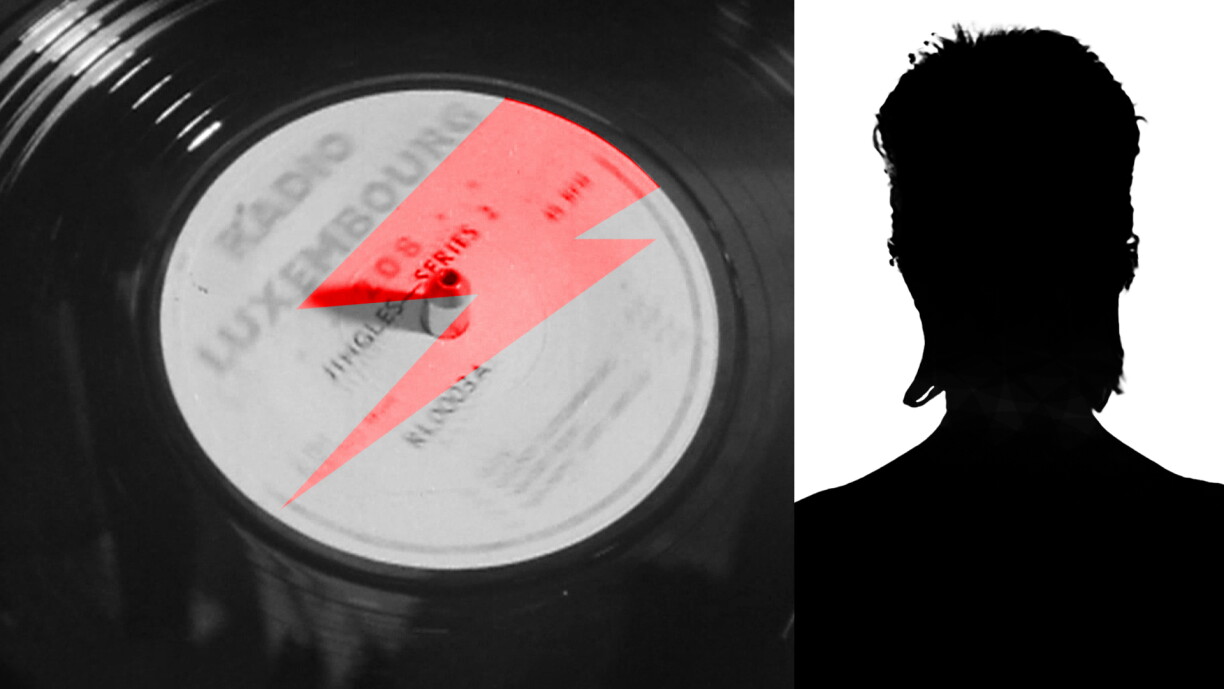
David Bowie, who died on 10 January 2016, remains one of the most influential figures in pop music. He rose to fame during the Swinging London era and released his final album, Blackstar, just days before his death. Throughout his career, the British artist was known for constantly reinventing himself and often surprising even his most devoted fans.
Throughout his career, Bowie sought inspiration in new places and forged collaborations across continents. His classic albums were recorded in some of the world’s most legendary studios: Trident in London for The Rise and Fall of Ziggy Stardust in 1972, Sigma Sound in Philadelphia for Young Americans in 1974, the Château d'Hérouville in France for part of Low in 1976, Hansa in Berlin for Heroes in 1977, and Power Station in New York for Let’s Dance in 1982.
Yet, long before achieving global fame, when the young David Jones was still dreaming of a career in music in the 1960s, his first experiences in a recording studio took place not in these legendary locations, but in a modest London facility. This early experience would prove to be an important first step in his artistic journey.
As revealed in a rare 2003 interview for CBS’s 60 Minutes, broadcast for the first time in 2016 after being released by Paramount, Bowie’s earliest forays into recording happened at the London studios of Radio Luxembourg, one of Europe's most influential radio stations.
Bowie looked back on those early experiments, explaining that his first encounter with a recording studio happened at Radio Luxembourg in London. A friend who had access to the building's night key allowed the young musicians to enter after hours and secretly record a demo. Bowie recalled that they eventually recorded enough material to nearly fill an entire album.
The experience left a lasting impression on Bowie, who stated, "it really fired me up about the recording process. I loved it so much".
Years later, Bowie returned to the Radio Luxembourg studio in London on 25 February 1971 to record the very first version of Moonage Daydream. This track became one of the standout songs on his breakthrough album, The Rise and Fall of Ziggy Stardust (1972). The original version was released as a single under the short-lived Arnold Corns project, a collaboration between Bowie and designer Freddie Burretti.





