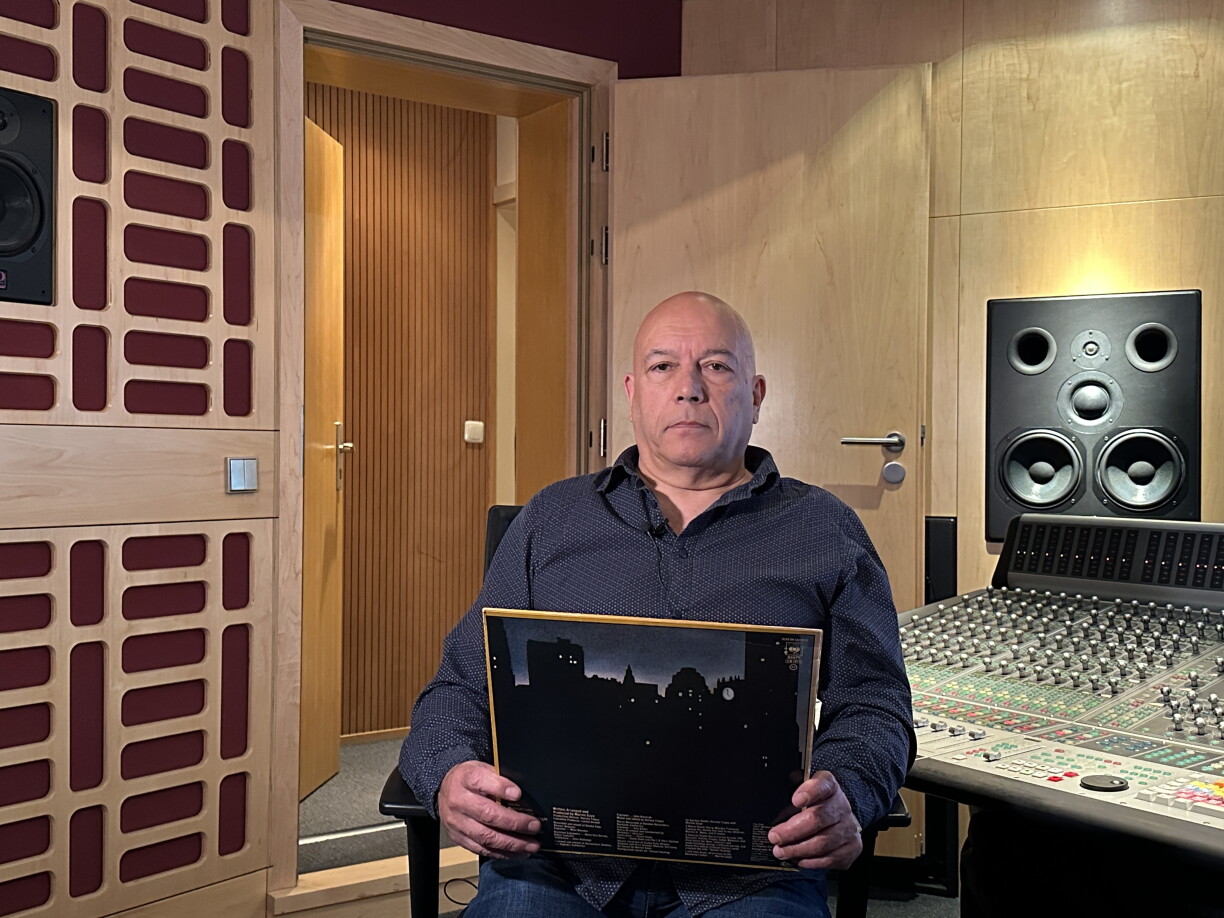
For Butcher, music was there from the beginning. His father, a music arranger for a London production company, took him to the studio as a young teenager, where for the first time Butcher saw a recording engineer at work.
The memory has stayed with him. "I got up, walked up, stood behind him, watched him. Turned around and said to my father, I want to do that."
The big leap came when the company his father worked for launched Morgan Studios – prompting Butcher to drop out of school and train as a tape operator in an assistant engineer position.
While sound engineering may be thought of as a technical profession, the reality runs deeper. "It's mostly artistic. It's mostly about working with the musicians. The technical thing has to be there, but it has to be transparent."
The job, he says, is as much about people as it is about sound – making musicians comfortable, defusing tension, handling "all the things that can happen in rock and roll."
Among Butcher's first high-profile clients were Black Sabbath. Their collaboration earned him production credits on both Bloody Sabbath and Sabotage, the fifth and sixth studio albums of the heavy metal pioneers.
Reflecting on Ozzy Osbourne and a band synonymous with excess, Butcher is candid: yes, "there were drugs involved" – but one of the reasons they liked him, he says, was precisely because he didn't partake himself.
In the studio, though, it was not actually all that bad. The excess, particularly around Osbourne, would get worse in the years that followed. But Butcher's memories of the sessions are fond. There was plenty of fun – but when it came to the actual work, the band were professionals. "When we worked we really did work – maybe it was only two hours a day, but we really did work."
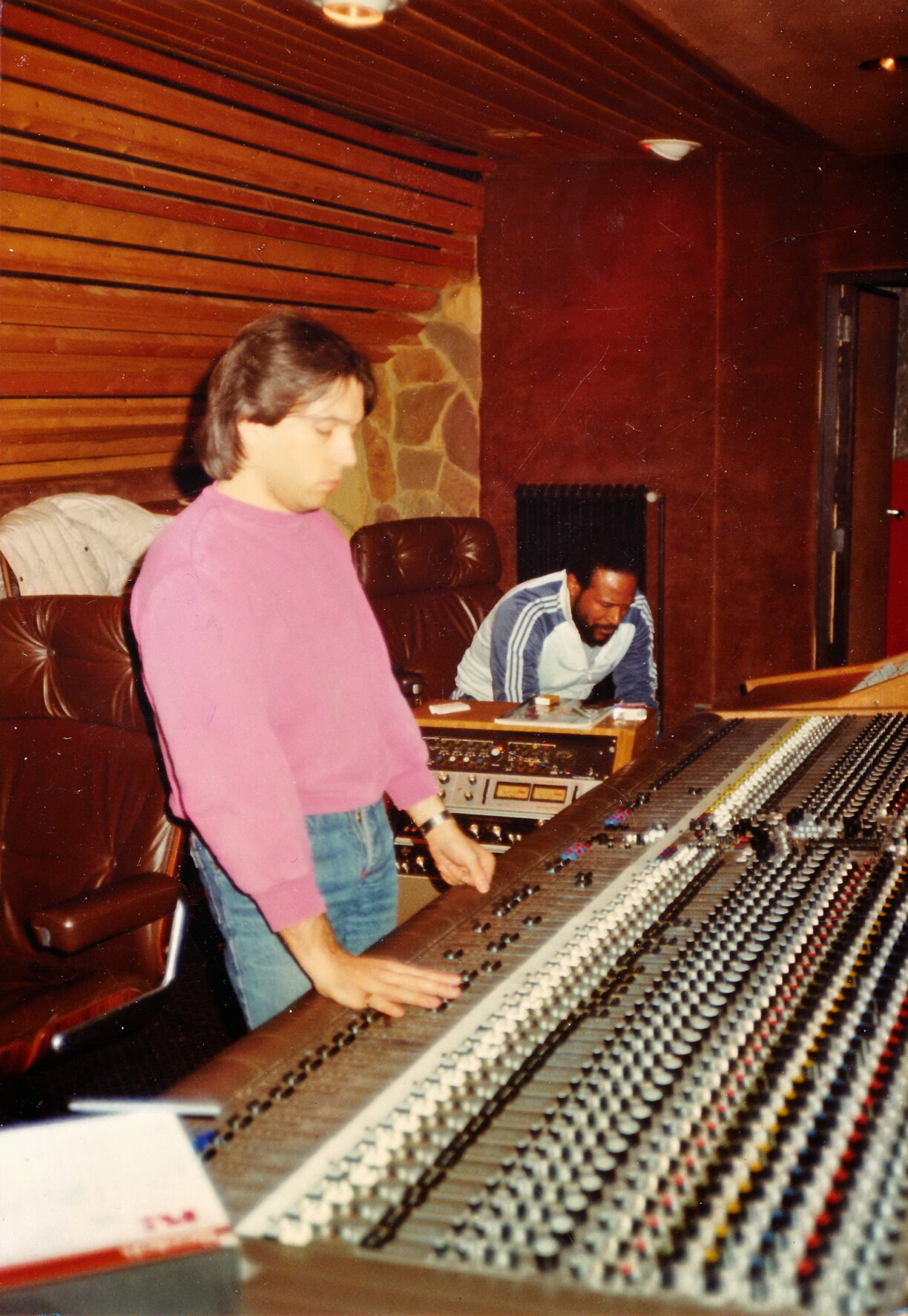
In the early 1980s he left Morgan to work at Studio Katy in Ohain, a small town in Walloon Brabant. It was there that he recorded the last album of US soul legend Marvin Gaye – Midnight Love. Gaye had temporarily relocated to the Belgian coastal town of Ostend in early 1981, following advice from his promoter.
The connection came through the late Belgian singer Arno. Arno, who was from Ostend, was asked by Gaye's promoter, also from Belgium – if he knew a good sound engineer. "I got a phone call: 'Hello, this is Marvin Gaye's manager'. I did wonder why Marvin Gaye's manager had a Flemish accent. But it was true – and that is how I began working with him."
When Mike began working with Marvin Gaye, other people warned him. Even the soul singer's own musicians had said that Gaye was a difficult character. "Oh, you are really going to suffer", they told him at the time. But funnily enough, he had no difficulties whatsoever working with the singer, explains Mike: "It was hard work, it was ten hours a day sometimes. I never had a bad feeling with him or anything."
Mike spent almost a year in the studio working on the album, the sessions ran from December 1981 to October 1982. But in the end, Gaye would thank Mike for his work in a very special way, by mentioning him on the album's last track. "That is my little claim to fame."
For Butcher, the album's standout moment came naturally. Unlike other artists, Gaye had recorded the whole album without guide vocals – "so you kind of already know the song, even if they don't keep it, it's just an idea." But Gaye went further: he laid down only the backing tracks. Then, one day, he walked into the studio and started singing. "As soon as he started singing, it all made sense."
Over the years Butcher has moved between roles – recording engineer, producer, sometimes both. As a producer he had considerable artistic input; on Arno's A la Française, for instance, he was deeply involved in shaping the record. But he has little patience for producers who impose their own vision on an artist. When he produces, he says, the artist is the co-producer – it is their music, and his job is to serve it, not redirect it.
The craft itself has changed around him. Recordings that were once cut to tape are now entirely digital – and with that shift came a change in pace, and in the art itself. Albums from the 70s, 80s and early 90s, Butcher reckons, could not have been made the way they were made today. Repeated takes forced arrangements to evolve in the process. Today, everything moves faster – sometimes too fast. Editing has become almost frictionless – everything can be moved, corrected, repositioned – and that too shapes the art, as musicians adapt to the tools available, "which is also fine."
On balance, recordings used to take much longer; today, more of the time is spent on mixing.
What makes a good album? Butcher has no simple answer. He listens widely – a devotee of Steely Dan, both for their sound and their songwriting, as well as Nirvana. Pop radio holds its appeal too. But the one thing he will say with confidence: "I am not a music snob. That is the only thing I can claim for myself. If music makes someone happy, then it is fine. That is my philosophy."
In Luxembourg, Butcher works predominantly on film projects – driven largely by funding. While budgets in the music industry continue to shrink, a film commission can mean up to three months of steady work.
The local scene has thrown up names that have genuinely impressed him. In the late 1990s and early 2000s he worked closely with Serge Tonnar and Jang Linster. A collaboration with Fausti never came about, despite the two knowing each other well.
More recently he has worked with singer Nelly Pereira – someone who left a mark. "An absolutely fantastic singer" – "one of the best I have worked with in my life."