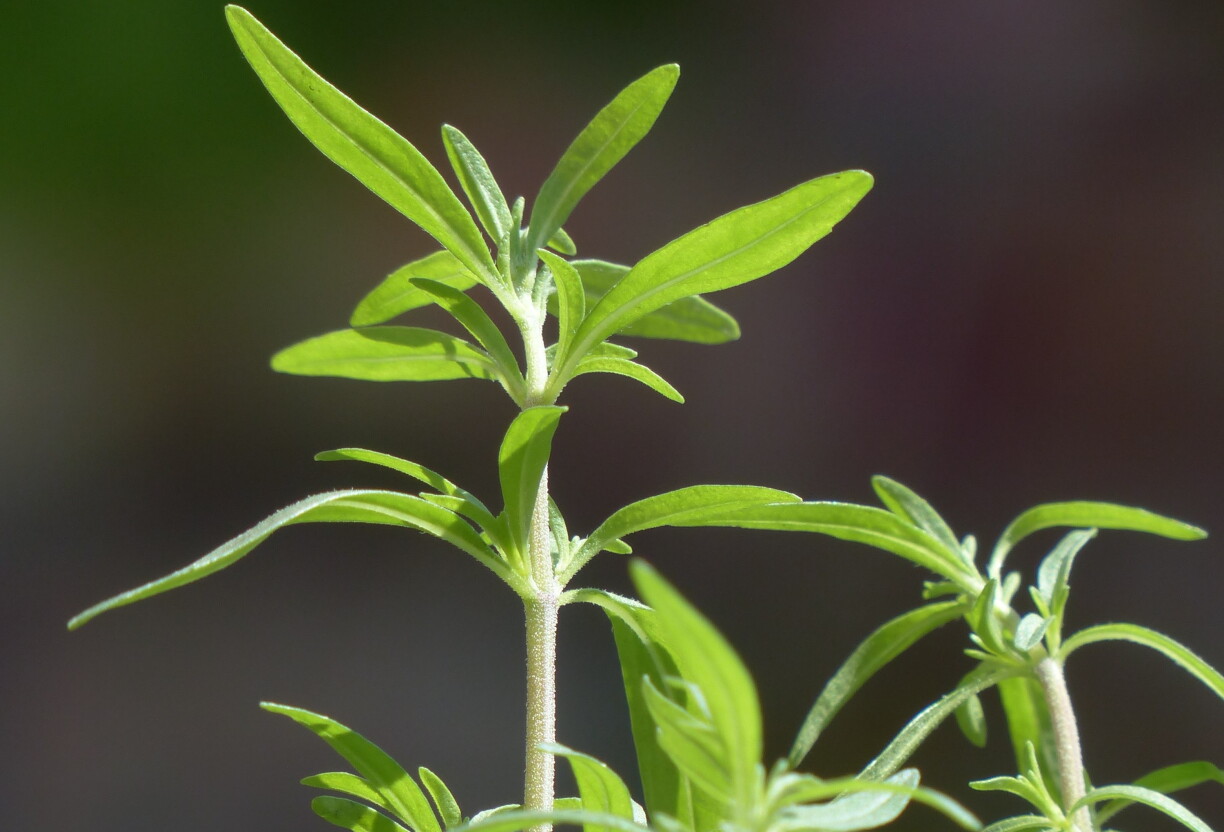
At first glance, summer savoury hardly stands out: small green leaves, tiny white, or pale pink flowers. Yet, once it goes into the pot, its warm and peppery aroma comes alive and truly transforms a dish.
There's a reason this herb bears its name. For generations, summer savoury has been a staple pairing with beans, valued not only for its flavour but also for the widespread belief that it makes beans easier to digest.
As chef Pit Wanderscheid explains, whether or not it actually aids digestion is a matter of debate, but summer savoury "pairs beautifully with all types of legumes, from lentil soups to hearty stews".
Here in Luxembourg, it's typically seen as a winter herb, but Wanderscheid sees that as a misconception. "To me, it's in the same category as thyme or rosemary", he says.
According to Wanderscheid, people even used to call the herb "the poor man's pepper", as true pepper was expensive at the time. Therefore, summer savoury was often used as a replacement because of its subtle peppery note, he said.
But its uses go far beyond beans. Summer savoury also enhances the taste of potatoes, mushrooms, courgettes, and vegetable ragouts. A few leaves can add a pleasing hint of spice to meat or sausage platters as well.
In Luxembourg, summer savoury is indispensable in classics like Judd mat Gaardebounen – smoked pork collar with broad beans –, particularly as a seasoning for broad beans, according to Wanderscheid. It features in Bouneschlupp (green-bean soup), French cassoulet, or as a key component of Herbes de Provence, he added.
When you are enjoying a grilled pork chop in summer, there is a good chance savoury is part of the mix, even if it's not immediately obvious, Wanderscheid said. Across the Atlantic in Québec, the herb stars in fèves au lard, a traditional dish of beans, maple syrup, and bacon, he explained.
Summer savoury has a long history stretching back to antiquity, when it was cultivated as a kitchen herb. Monastic gardens later adopted it, growing savoury not just for flavour, but for its medicinal qualities as well.
Wanderscheid said that like many herbs, summer savoury is prized for more than just its taste. It is thought to ease digestion and prevent the typical bloating associated with bean dishes, which is why it often appears in such recipes, he said.
He explained that the herb is also regarded as antiseptic, anti-inflammatory, and antispasmodic, which is helpful for stomach and intestinal discomfort, and even for coughs. A tea brewed from savoury can soothe the stomach and help relieve phlegm, according to Wanderscheid.
Today, summer savoury may not be the first herb that comes to mind, but those who grow it know it is a rewarding plant. It thrives in plenty of sunlight, does not need much water, and is best harvested just before it blooms, when its aroma is at its peak.





