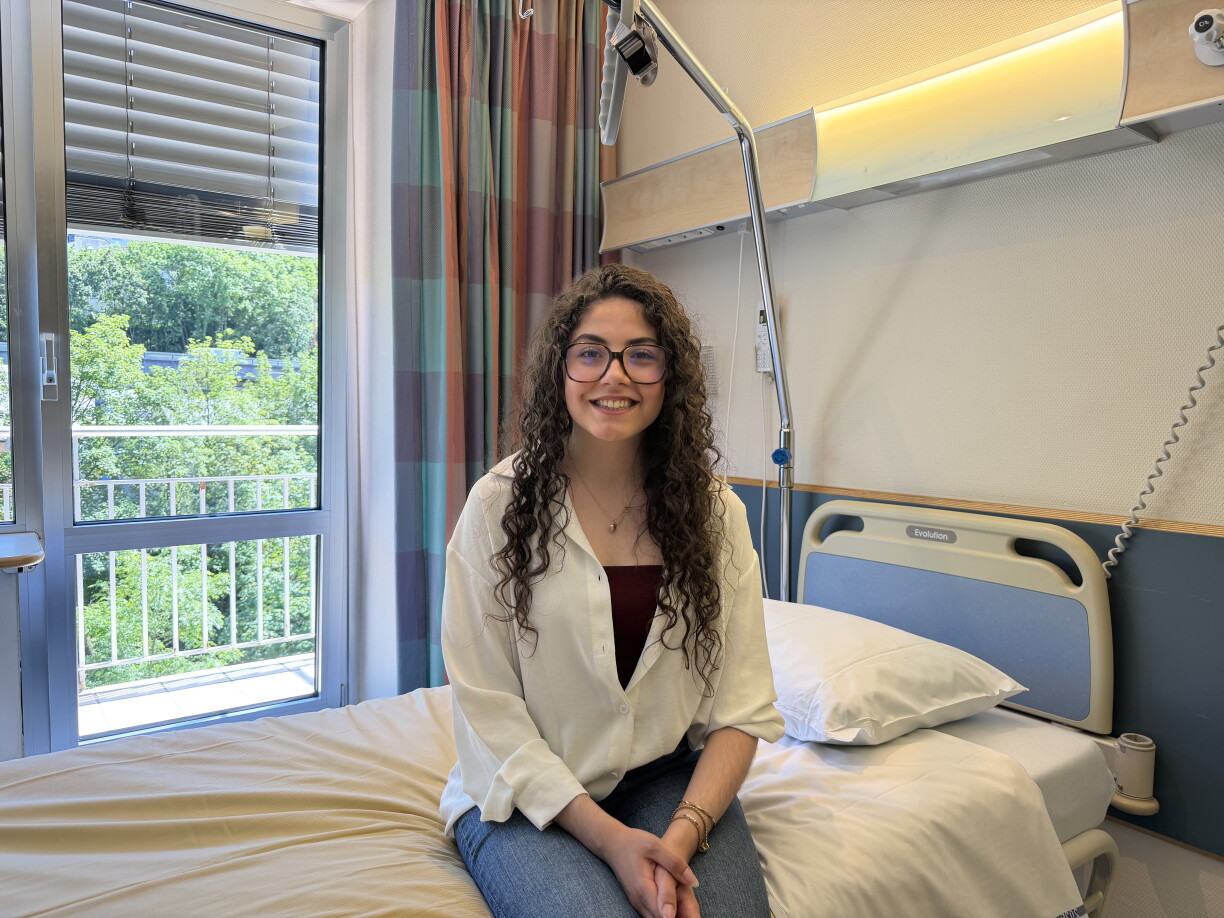
Lupus is a rare autoimmune disease that can be difficult to recognise, partly because its symptoms are not always visible. It often affects young people who otherwise appear healthy.
For Lupus Awareness Month, RTL accompanied 19-year-old Julie Cavaleiro during a visit to the Luxembourg Hospital Centre (CHL) in Eich, where she spoke with her doctor about living with the chronic condition.
For around a year, Cavaleiro has been seeing Dr Vital Da Silva every four weeks for check-ups. In her case, it all began with heart problems; numerous appointments with different doctors and countless tests resulted in a diagnosis for lupus.
The 19-year-old patient said the diagnosis came as a major shock, adding that she did not really know what lupus was and spent an entire week researching it. She often found references to unusual marks on the body and began checking herself, but found nothing, she said. At the time, she thought it was impossible that she had lupus.
That is precisely what makes the disease so often invisible. The immune system attacks the body instead of protecting it.
Dr Vital Da Silva specialises in autoimmune diseases. He explained that, fortunately, lupus does not always affect the same organs with the same severity. In some cases, the disease can be relatively mild, while in others it can be very aggressive. Symptoms therefore vary greatly from one patient to another, both in type and severity.
This makes it difficult for patients, almost 90% of whom are young women, to recognise the danger. It also makes lupus difficult for doctors to diagnose. According to Dr Da Silva, symptoms can appear throughout the body, including mouth ulcers, hair loss, and many other signs. The main symptom, however, is fatigue.
Cavaleiro knows this all too well, often feeling dizzy from one moment to the next, and also hair loss. Apart from that, however, she said she does not feel particularly restricted.
At school, she has to take things a little easier during sport because of her heart. For that reason, Dr Da Silva regularly listens to her heart during check-ups.
Cavaleiro will unfortunately have to live with lupus for the rest of her life. But she is not letting it defeat her, saying that it is possible to make sure the condition does not get completely out of control.
This is why medical follow-up is so important. If she continues to pay close attention to her lifestyle, with enough exercise and healthy eating, while also taking her medication and attending regular treatment appointments, she should be able to live well with lupus.
She is now also in contact with other patients, something she felt she had been missing shortly after her diagnosis.
Because rare diseases such as lupus are difficult to identify, but sometimes require rapid treatment, the CHL has set up a system to guide affected patients more effectively. This fast-track system can be accessed via the following email address: ern.reconnet@chl.lu.





