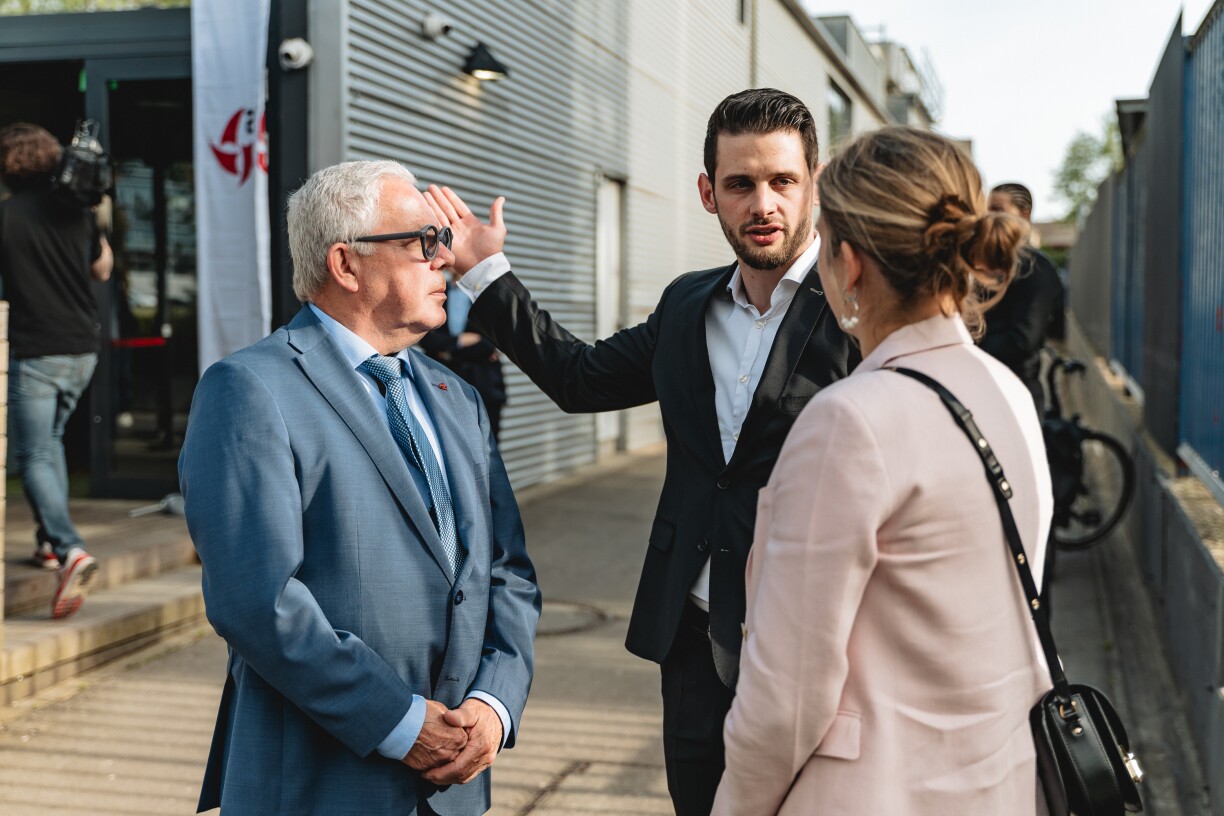
Around 140 journalists from print, radio, and audiovisual media came together to celebrate the Luxembourg Association of Professional Journalists' (ALJP) centenary. Political figures like Prime Minister and Media Minister Luc Frieden and delegated Media Minister Elisabeth Margue were also present. Alongside the official programme, the ALJP also opened an exhibition on 100 years of Luxembourg journalism.
Journalism has been in constant development in recent decades. The way traditional media operate and reach audiences has fundamentally changed.
Roger Infalt, former president of both the ALJP and the Press Council, warns that growing media scepticism is one of the defining challenges journalists now face. For Infalt, it is essential that journalists push back against this. "Back in those days, the prevailing view was that what appeared in the newspaper was true, and I think we still want to claim that today. But we face competition that sometimes portrays us as if we were the lying press."
Infalt also raised the question of access to information, which is now set to be enshrined in law after years of advocacy. For him, it is now the “home straight”, even if the current proposal is not fully developed as they would like: “The word press freedom will take on a whole new meaning.”
The ALJP's current president, Sidney Wiltgen also commented on the draft legislation. He welcomed the legal framework in principle but struck a cautious note: "A text has now been put forward. We are not 100% satisfied with it, we are journalists, we always find something to criticise." He pointed in particular to exceptions that are broadly defined and vaguely worded, adding that how the final text will be implemented and will work in practice remains to be seen.
Wiltgen, who is a journalist at Tageblatt, also identified SLAPP lawsuits as one of the key challenges used to intimidate journalists, as well as the potential impact of artificial intelligence on the field. The full extent of its impact is still difficult to assess, but should not be underestimated.





