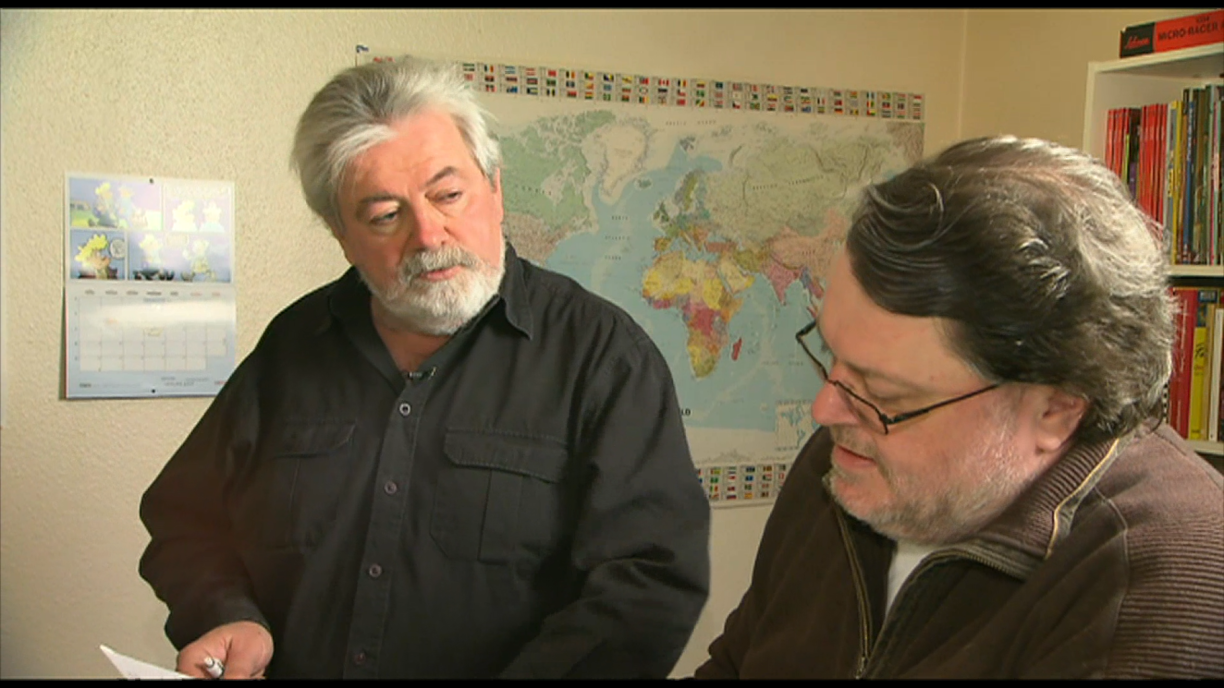
Writing had always been his thing, says Lucien Czuga. It had started at school, where he was always top of the class in languages. That had also earned him a certain privilege: while his classmates still had to work with the teacher, he was allowed to read the books he had brought along. If there was a problem, the teacher would ask him.
Lucien Czuga had also always been professionally involved in writing and languages. Barely out of secondary school, he was commissioned to write a guide to the European and international institutions in Europe, a project that took him across Europe and one he still remembers fondly today:
"You are fresh out of school, and you are immediately allowed to do exactly what you enjoy. In my case, this was writing about what you learned, and I also got to travel. I really love travelling and seeing new countries, new people and so on. And back then, it was wonderful. I could fly all over Europe. There was a time when I felt more at home at Frankfurt Airport than at my actual home."
After that, he spent a transitional year at the Journal before working in the advertising industry for thirty years. As the first editor permanently employed at a Luxembourg advertising agency, he was involved in the campaign against the Cattenom nuclear power plant, amongst others.
Comics then entered his professional life in 1986. At that time, he had been getting parking tickets fairly regularly and thought that one really ought to do something "to give them something back." This sparked the idea for a comic strip, featuring a character known as a "Pechert". And indeed, a colleague asked him whether he could write a three-panel comic strip for a free newspaper. But when he went looking for an illustrator, he found the man with whom he would turn the Luxembourg comics world upside down for the next nearly thirty years:
"I was, of course, keen to do this, but I had no illustrator. Then I saw in the Tageblatt that the cinema column was being illustrated by a certain Roger Leiner, with characters reminiscent of Crumb, of Robert Crumb. I loved it. So I thought: just call the Tageblatt and ask for his phone number. I called, and the lady at the switchboard said: "Ah, Mr Leiner, he lives at such and such an address and his number is such and such." These days they would of course say: "Oh, data protection, absolutely out of the question, and so on." But anyway, I called Roger that same evening, and he said, "Come on over this evening." I then immediately drove to Rollingen near Mersch."
Once Lucien Czuga arrived in Rollingen, it became clear immediately that he and Roger Leiner would want to work together for the rest of their careers. It was ultimately the Bommeleeër affair that provided the spark for the creation of the most famous Luxembourg superhero of all time:
"At that time, the Bommeleeër affair was headlining the news. And we thought: this is our subject, we are going to turn it into a comic. But we still had to come up with a comic hero who could solve this case. And since we were both big fans of Super Dupont, a French superhero who eats Camembert so that he can fly, we thought, this is it, we need to invent a Luxembourgish superhero, and he naturally eats Kachkéis."
Tens of thousands of readers have since followed Superjhemp as he saves the country, caricatured as Luxusbuerg, its regions and its inhabitants time and again, partly to take the mickey out of them but also partly as a tribute:
"Superjhemp really supported tourism by portraying all the wonderful places in the country, from Vianden to the capital, to Echternach and so on. All transformed, of course, in our own way, in my way. I poked a little fun at things, and Roger translated that into drawings, which was a wonderful collaboration. Naturally, the characters featuring in the comics were caricatures too"
Lucien Czuga attributes the success of Superjhemp partly to Roger Leiner's talent as an illustrator: "It was absolutely remarkable. I really feel that throughout the whole time I worked with him, Roger was, to me, a pure genius. As simple as that." The way they were taking the mickey out of things was something that was still lacking in Luxembourg at that time:
"What Luxembourgers lack is laughter, humour. There is not enough laughter here in Luxembourg; it is always just about being serious, always working to earn as much as possible, to be able to afford a little house in a residential area. This Luxembourgish doggedness is a bit of a shame. Yet people were happy to see us when we went to signing sessions in Contern or in Walferdange. You could tell that they were glad to queue to get their album signed, because I would entertain them with my little jokes, and Roger would draw and sketch something nice for them. And that was truly a lovely moment.
Nowadays, Superjhemp in that form would probably no longer work, the author reckons. People have become more sensitive when it comes to humour, and social media means that more people get worked up about things more quickly:
"Back then, social media didn't exist yet. You couldn't expect someone to get worked up about something on a screen and then have a thousand people say: 'Oh wow, great that he's upset about that, I'll get upset about it too.'"
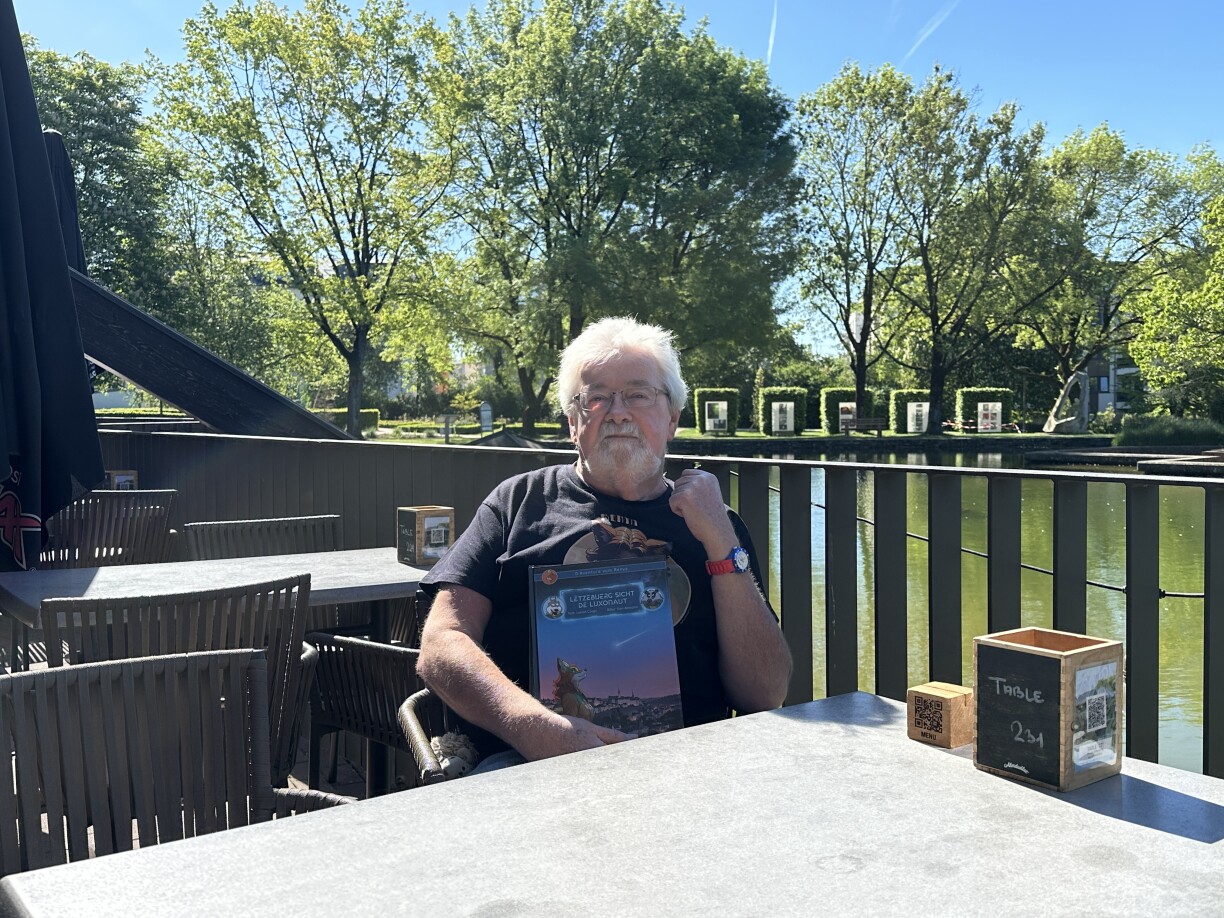
Lucien Czuga has nonetheless remained faithful to comics even after the end of Superjhemp. In his current project, the comic "Lëtzebuerg sicht de Luxonaut", created together with Dan Altman, the story follows Renya the fox-woman - a successor to Renert - who in the year 2050 becomes the first Luxembourger to fly to Mars. The comic has been published in Luxembourgish, German, French, English and even Japanese. It was officially presented at the Luxembourg Pavilion at the Osaka World Expo, where Grand Duke Guillaume also received a copy.