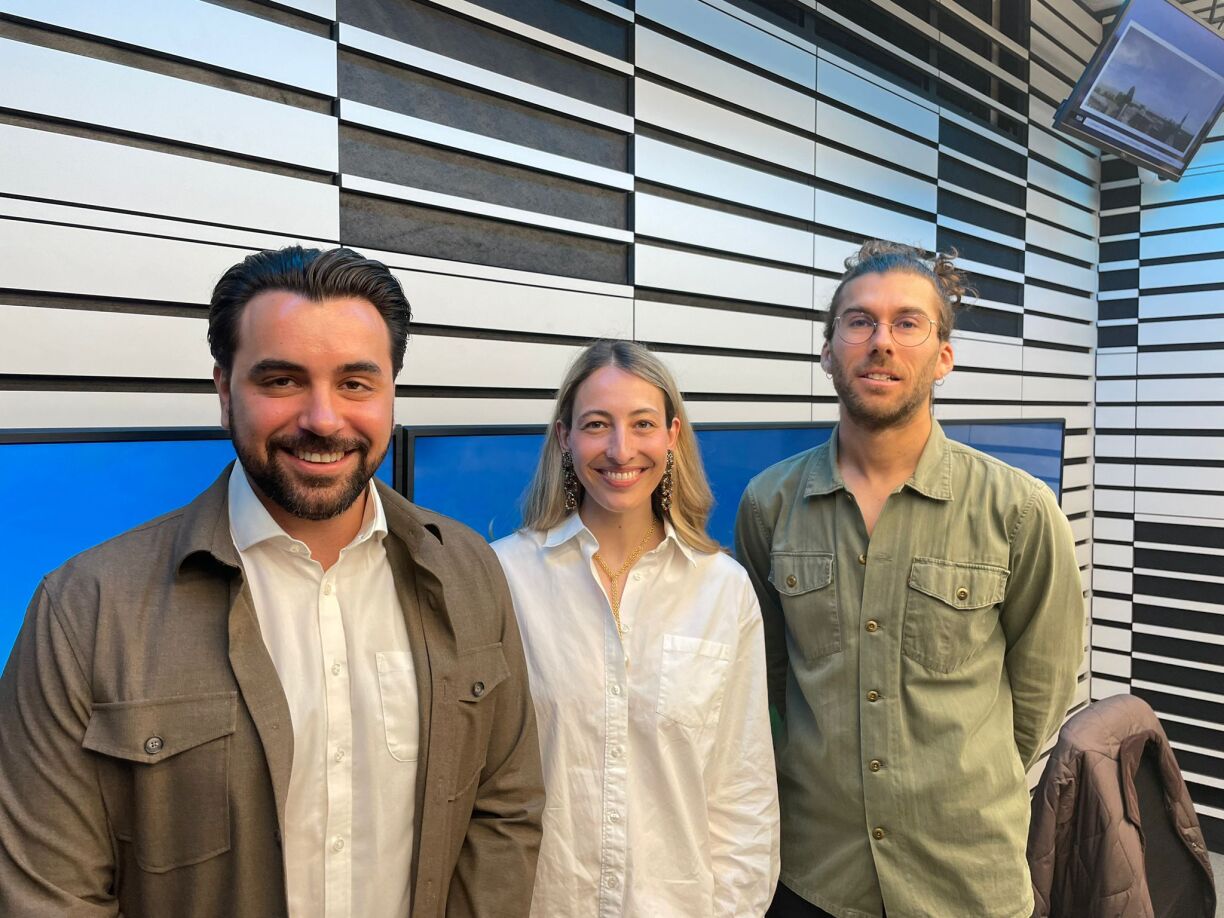
How are small and medium-sized enterprises faring in times of uncertainty and crisis? To answer this question, our colleagues from RTL Radio invited three guests for a roundtable discussion on Saturday: Fanny Bervard, founder of her own jewellery brand; Raphaël Betti, a bar owner and entrepreneur; and Lionel Ferber, the head of a large hairdressing business.
When the minimum wage increases, other wages just above it are also at least indirectly affected, Ferber stated. For his business, this would mean that either margins would shrink or prices would rise. Bervard emphasised that while maintaining employees' purchasing power was important, it was not easy for businesses. Betti said that with only two employees, he would be less affected by a minimum wage increase. In an emergency, he would step in himself, he added.
Looking at employers, one cannot say across the board that they are all doing well, Ferber noted. He argued that housing was the biggest problem, as too large a portion of salaries often goes towards rent or mortgage repayments. Betti, meanwhile, felt that a limit would eventually be reached with salaries, but he accommodates his employees in other ways, such as through flexible working hours or team-building activities. Bervard takes a similar approach. For example, she is paying for a Luxembourgish language course for one of her employees – something that could also benefit the woman if she were to look for another job in the future, Bervard said.
Regarding the expansion of Sunday working hours, the three guests held a nuanced view. Whether it makes sense to open on Sundays depends on the sector and partly on the individual business, they said.
A general reduction in working hours with full wage compensation, meanwhile, was not welcomed by any of the three guests. In their view, this would ultimately increase pressure on employees to achieve the same output in a shorter amount of time.
Instead, the panellists would prefer adding a sixth week of holiday in the private sector. That would place less financial burden on businesses, especially if employees take that holiday during slower business periods, they argued.
As for high energy and raw material prices resulting from the war in Iran, these would certainly have a massive impact on margins. One example cited was the high price of gold for jewellery. However, the guests noted that businesses can also emerge stronger from crises. Ferber mentioned an online shop that was built during the Covid-19 crisis and is still running well today.
Bervard recently won the Young Female Entrepreneur Award. She emphasised that this was not just her achievement but that of her entire team. Betti, for his part, called on people to pursue work they enjoy professionally and not to look only for security. Ferber stressed the importance of truly knowing one's trade. For this reason, he subsequently completed his master craftsman's diploma.
Although the three guests enjoy being self-employed, they nonetheless feel that these are extremely difficult times for the skilled trades. This is also due to the fact that it is difficult to find qualified staff, they said.





