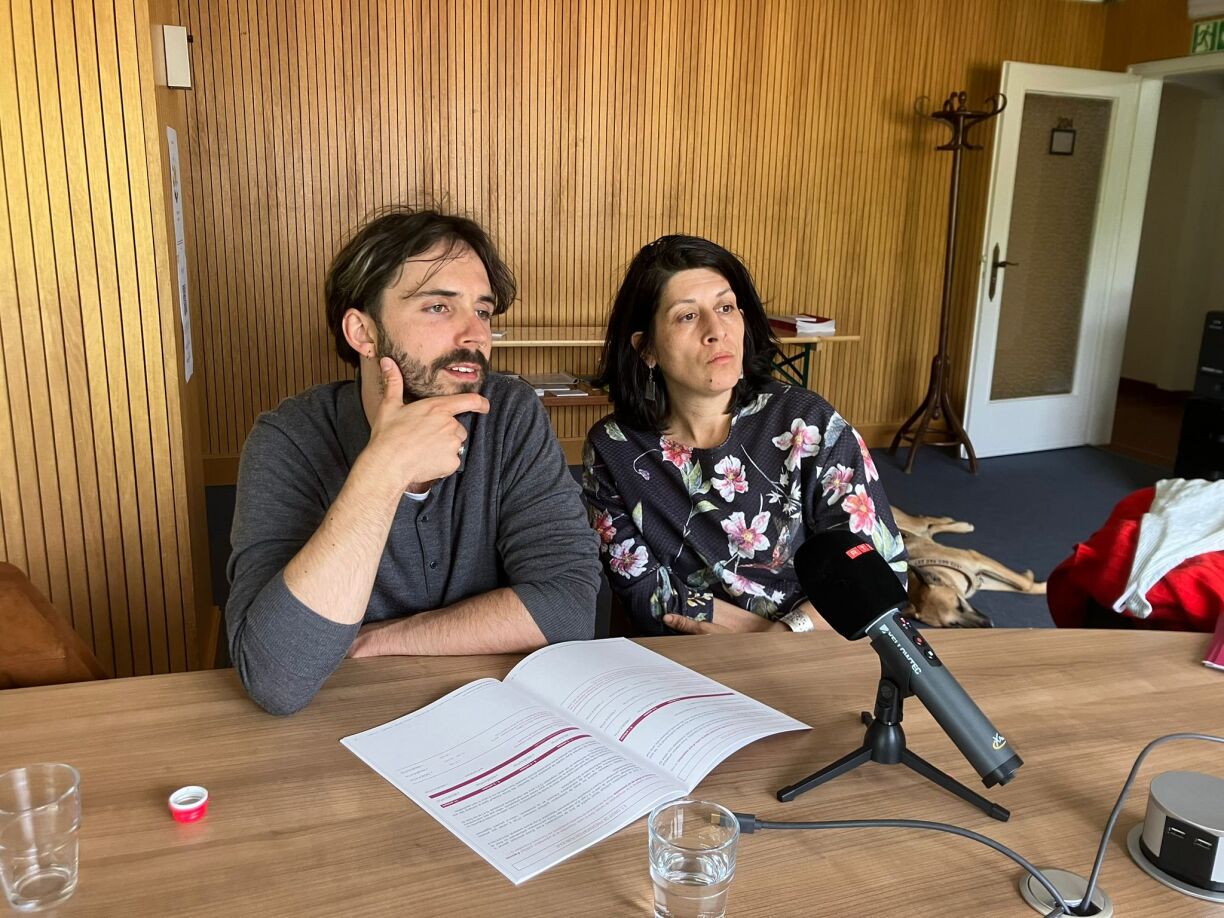
A publication by the Association of Visual Artists of Luxembourg (AAPL) sets out recommendations aimed both at artists themselves and at institutions.
Negotiations on fees for the visual and plastic arts sector began just over four years ago. According to Justine Blau from the AAPL, the initiative emerged from a clear need, as many artists were only being paid after a project was completed, rather than for the work carried out throughout the process.
She explained that artists contribute projects, content, and engagement with the public to museums and cultural venues, and that this work should be paid for in the same way as in the theatre sector.
The recommendations are intended to give artists a tool they can refer to, while also helping museums and institutions understand what fair remuneration looks like. Charl Vinz gave the example of an exhibition featuring one or two artists in a medium-sized venue in Luxembourg, for which the AAPL recommends a minimum fee of €5,500 excluding VAT.
He stressed that the "excluding VAT" element is important, as artists' final remuneration can differ depending on whether or not they are subject to VAT.
The AAPL also underlines that artists' work does not only consist of creating art. Vinz explained that administrative tasks, installation work, residencies, public presentation rights, text writing, and other services linked to exhibitions should also be considered in the fee structure. He stressed that the aim is to make clear that these tasks are also paid work, just as they would be in any other profession.
The recommendations drawn up by the AAPL are meant to serve as a basis rather than a fixed document. Blau said the association felt it was important to establish a starting point, with fees it considers reasonable in relation to current practices and available budgets. The goal, she explained, is to put transparent best practices on paper.
Blau added that artists want to be respected and paid decently for the work they do. She noted that normalising artistic work also means normalising income, and that while ideas such as a basic income may exist separately, the immediate priority is ensuring that payment for artistic practice becomes an accepted standard.
For Blau, this means having budgets that properly account for artists' work and allowing people to make a living from their art.
The process remains ongoing, and the association offers training to its members, other artists, and institutions on the fee structure it has developed.
More information is available in French at www.aapl.lu.





