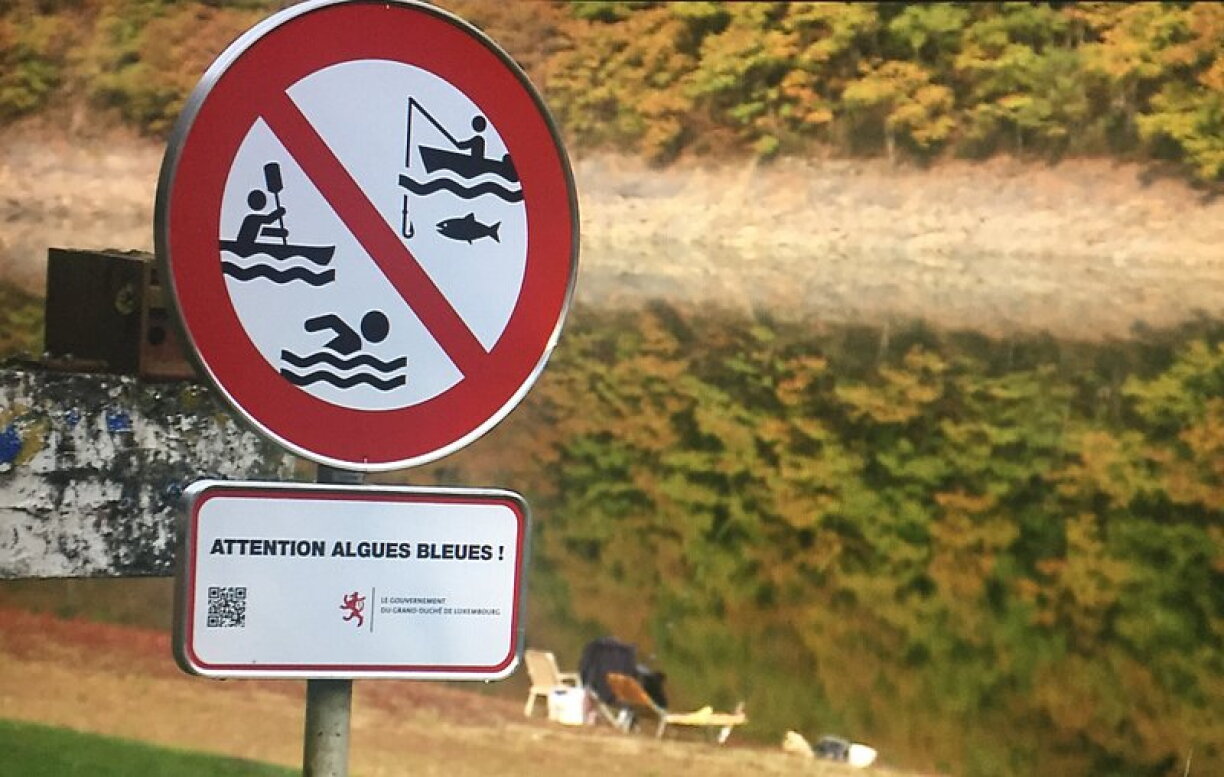
Swimming is now banned at the upper lake in Weiswampach after water quality analyses conducted on Tuesday, 28 July confirmed a significant bloom of cyanobacteria, commonly known as blue-green algae.
Laboratory results identified the presence of Microcystis aeruginosa – a toxic cyanobacterium – as well as toxin concentrations exceeding safety thresholds. In response to this health risk, officials have imposed an immediate ban on swimming, in line with the Grand Ducal regulation governing bathing water monitoring in Luxembourg.
The Luxembourg Institute of Science and Technology (LIST), responsible for monitoring cyanobacteria in official bathing areas, observed extensive algal blooms during its inspection. Certain cyanobacteria species can produce toxins that pose dangers not only to humans, but also to aquatic animals and pets.
Contact with contaminated water – or accidental ingestion or inhalation – may lead to symptoms ranging from mild skin irritation to headaches, burning sensations, and nausea. Health authorities advise anyone experiencing symptoms after swimming to consult a doctor and mention possible exposure to cyanobacteria.
Officials further recommend keeping pets away from the water, avoiding all contact with the lake, and refraining from water activities such as fishing and boating. If algal blooms are visible, the public should not handle fish from the lake or consume any catches.
Observations of blue-green algae can be reported through the Bloomin’Algae app, and current water quality updates are available on cyanowatch.lu.