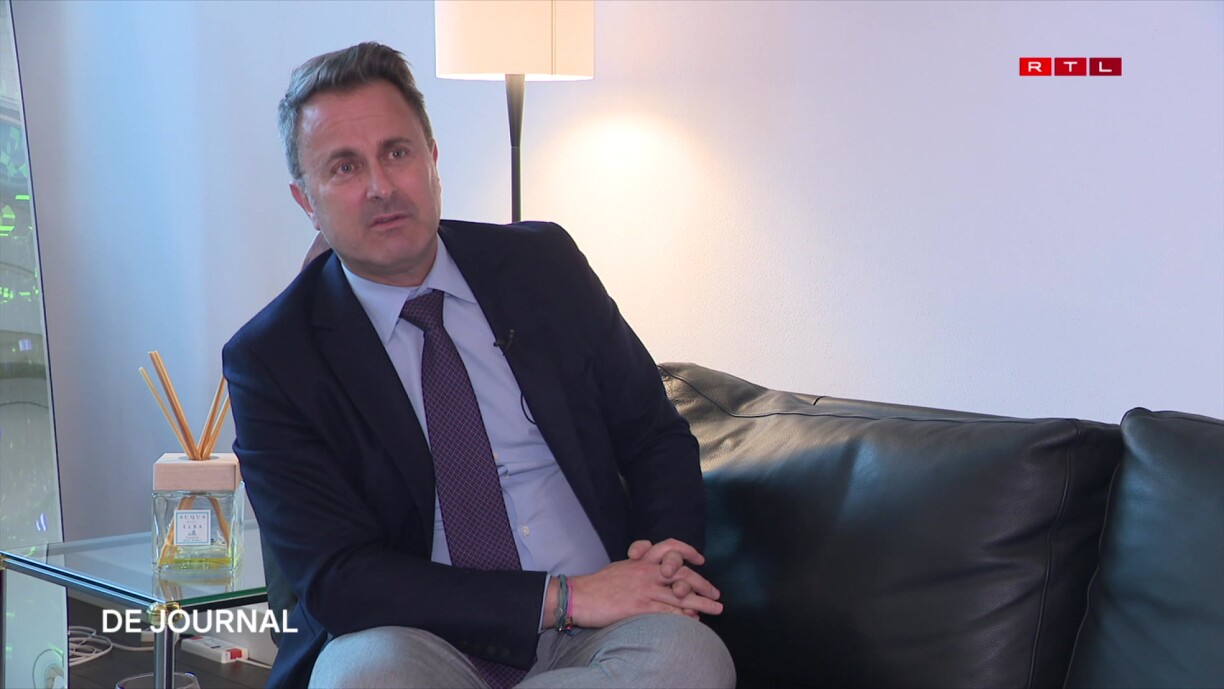
Luxembourg's Foreign Minister Xavier Bettel has called for a stronger and more unified European role in efforts to end Russia's war in Ukraine, warning that the EU risks sidelining itself at a decisive moment for peace talks. Speaking on the fourth anniversary of Russia's full-scale invasion, Bettel said Europe is currently absent from key negotiations, both on Ukraine and on the Middle East, and lamented that the bloc's lack of unity is weakening its voice on the world stage.
"War is easy to start", Bettel said, "leadership is ending a war."
Since the first days of the invasion, a Ukrainian flag has hung outside Luxembourg's Foreign Ministry as a sign of solidarity. Bettel said he tips his hat to the Ukrainian people and President Volodymyr Zelensky, praising their resilience in the face of an invasion he described as an unjustifiable decision by Moscow.
"Four years ago, it was a wrong decision by the Russians to attack Ukraine, and it still is today", he said.
Bettel noted that many had initially believed the war would be over within weeks, including, he suggested, Russian President Vladimir Putin. Instead, he argued, Putin's attempt to make Russia "greater" has left it diminished.
Bettel expressed regret that the European Union is not currently seated at the negotiating table, despite the conflict unfolding on its doorstep. He blamed internal divisions among the EU's 27 member states for undermining its influence.
"If we have a choir of 27, but 27 different song sheets, it's not fun to listen and you hear nothing", he said. "If 27 can sing the same tune together, we are much louder than someone singing alone in Washington."
Without unity, he warned, the result is "cacophony".
The minister also voiced concern that some European politicians have lost sight of the EU's founding purpose as a peace project. In his view, the bloc has increasingly focused on business, trade, taxes, and finance, with people no longer sufficiently at the centre of its policies.
Turning to the substance of potential peace talks, Bettel said many critical questions remain unresolved. These include the status of occupied territories such as Crimea, Donetsk, and Luhansk, who would control them, and under what legal framework.
He also pointed to issues of criminal accountability for alleged war crimes and the question of reparations. Ultimately, Bettel suggested, much will depend on political will at the highest level – particularly in the United States.
"It depends largely on what Donald Trump wants... It's terrible that I have to say this, and it's difficult to say" Bettel acknowledged, referring to the US president's stated aim of ending the war before summer. Trump had previously claimed he could end the war within 24 hours, Bettel further said.
If Trump were to use the leverage available to him to increase pressure, Bettel said, progress could be possible. However, he cautioned that both sides would need to be willing to take steps toward compromise, and acknowledged the role of personal egos in prolonging conflicts.
"No one wants to stand there as the loser", he said.
Bettel added that if a lasting peace were achieved, he would have no issue with Trump receiving the Nobel Peace Prize. But he warned that such recognition would only be justified if efforts toward peace were consistent and credible.
He must not play the arsonist again, Bettel said.





