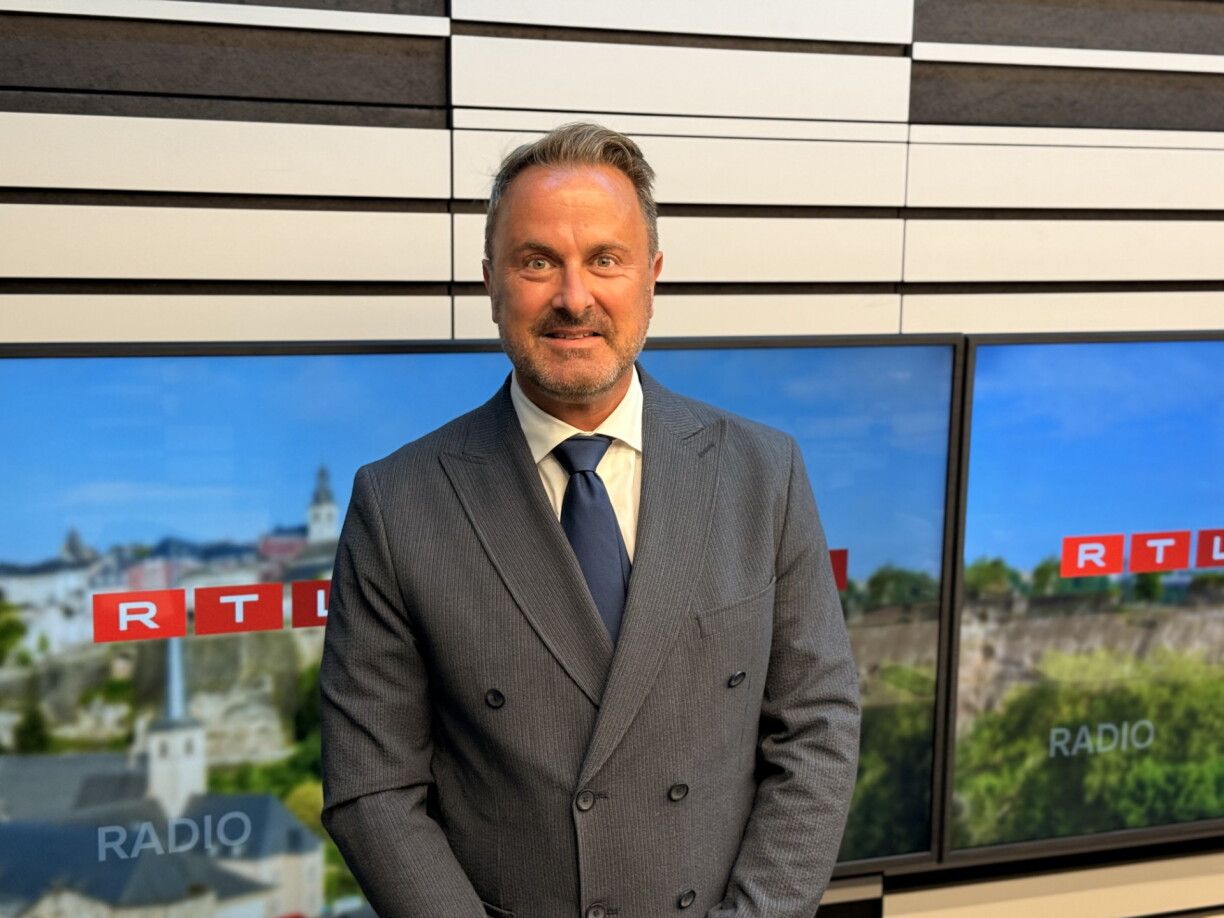
Foreign Minister Xavier Bettel addressed EU enlargement, Israel's settlement policy, the war involving Iran, and the rise of far-right parties across Europe during an interview with RTL on Monday morning.
Bettel was asked about the referendum in Iceland, where 52.8% of Icelandic voters rejected the resumption of negotiations on joining the European Union.
The result had to be respected, he said, regardless of whether Icelanders currently found EU membership attractive. He stressed that Iceland is already closely integrated with the bloc through areas including the single market and Schengen, meaning cooperation would remain extensive even without full membership.
Bettel nevertheless argued that the result should prompt some reflection within the EU. He noted that some of the first politicians to welcome the Icelandic vote had been Nigel Farage in the UK and Marine Le Pen in France.
There was a tendency, he said, to blame Brussels for everything that went wrong while paying far less attention to what European integration had achieved.
"The EU isn't perfect", Bettel acknowledged, but said it had brought decades of peace and many other benefits that were too rarely highlighted. Europeans themselves bore some responsibility for constantly complaining about the bloc, he added.
He recalled having once provocatively suggested trying "a week without the EU" to see how much of everyday life depended on it.
"If all you do is talk the EU down, you shouldn't be surprised when people ask why they should become members", he said.
At the same time, Bettel rejected the idea that the bloc should respond by rapidly admitting new members.
Countries including Ukraine, Moldova, Montenegro, and other Western Balkan candidates first had to fulfil the Copenhagen criteria, he said.
"The EU is not a race", Bettel stressed, arguing that Brussels should not "put its foot on the accelerator" for geopolitical reasons and only check compliance afterwards.
He also rejected German Chancellor Friedrich Merz's proposal for possible intermediate forms of membership.
"Half-membership or three-quarter membership – I really don't think that's a good idea", Bettel said.
He pointed to the EU's long-running disputes with Hungary as an example of the difficulties that can arise once a country is already inside the bloc but fails to uphold certain rules.
Countries seeking membership should therefore meet the requirements beforehand, he argued. Montenegro was currently "the best pupil" among the candidates when it came to implementing the necessary reforms, while several others still had "a long way to go", according to Bettel.
That included Ukraine and Moldova. Bettel said he was not among those expecting either country to become an EU member in the immediate future simply because doing so would send a geopolitical signal.
The difficulties of reaching agreement among EU countries were particularly evident in the bloc's response to Israel, Bettel said.
Foreign policy sanctions often require unanimity, which has repeatedly prevented the EU from acting. Bettel said he found it particularly frustrating that there was not even a simple majority in favour of sanctions against Israeli ministers Itamar Ben-Gvir and Bezalel Smotrich.
He strongly condemned remarks attributed to Ben-Gvir advocating the killing of Palestinian civilians. Such statements were "sickening", Bettel said.
He was equally critical of Israeli Prime Minister Benjamin Netanyahu for keeping ministers making such statements in his government.
Bettel, who served as Luxembourg's prime minister for a decade, said that if one of his own ministers had made comparable remarks, "I would have thrown them out".
By failing to react, he argued, a prime minister risks effectively endorsing such comments.
With EU-level action blocked, Bettel has asked his officials to examine whether Luxembourg could impose measures of its own, particularly in relation to trade with the occupied Palestinian territories. That could require changes to Luxembourg's 2018 legislation on imports and exports.
But Bettel repeatedly cautioned against overstating what such measures could achieve.
Luxembourg's trade with Palestine amounts to less than €15,000, he said, while the EU as a whole trades less than €55 million with all Palestinian territories. The amount involving the occupied territories specifically would be smaller still.
"It's symbolic politics", Bettel acknowledged, although he said the principle of taking action still mattered. "No one should think the Israeli government is going to tremble and fall because of €15,000", he added.
There are also legal obstacles. Trade policy is primarily an EU competence, meaning national measures can generally only deviate from European rules under specific grounds such as national security or public order, he explained.
Bettel said Luxembourg therefore needed to be certain of its legal basis before acting. The last thing he wanted, he said, was to hand the Israeli government a victory by adopting measures that were subsequently struck down by a court.
"I would rather the EU had the courage to take measures", he said.
For Bettel, the wider problem is that the EU can be forceful in its rhetoric while lacking the tools or political agreement to follow through.
He likened it to "a dog that barks very loudly but has no teeth and can't bite", arguing that the problem points to a broader need for institutional reform both within the EU and at United Nations level.
Turning to the war involving Iran, Bettel questioned both the way the conflict began and the assumption that military pressure would weaken Tehran's regime.
He stressed that the war had been launched without an international mandate and said its consequences had apparently been underestimated. Bettel argued that the expectation that Iran's religious regime could simply be removed and replaced with a new government had proved unrealistic.
A religious regime, he suggested, was difficult to dismantle by attacking its leadership alone. Rather than becoming weaker, he believed the Iranian authorities may now be "even worse and stronger than before".
At the same time, Bettel opposed allowing Iran to exercise unrestricted control over the Strait of Hormuz or effectively establish a toll system for vessels passing through it.
He said Luxembourg should consider, together with international partners, how the safety of shipping through the strait could be guaranteed.
Allowing one country to impose such charges without challenge could encourage others controlling strategically important waterways to do the same, he warned.
The consequences would stretch far beyond oil prices, according to Bettel. He highlighted the impact on fertiliser costs, which could in turn make agricultural production and food more expensive, particularly affecting poorer countries and communities.
Asked about the strength of the far-right party Alternative für Deutschland (AfD) in Germany, Bettel said the trend was not confined to Luxembourg's eastern neighbour. He pointed to Marine Le Pen's support in France and the recent strength of Nigel Farage in Britain as part of a broader development across Europe and beyond.
Rather than dismissing people who vote for far-right parties as simply being wrong, mainstream politicians needed to understand the concerns driving their choices, Bettel argued.
"If people have questions, worries, or fears, whether rational or irrational, you have to understand them and try to find solutions", he said.
Public security was one example. Bettel said frustration could grow when someone becomes a victim of theft or assault and then sees the suspected perpetrator back in the same place shortly afterwards, creating the impression that "something isn't working".
He therefore welcomed Luxembourg's planned introduction of accelerated court proceedings, under which certain offences could be dealt with much more quickly rather than suspects waiting months for a trial.
The purpose, he said, was to show that public authorities remained in control and that individuals could not simply decide for themselves what rules they wished to follow.
Bettel rejected the suggestion that quicker proceedings necessarily amounted to an attack on civil liberties.
Drawing on his own background as a lawyer who worked extensively in criminal law, he stressed that defendants' rights had to remain fully protected and that he was certainly not advocating turning the courts into "a slaughterhouse".
But he warned that perceived impunity could seriously damage confidence in democratic institutions. "Impunity is the greatest enemy of democracies", Bettel said.
If people begin to feel that the state is no longer in control, he argued, the risk is that support for far-right movements will grow.
He also cautioned against refusing to discuss difficult issues because they might be considered politically incorrect. Trying to impose positions on people rather than engaging with their concerns could, he warned, have "very, very serious negative consequences".