Luxembourg's forests are increasingly challenged by rising temperatures and longer dry spells. In order to strengthen resilience, the Nature and Forestry Administration is turning to a greater diversity of tree species that are better adapted to changing climatic conditions.
In addition to this shift in forestry management, the campaign 'Planting for the Future' will see an additional 1.7 million trees planted across the country by 2030. Simply replacing lost trees is not enough: experts stress the need for robust, diverse species, carefully chosen planting locations, and proper aftercare to ensure the long-term health of woodland areas.
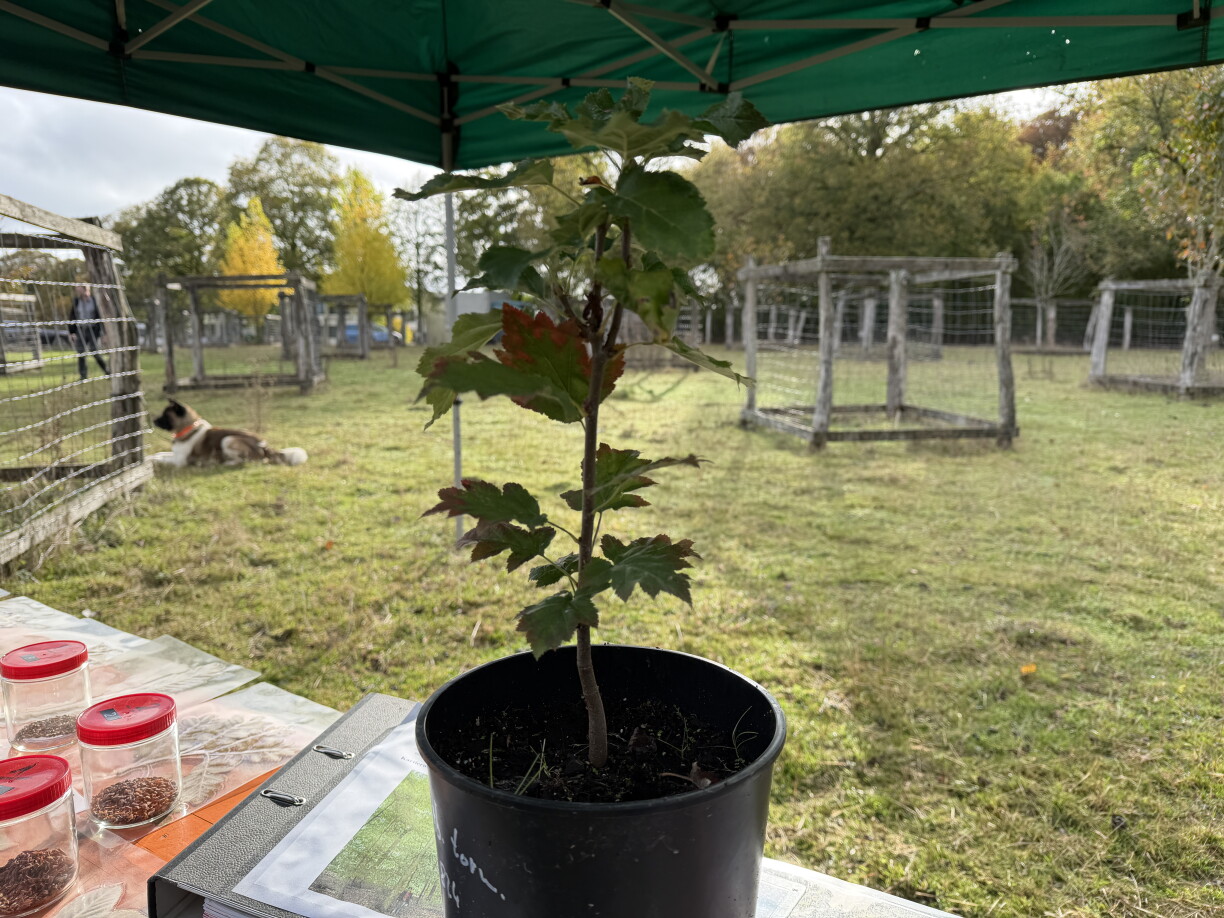
One species gaining renewed attention is the service tree. Once considered of minor importance, the service tree is now valued for its deep roots and unusual tolerance of dry, sunny locations, according to Thierry Diedenhofen from the Nature and Forestry Administration. This makes it a promising addition to mixed forests aiming for greater diversity and resilience.
To reintroduce the service tree into local forests, seeds must be collected, often from dedicated seed orchards. After planting, careful maintenance becomes crucial, as the tree needs plenty of light and space to thrive and does not cope well with competition from other vegetation. This type of targeted management is increasingly central to maintaining healthy, mixed forests.
Beyond forest management, Luxembourg is also focusing on reforestation outside traditional woodlands. Through the "Planting for the Future" campaign, the Grand Duchy has pledged to plant 1.7 million additional trees by 2030.
This initiative forms part of a wider European effort, with the goal of planting three billion trees across the European Union by the end of the decade. Milan Loreti from the Ministry of the Environment explains the calculation: "The figure is based on the estimate that around 300 million trees naturally grow each year in Europe. Over ten years, that amounts to three billion. The EU aims to double this number through additional planting."
Luxembourg's share is 1.7 million new trees, not all of which will be in forests. Urban and rural communities are also set to benefit, as new trees can help reduce urban heat islands, retain soil moisture, and provide habitats for wildlife and plants.
To support this, the Ministry of the Environment is working on measures to increase greenery in built-up areas. Planned reforms to the nature conservation law and initiatives such as a 'Tree Challenge' are designed to encourage municipalities to participate in planting efforts.
Private individuals can also contribute to the 1.7 million tree target, but success depends not just on numbers. It is essential to plant the right tree in the right location, as not every species is suitable for every landscape. Invasive species or those on EU prohibited lists should not be used.
Furthermore, trees planted as simple replacements do not count towards the 1.7 million target; only new additions are registered.
The ultimate objective is not only to increase tree cover, but to create the right conditions for trees to thrive and cope with climate change. For Luxembourg’s forests, this means more diversity, sustainable management, and long-term planning for the coming decades.
The Ministry currently cannot provide precise figures on progress towards this goal, since not all tree plantings have been registered, especially those by private individuals. Anyone who has planted a tree since 20 May 2020 can register it at: https://mapmytree.eea.europa.eu/#/homehttps://mapmytree.eea.europa.eu/#/home