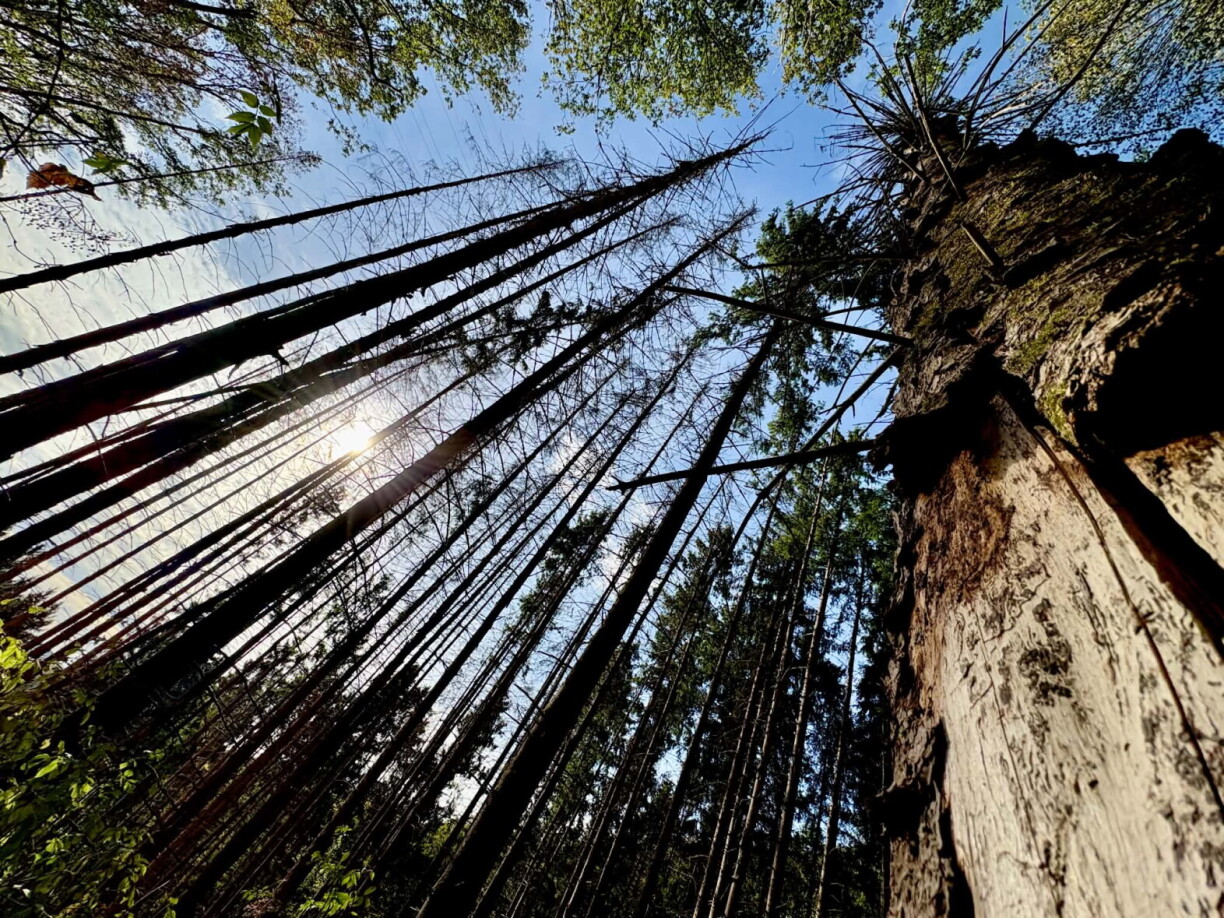
Luxembourg’s forests have weathered many challenges over the decades, including storms, acid rain, and harsh winters. However, climate change has emerged as a far greater threat in recent years.
Rising temperatures and increasingly frequent droughts are putting immense stress on local woodlands. The most recent survey by the Nature and Forest Agency, published in 2024, paints a stark picture: only 15% of the country’s trees are currently categorised as healthy. This marks a dramatic reversal from 40 years ago, when around 80% of trees were considered to be in good condition.
Recent summers have pushed forest health to dangerous new lows. Extended spells of heat and drought over the past months have directly weakened Luxembourg’s forests, a trend noted by forest engineer Claudine Felten. She points out the widespread presence of dead branches in the tree canopies, a visible symptom of the ongoing stress.
High temperatures and prolonged dry periods mean there is less groundwater available for trees, which struggle to absorb sufficient moisture. This leads to leaf or needle loss, and a reduced ability to carry out photosynthesis. The problem is particularly acute on soils with limited water retention capacity.
This year, the effects have become apparent unusually early. By the end of July, individual trees were already showing signs of stress, with leaves changing colour prematurely. Martine Neuberg, head of trees and forests at the Nature and Forest Agency, explains that this is a clear sign that the trees are suffering from a lack of water.
The impact of heat and drought is compounded by pests such as the bark beetle. These insects burrow tunnels beneath the bark, inflicting further damage. While pests often exploit already weakened trees rather than cause initial decline, their effect can be devastating.
Warmer conditions have enabled bark beetles to breed more rapidly, with up to three or four generations per year now possible in Luxembourg, compared to just one or two in the past.
Healthy forests play a vital role in absorbing carbon dioxide, helping to slow global warming. But as more trees die and forests release more carbon than they capture, this benefit can be lost. In fact, this reversal has already been observed in Luxembourg in recent years.
According to the national forest inventory, between 2010 and 2023 Luxembourg’s forests emitted more CO₂ than they absorbed. Instead of acting as a carbon sink, the nation’s woodlands have started to become a net source of carbon emissions, undermining their traditional role in climate protection.
For forest engineer Claudine Felten, the future of Luxembourg’s woodlands is a source of concern. She predicts that the forests we know today will be unrecognisable in the coming decades.
In response, authorities and forest managers are working to improve resilience by introducing a greater diversity of tree species, focusing on those better adapted to changing weather conditions.