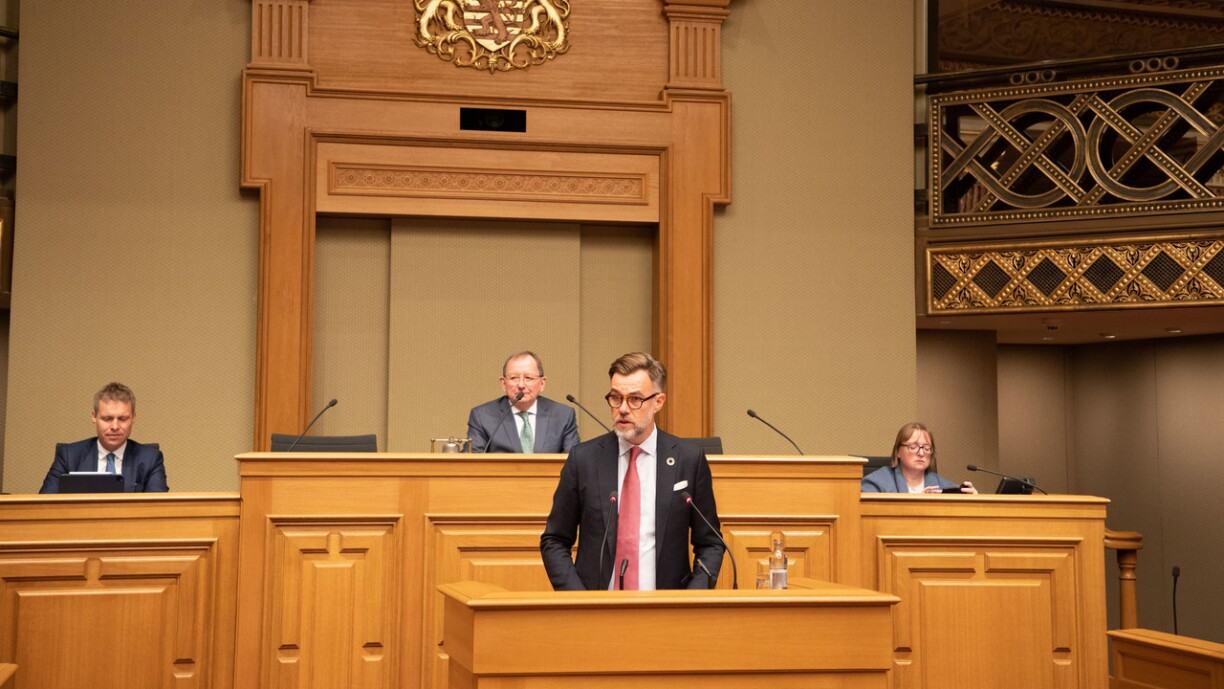
The Minister opened his speech by mentioning the impact of the Russian war of aggression in Ukraine, particularly on Luxembourg's cooperation partners around the world. After the Covid-19 pandemic had already led to major setbacks in poverty, nutrition, education, and security in many developing countries, the war has pushed millions of people to the brink of starvation.
In this context, the Minister highlighted the increased efforts that Luxembourg's Development Cooperation has undertaken to address food insecurity, both in humanitarian action to fight acute hunger and in development cooperation projects to make food systems more resilient in the long term. While Luxembourg has already invested around €40 million in sustainable agriculture and food access in 2021, this amount is expected to climb to over €60 million in 2022, accounting for more than 10% of Official Development Assistance (ODA).
Fayot also addressed the challenges faced by humanitarian affairs and the response of Luxembourg's development cooperation to this situation. With no less than 274 million people in need of humanitarian assistance and protection according to the United Nations, Luxembourg has pledged to devote at least 15% of its ODA to humanitarian purposes in the future. This commitment is part of the new Humanitarian Action Strategy published in 2022, which will enable Luxembourg's Humanitarian Affairs department to act in a more targeted and effective way around six strategic priorities, six horizontal themes, and 50 action points.
To further leverage Luxembourg's strengths and expertise in innovation and humanitarian action, the Minister also announced that in June 2023, Luxembourg will host the first edition of an international Humanitarian Innovation Accelerator programme, organised in collaboration with the World Food Programme, with the goal of finding and developing new solutions to humanitarian emergencies.
Fayot then gave an update on bilateral cooperation activities. It is apparent that the situation in many of Luxembourg's cooperation partner countries is unstable. This is particularly evident in the Sahel region, where a slew of crises related to climate change, malnutrition, and security concerns are mounting. While Senegal and Niger continue to be trusted partners despite rising insecurity, and the implementation of the Indicative Cooperation Programmes (ICPs) proceeds as planned, the situation in Burkina Faso, which saw two military coups in 2022, and in Mali remains concerning. Development cooperation in both countries will continue on the basis of transition strategies. In this regard, Fayot stressed that the security of personnel on the ground is a top priority, and that the Ministry of Foreign and European Affairs ensures that the necessary security measures are in place at all times.
Fayot also presented the future direction of bilateral development cooperation. In view of the difficult situation in many partner countries and in order to diversify Luxembourg's development cooperation activities on the African continent, Luxembourg will intensify its relations with Rwanda and Benin. Projects in these countries will aim to promote the rule of law and good governance, sustainable agriculture, and food security as well as improved access to inclusive finance for farmers. After Luxembourg ended bilateral development cooperation relations with Nicaragua in 2019, a reorientation is taking place in Central America. As a result, additional regional cooperation will be promoted, as will greater collaboration with Costa Rica, which will support triangular and South-South cooperation. Luxembourg thus follows in the footsteps of other EU member states that also operate out of San José
During his speech, the Minister stressed the importance that Luxembourg's development cooperation places on human rights compliance in all its activities. In order to strengthen its commitment and impact in this area, Luxembourg's development cooperation plans to increase the budget allocated to projects that specifically promote the protection of human rights.
In this context, Fayot announced that human rights, as well as food security, will be key topics during the Development Cooperation Conferences in December.
The Minister indicated that Luxembourg's development cooperation will strengthen its support for Non-Governmental Development Organisations (NGDOs), highlighting the essential role they play in the execution of sustainable development cooperation. It will thus increase its contribution to covering their real administrative costs by raising the ceiling taken into account from 14 to 15%.
At the end of his speech, the Minister presented the budgetary forecasts to the MPs. Despite the economic situation, the ODA is expected to exceed €500 million for the first time.