As Luxembourg braces for another round of Tripartite talks, the country’s social partners are coming together in a tense climate, with the aim of preserving social stability by reinforcing purchasing power and supporting businesses at a time of rising costs.
But how are key economic actors experiencing the challenges posed by soaring energy prices and persistent inflation?
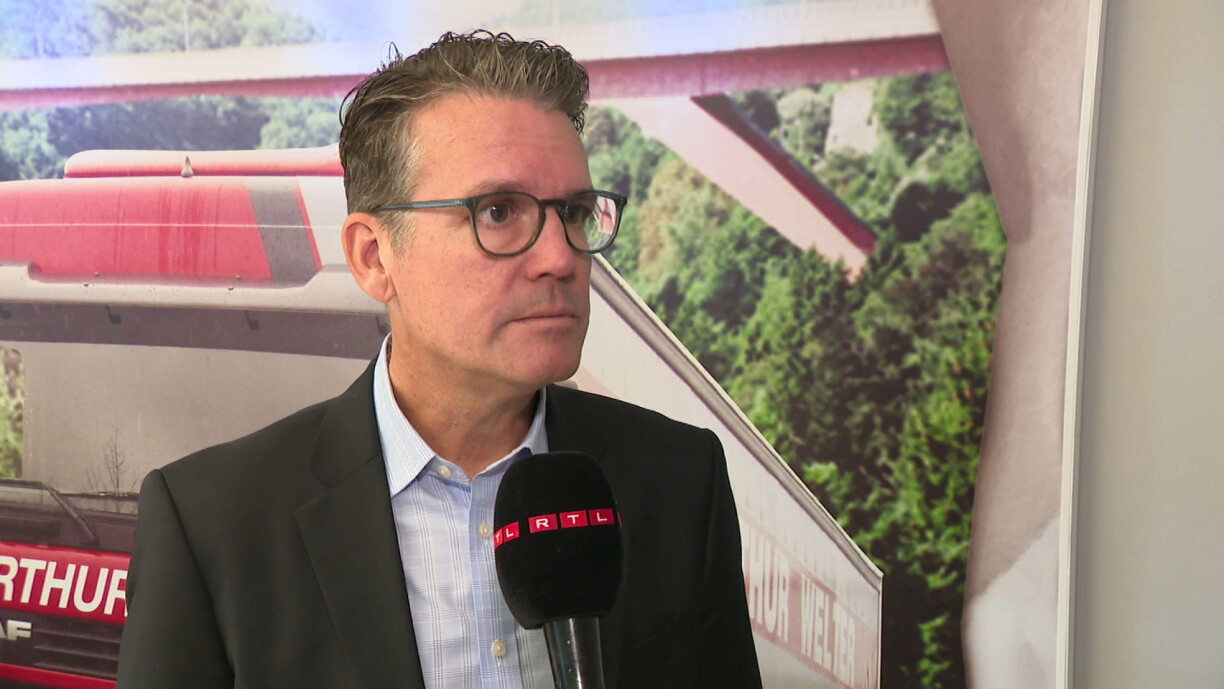
For Arthur Welter, a major Luxembourgish transport company with 700 employees and a fleet of around 400 lorries consuming some 12 million litres of diesel per year, business is currently resilient despite the crisis.
Surprisingly, it is not fuel prices that cause the most pressure. Due to contractual arrangements, fuel price fluctuations are passed directly onto clients, meaning that energy costs are not a primary burden for the company.
The company's director, Ben Frin, explains that fuel costs are simply passed along the supply chain to clients and ultimately to end consumers, feeding into the broader inflationary pressures that influence Luxembourg’s indexation mechanism.
Labour costs, however, tell a different story. At Arthur Welter, these account for over 40% of total expenses and are much harder to absorb than fuel price changes.
When wages rise due to indexation or increases in the minimum wage, the company cannot immediately pass these costs onto clients, as transport contracts are typically negotiated only once a year.
In difficult economic times, clients are less inclined to accept higher transport tariffs, further limiting the company’s flexibility, Ben Frin concludes.
Rising prices and declining purchasing power are affecting everyone in Luxembourg, setting the stage for the Tripartite discussions, where government, employers, and unions sit down to find ways to support residents and businesses.
According to Alexa Ballmann, Vice-President of the Federation of Craftsmen and a business owner herself, small and medium-sized enterprises (SMEs) are particularly affected.
She notes that more than a third of crafts businesses in Luxembourg failed to turn a profit in 2024, underlining the severity of the situation.
Ballmann, who manages two beauty salons, highlights that her sector is especially vulnerable to falling purchasing power, as clients can easily delay appointments in difficult times. Meanwhile costs, most notably wages, continue to rise.
She points out that every new indexation tranche brings unavoidable cost increases, which are then reflected in higher prices for clients.
Wage rises, rent hikes, and increasing costs from suppliers all combine to create upward pressure on prices. This leads to a cycle: higher prices trigger new indexation tranches, which in turn fuel yet more price rises.
For many business owners, repeatedly having to justify these increases to customers is demoralising, as the price rises are not about making extra profit but simply about staying afloat.
Ballmann argues that Luxembourgish businesses need to become more productive in order to remain competitive. She points to factors such as an increase in leave days, high rates of sick leave, and inflexible working and opening hours, all of which are interconnected with productivity and profitability.
In her view, what is needed is not just debate about indexation or short-term fixes, but real reform that introduces greater flexibility and addresses the root causes of these challenges.
Only with bigger changes, she believes, can Luxembourg ensure the long-term viability of its businesses.