The supply of drinking water has slightly improved since the end of July and early August, according to Marc Hans, Director of the Water Management Agency. He explains that the summer holidays and the collective construction holiday have reduced consumption, as schools are closed, many people are abroad, and construction activity is lower. However, Hans cautions that this respite may be temporary. Once holidays are over, water consumption typically rises again, and if regular rainfall does not return by then, the situation could deteriorate.
Luxembourg’s drinking water comes from both surface water and groundwater. A significant portion of the surface water is drawn from the Esch-sur-Sûre reservoir and processed by the Esch-sur-Sûre Dam Water Syndicate (SEBES). Generally, about 60% of drinking water is supplied from surface water and 40% from groundwater. The abundant rain last winter and in early spring helped replenish groundwater reserves this year, although flows from some springs are now starting to decline.
The Esch-sur-Sûre reservoir currently stands at around 316.5 metres above sea level, which corresponds to approximately 42 million cubic metres of water. This is nearly four metres above the lowest level ever recorded in 2011.
Christian Schroeder, Deputy Director of SEBES, states that the reservoir is at a very comfortable level for this time of year. He notes that the rainfall in March and April, and significant rainfall upstream in Belgium, allowed water levels to reach 319.5 metres – effectively the maximum – and boost reserves before the summer.
At present, water levels in the reservoir are dropping by about six centimetres per day. This is due to both drinking water production and the requirement to maintain a minimum flow downstream of the dam. August is usually a quieter month for SEBES, typically producing 60,000 cubic metres of drinking water per day. Currently, however, output has risen to 75,000 cubic metres per day. The Esch-sur-Sûre facility has a maximum capacity of 110,000 cubic metres per day, and additional groundwater sources can be activated if necessary.
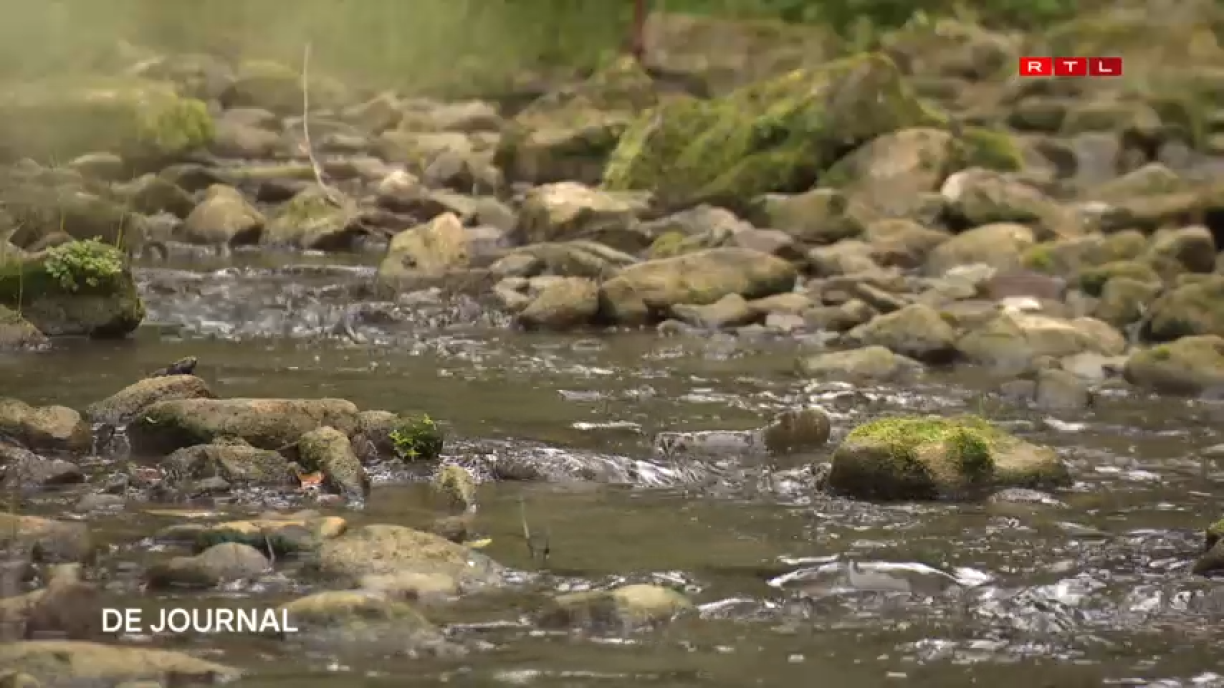
The situation is much more critical for rivers and streams, particularly in northern Luxembourg, which are suffering from a lack of rainfall. Some locations are now recording levels lower than any previously observed, even those seen at the peak of the 2022 drought.
Marc Hans stresses that the situation is dramatic in some places. Low water levels lead to higher water temperatures and lower oxygen content, while pollutants become less diluted. This can pose a serious threat to fish, insects, and other aquatic organisms. If stretches dry out entirely, migration routes for these species are cut off.
A spell of regular rainfall would quickly improve conditions in rivers and streams, but it takes longer to restore groundwater reserves. First, the soil must be thoroughly moistened before water can seep into underground aquifers – a process that can take up to two months. Brief, heavy showers are not enough; sustained rainfall over a longer period is needed.
If dry weather persists into the autumn, the starting position for next summer could worsen. In the long term, the Water Management Agency (AGE) is relying on three pillars: reducing consumption, better protection of groundwater, and developing new resources. One potential new source is the Moselle river, whose water could in future be treated and used for drinking water purposes.
The national vigilance phase remains in place. If local conditions worsen, municipalities have the authority to restrict non-essential uses of water through local regulations. So far, a red alert phase with nationwide restrictions has never been declared in Luxembourg.





