The institute recorded a higher mortality rate in April, i.e. more people died that month compared to the average of the past years.
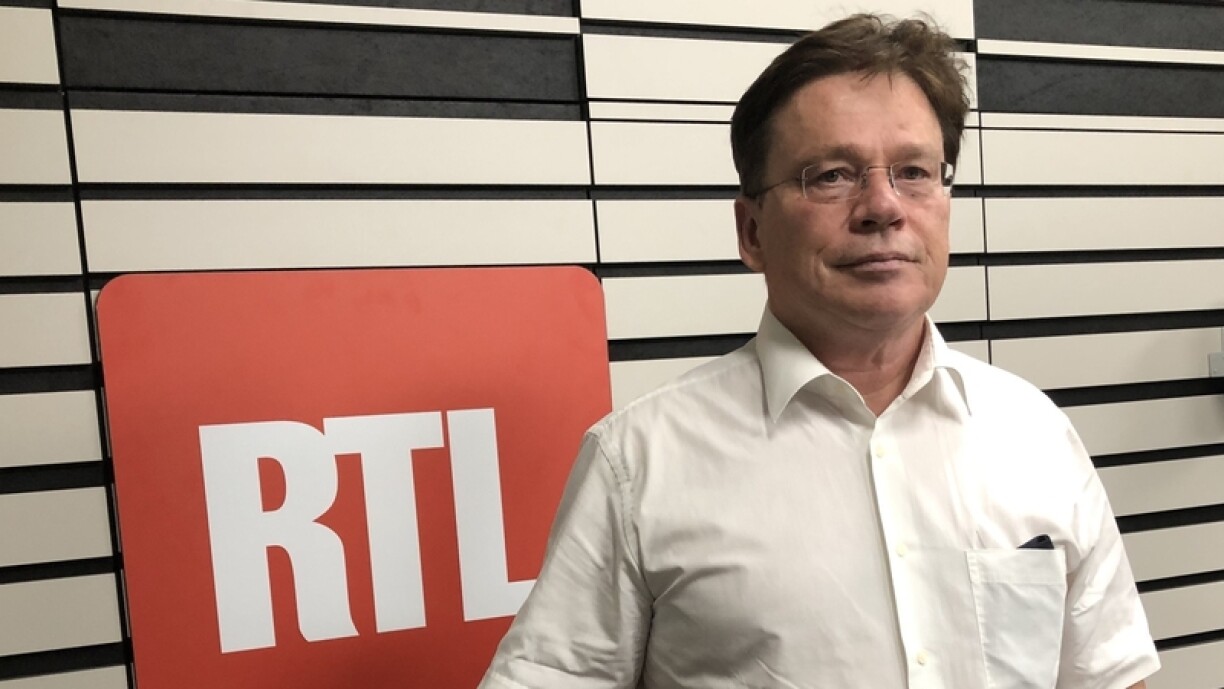
However, the director of STATEC, Serge Allegrezza, stated on RTL Radio on Saturday that this trend did not continue during the months that followed.
Allegrezza explained that the situation in Luxembourg was different from other countries as there was no significant increase in death rates compared to past years.
Number of new infections should be considered over a one-week period
The STATEC director stated that the evaluation of weekly infection developments can point to potential trends. He added that other good indicators are the number of deaths due to Covid-19, and of people currently in intensive care.
Allegrezza also confirmed that the figures which are published every day do not correspond to the actual number of new infections in one day – which is "normal" in statistics. He explained that this is because the health care sector is communicating the data with a slight delay. STATEC is currently working alongside the sector.
As for the higher mortality rate recorded in April, the STATEC director stated that this trend did not continue after the last death due to Covid-19 on 24 May. This is a major difference with other countries because Luxembourg does not continue to record an above average number of deaths.
A possible repercussion of the pandemic could be an increase in inequality. Allegrezza announced a number of studies on this topic which could be published in October. The usual studies to measure inequality could however not be conducted because of the lockdown.
Climate
While STATEC did record a reduction of CO2 emissions during the lockdown, it was only for a short period of time. Allegrezza pointed out that there was a strong intention all across Europe to work out a "Green New Deal", and the Luxembourgish government also had an energy transition plan. However, this transition now required "much more time", and there was also the risk that it may be in contradiction to the economic relaunch. Allegrezza also stressed that a transition must be just: "People want a lot of changes, but when it comes to the details, they are already much more divided".
Economy
As for the economic situation, the STATEC director stated that the institute is still expecting a 6% recession this year and a 7% upturn in 2021. This despite the EU Commission’s recent estimates of a minus of 6.2% this year and only a 5.4% upturn next year. When it comes to bankruptcies, Allegrezza explained that no unusually high figures had been recorded so far. However, he went on to say that bankruptcies are usually not an immediate repercussion, which is why he is expecting to see the effects "at the end of this year or maybe only next year". STATEC is also expecting the unemployment to balance itself out at 6.7% from the current 7% because the upturn is expected to take place during the second semester. However, if the pandemic worsens, there is a risk that the unemployment rate could climb to up to 10%. This would be the case if a second wave would hit the country and make another lockdown inevitable. This is also why Allegrezza thinks a second lockdown is not likely, while the possibility of a second wave on the other hand could not be dismissed.
There are also many more risks "lurking around the corner". The virus could mutate, or protests could form against the restrictions put into place to fight it. Brexit is of course also still an issue as well as a potential trade war between the US and China.
Since Luxembourg obviously does not have an influence on all of these events, the development of the situation abroad is just as important.
Another important variable for STATEC is the basic reproduction value. For infections to go down, it must be under 1 – in Luxembourg, it is currently at 1.09
When asked about a potential tracing app, Allegrezza stated that he was in favour of it. Everything should be done to avoid a second lockdown which the STATEC director thinks would be unbearable from an economical as well as a social point of view.





