The former Liberty Steel plant in Dudelange is set to be transformed into a large-scale hub for artisans and craft businesses over the coming years, with the capacity to eventually accommodate up to 400 enterprises.
The plan, developed by the government in collaboration with the municipalities of Dudelange and Bettembourg, aims to redevelop the site of the steel company, which went bankrupt in November 2024. At the same time, the project is intended to support the craft sector by providing businesses with the infrastructure they need to operate and grow.
Located in the Wolser industrial zone, the site will be developed to maximise efficiency through shared infrastructure tailored specifically to the needs of craft businesses. Minister of the Economy Lex Delles explained that this approach will make it possible to better address the requirements of the sector. He noted that the goal is to provide a location capable of hosting even heavy craft activities, such as construction and locksmithing, while also offering businesses room to expand.
Delles stated that careful planning is essential, pointing out that a locksmith, for instance, cannot be located on the third or fourth floor of a building. To ensure the project moves forward efficiently, the government will work closely with the municipalities of Dudelange and Bettembourg, he added.
Amendments to the General Development Plans (PAG) and Special Development Plans (PAP) in both municipalities will be necessary to allow more businesses to settle on the site. Local officials have emphasised that the focus will be on ensuring the space is used efficiently.
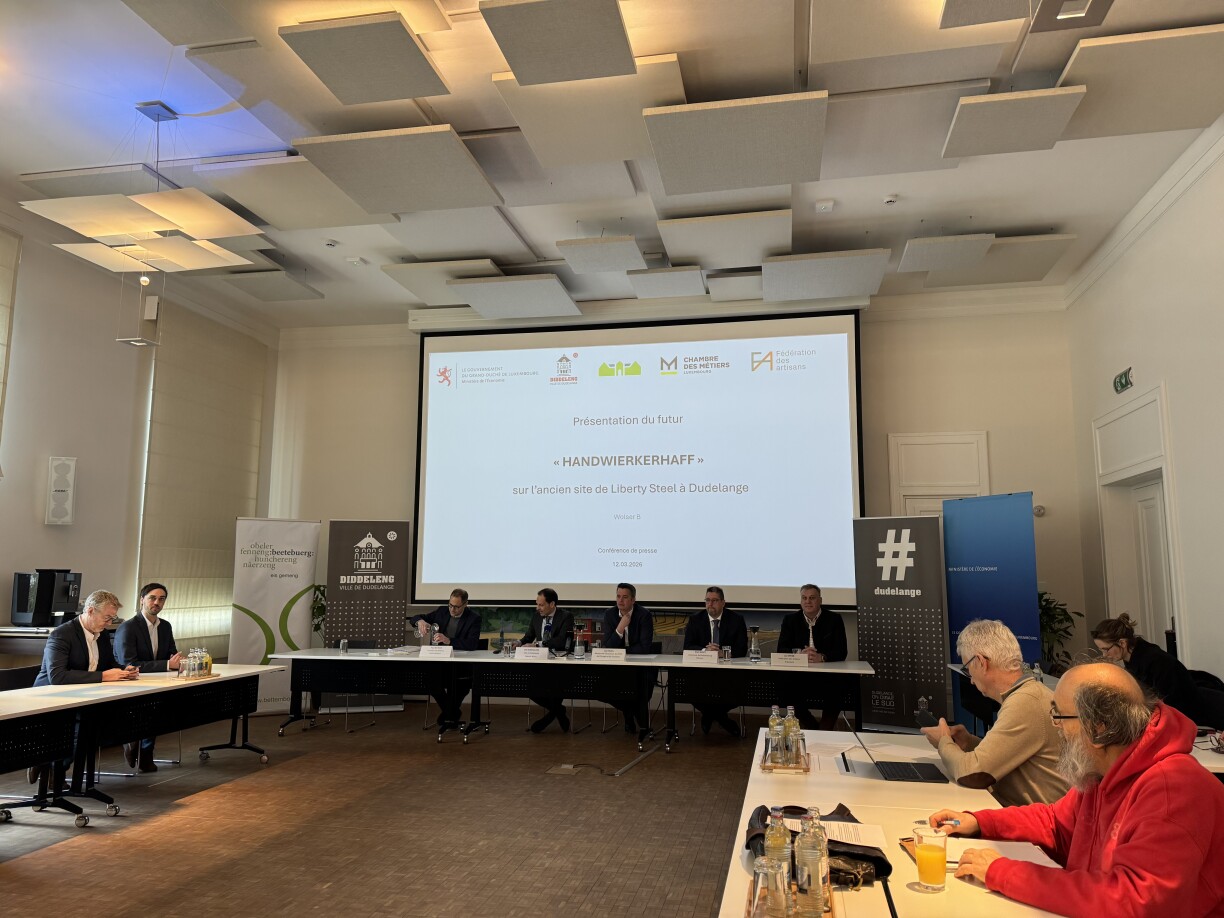
The push for a dedicated craft hub follows a survey revealing that many businesses are struggling to find suitable plots of land. Due to this shortage, companies are facing difficulties expanding and evolving. According to Paul Nathan, Vice-President of the Chamber of Skilled Trades and Crafts, numerous firms are affected by the issue. The survey, which polled 533 businesses, found that 114 were actively looking for new space. The Chamber quantified the demand, concluding that these companies collectively require an additional 68 hectares.
The project is scheduled to be carried out in three phases. The first phase will involve the renovation of existing halls, followed by the construction of new buildings in subsequent stages.
Once completed, the hub is expected to house up to 3,500 workers. Dudelange Mayor Dan Biancalana described this as a significant added value for the region. Beyond the creation of new jobs, he sees potential for cooperation with the local secondary school, which could evolve into a "mixed" institution to introduce students to careers in the craft sector. The mayor believes the project offers various opportunities to increase the visibility of the craft trades.
A budget of between €10 and €12 million has been allocated for the first phase, which is expected to be completed by 2028. The overall timeline for the project is estimated at 10 to 15 years, with the total budget yet to be calculated.
The completed site will also include space designated for activities in the defence sector.





