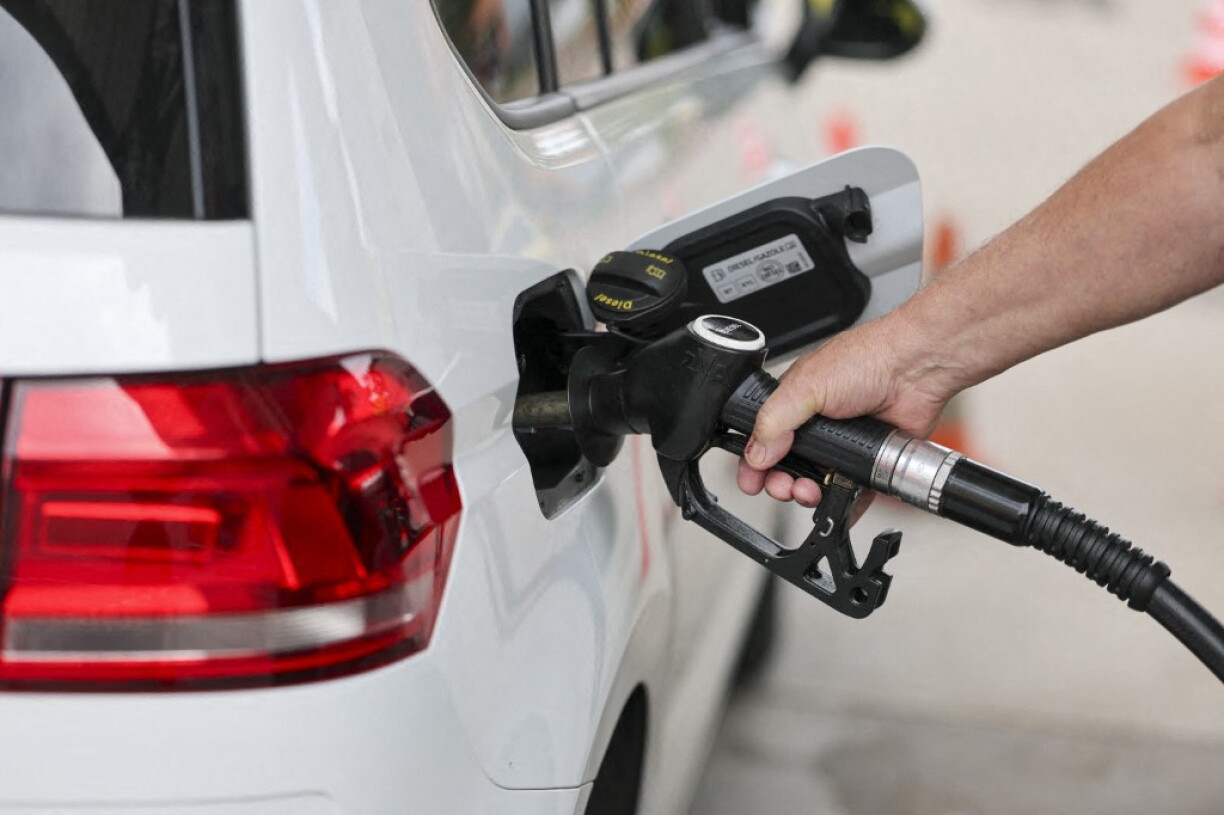
Fuel prices at the pump in Luxembourg remain at record highs, following a recent surge in diesel prices, despite a slight drop in petrol prices over the weekend. On Monday, the price of Brent crude oil climbed again, reaching $109 per barrel. According to government ministries, it is impossible to predict how prices will develop in the coming weeks and months, as the situation in the Middle East and on global markets continues to change rapidly.
In Luxembourg, the Ministry of the Economy determines the daily base price of fuel. This calculation is based on price quotations from Argus, an independent provider of energy and commodity price assessments, the ministry explained in a statement.
The prices for heating oil and diesel in particular are based on the quotation 'Gasoil diesel10ppm German Rotterdam fob barge prompt'. For unleaded 95 and 98 petrol, the reference terms are 'Gasoline Eurobob non-oxy NWE barge prompt and Gasoline 98r NWE barge prompt'. The term 'barge prompt' refers to the purchase or sale of a product or raw material that can be loaded onto a ship within a relatively short period, while fob stands for free on board.
The final price motorists pay at the pump also depends on the euro-dollar exchange rate, as international quotations are set in dollars. A stronger euro or a weaker dollar, therefore, works in favour of Luxembourg motorists.
On top of the base price, consumers in Luxembourg pay excise duties and value-added tax (VAT). VAT was temporarily reduced from 17% to 16% in response to the energy crisis following the outbreak of war in Ukraine, but it has since returned to 17%. Excise duties will remain fixed until the end of the year: for both unleaded 95 and 98 petrol, the rate is 0.53 cents per litre, and for diesel, it is 0.42 cents per litre.
Both VAT and excise duties are significantly lower in Luxembourg than in neighbouring countries. This is a deliberate policy to encourage fuel tourism, generating additional revenue for the state.
A government subsidy of 5 cents per litre, agreed during the June session of the Tripartite, will also continue until the end of the year.
At the beginning of the month, Minister for the Economy and Energy Lex Delles said he was not yet ready to predict whether these support measures would be extended beyond their planned end date, noting that the state has only limited means to respond to fuel price developments.
Earlier this year, when preparing for the Tripartite meetings, the National Institute of Statistics and Economic Studies (STATEC) had envisaged a pessimistic scenario in which the conflict ended within six months, by September or October. This scenario may, in retrospect, have been overly optimistic. The government has now indicated that these projections could be updated ahead of the October follow-up meeting of the Tripartite.
The relevant ministries are currently working to set a date in October for the Tripartite follow-up committee.