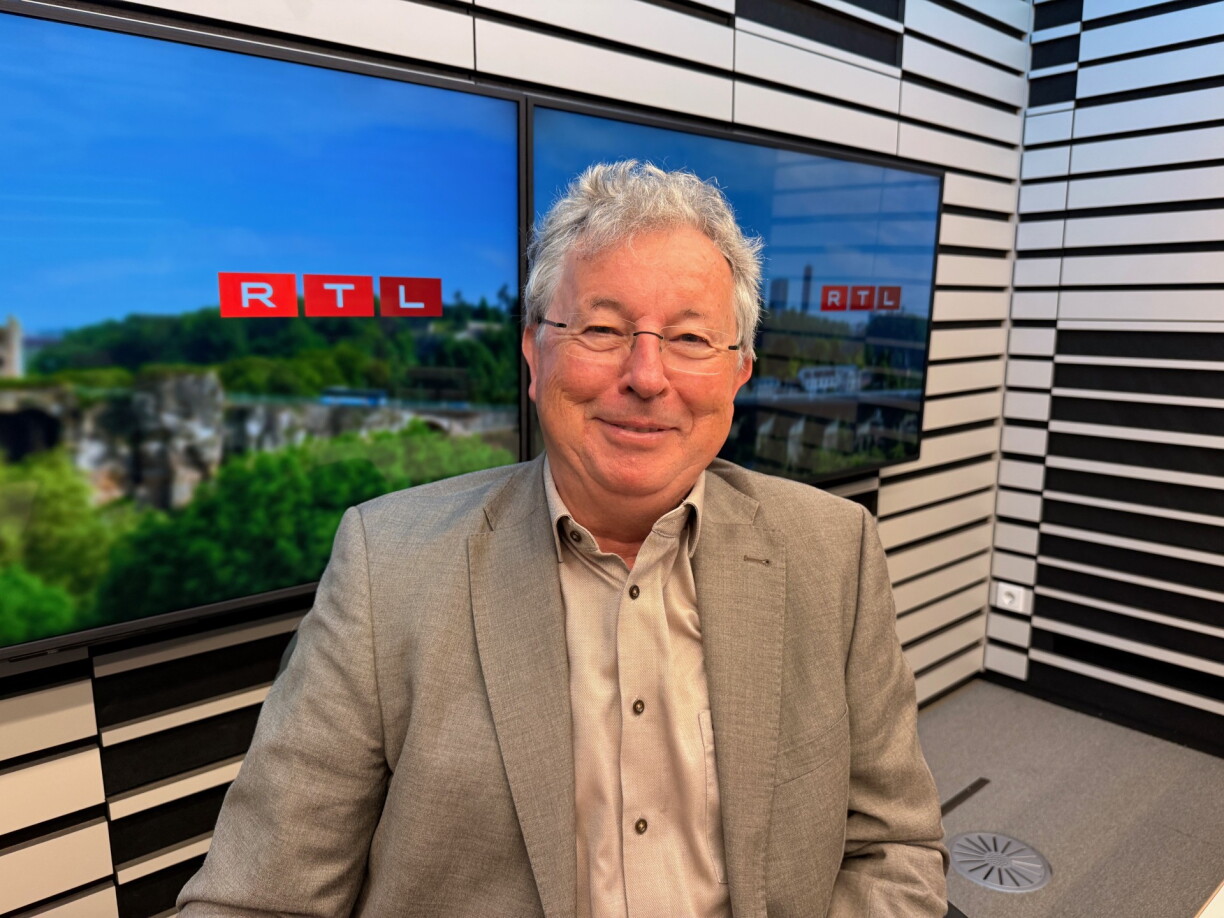
CSV politician and Syvicol president Emile Eicher spoke to RTL on Thursday, explaining the benefits of early involvement for citizens in a merger project, and where the municipal syndicate reaches its limits.
Syvicol, the municipal union, celebrates its 40th anniversary on Monday.
In the municipalities of Boulaide and Lac de la Haute-Sûre, councils will vote on the merger project and the organisation of a referendum on Thursday.
In his time as Clervaux mayor, Eicher said the first merger attempt failed. "We thought we would build a great project and then go to the people and say, this is how we do it. But that is exactly the wrong way to go about it." His lesson from this is to involve the citizens early on, to see what their priorities are, and let these influence the project.
The president of Syvicol says the biggest advantage of a merger will become evident in the services on offer. With more staff, the offices can extend their opening hours, problems can be better addressed and the municipalities can employ specialised personnel, for example, for preventive work on the water supply. However, the administrative effort was underestimated in Clervaux. Despite the preparation, it would have taken another one to two years for the changes to be implemented, including the harmonisation of building and tax regulations for three municipalities.
Twenty years ago, there were 118 municipalities in the country. Today, there are 100. But in the last five years, there have only been two mergers in Luxembourg. Eicher explains that the state financial incentives are important, but to further motivate the municipalities, it is important to first enter into the conversation. However, the initiative must still come from the municipal authorities.
Years ago, the talks began with six municipalities. Now, only Diekirch, Ettelbruck, Erpeldange-sur-Sûre and Schieren are still involved. Eicher says the project has a special dimension: "I think it is not a normal merger, like others before now, because it is a region that the state would like to develop as a development hub." This means that the merger would have a completely different position than a land merger.
To take on this role, the municipalities need "help, they need political support and they also need resources, both financial and support with advice and action from the individual ministries. And I think the government still needs to get a bit more involved," the Syvicol president states.
In the past, a municipality received an average of between 2,000 and 2,500 euros per inhabitant. The Nordstad municipalities are asking for 10,000 euros per inhabitant. Eicher says that in addition to housing, schools, sports facilities and investments in culture are also needed. That's why funding is needed, but it is impossible to get that money all at once.
Eicher maintains that the local authorities are still open to a merger in principle. However, he has the impression that they are disappointed because the long-term commitments from the government are not forthcoming. "That is exactly what I am saying, that the long-term approach is a bit lacking."
On Monday, Syvicol celebrates its 40th birthday. Eicher notes how much the work has increased. In 2019, the union was asked for six official opinions. In 2025, this increased to 60. He anticipates similar numbers this year. In particular, Syvicol's work on creating uniform building regulations has been particularly demanding. In order to keep up with the work, the meetings and the working groups, the team of eleven people is in need of three to four additional employees, says the president.
As an example of the more complex requirements, Eicher mentions the EU directive NIS2 on cybersecurity. Smaller municipalities often lack the staff and expertise to implement these requirements. He expects faster procedures from digitalisation, in which citizens can understand where their case file is and who is handling it. He says artificial intelligence could help to process files faster. "The problem is, everything is in a cloud, and there is an independent cloud here in Luxembourg. Maybe we should also consider moving away from foreign ones and switching to Luxembourgish ones," says Eicher.