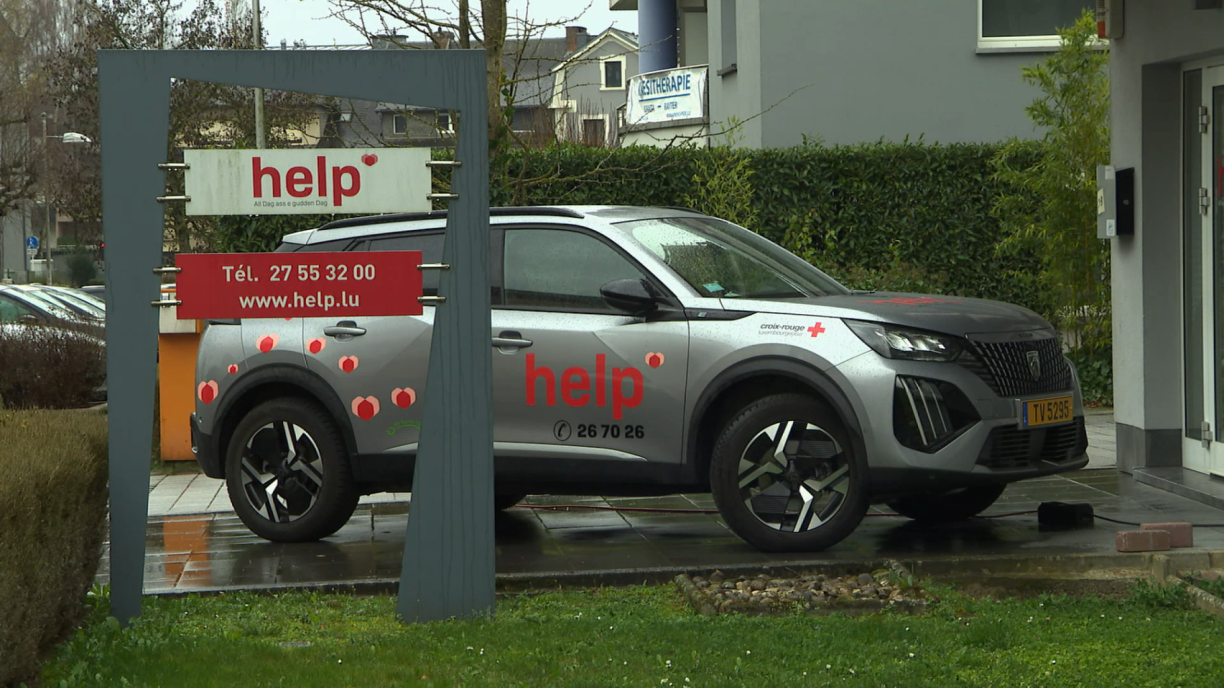
In an historic fusion for Luxembourg's care sector, the 'Help' network and the 'Doheem versuergt' at-home care service organised by the Red Cross will merge. The name 'Help' will remain, but under the Red Cross umbrella. While there will be a number of changes at administrative level to bring the organisations together, nothing should change for patients.
More than 1,500 staff members work for 'Help', either visiting patients at home or at permanent care homes. The network is active across the country and cares for around 7,000 people a year. In future, patients will continue to be their main focus and ideally they should not experience any changes as a result of the fusion. The big advantage will be more transparency, making it clear to patients who their point of contact is. The decision to merge was taken as a result of a difficult situation in the sector, according to Help president Guillaume Steichen.
"Access is not good enough, there are too many people left by the wayside. We have a lack of staff, problems with financial constraints, an ageing population and a growing number of patients with chronic illnesses. All these are challenges we have to face."
After the merger, the new organisation will still be ranked second in the home care sector in Luxembourg, behind the 'Stëftung Hëllef Doheem' network run by the church sector. In recent years, competition has increased, primarily through private companies. Red Cross general director Michel Simonis is optimistic in spite of this, even though his personal values make life a bit trickier compared to the competition.
"We are an important part of the sector and we succeed in achieving our ambitions. But one of them is to have national coverage. We travel all over the country and there is just one price, whether the patient is in Weiswampach or in the capital, or central Esch-sur-Alzette. Other companies tend to target areas where they have lots of clients and they say, we'll do care at home, they'll get the same price and there is a small margin in it, that's why people come."
Staff members will not experience any negative repercussions as a result of the fusion, especially in terms of finances.
"In this area we are covered by the SAS collective agreement, in the social and healthcare sector. The agreement stipulates that even if you change employers voluntarily, your rights and seniority go with you. This is a bit of a takeover in that a group of employees will collectively join the Red Cross and of course all their acquired rights will remain."
The employees will also have the advantage of working for a much larger business, allowing them more internal mobility and space to change roles, not only within the Help group, but the Red Cross itself, which counts 3,500 employees.
The fusion embodies the last step of an integrational process which began many years ago. Help was launched in 1998, when long-term care insurance came into being.
Watch the full report in Luxembourgish





