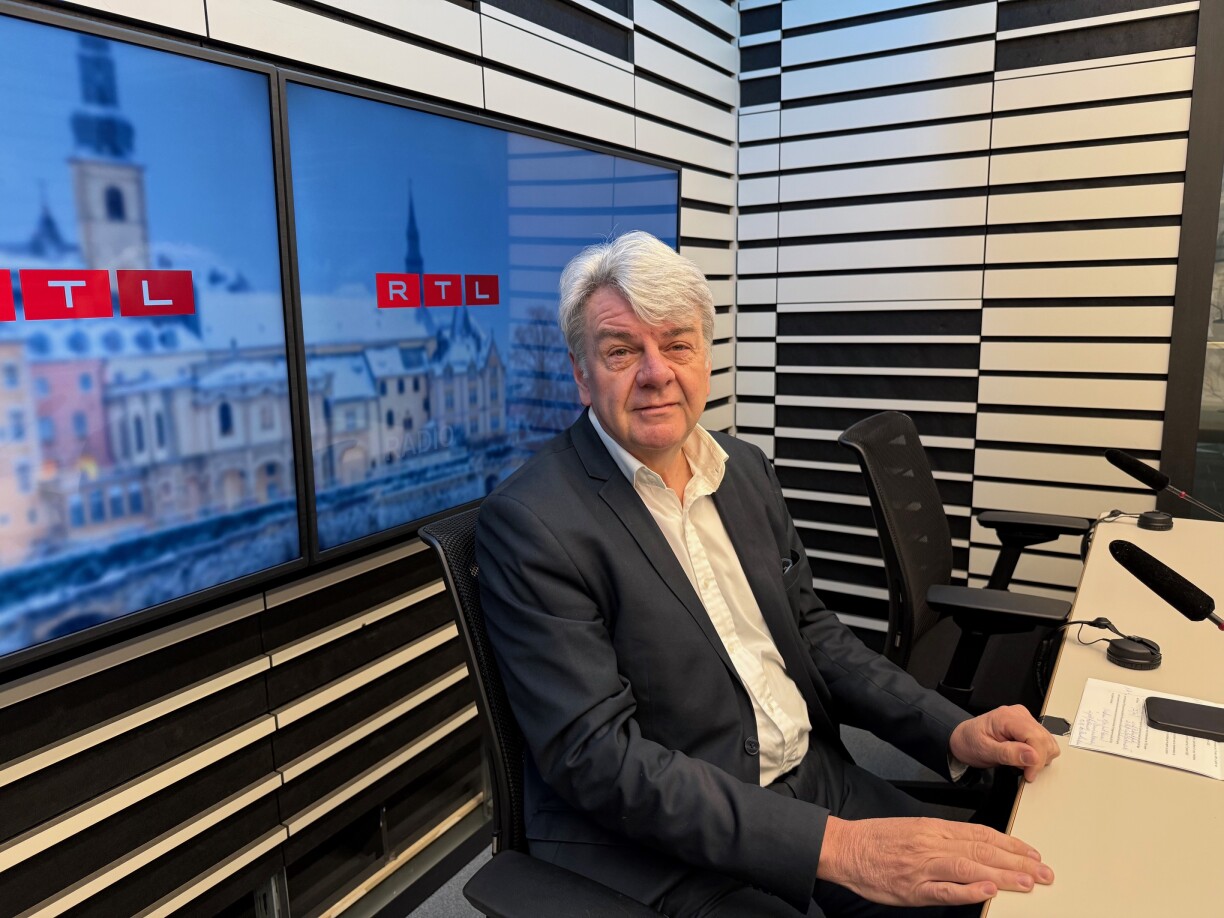
Civil servants' union CGFP president Romain Wolff on Thursday morning urged caution over the growing role of artificial intelligence in Luxembourg's public sector ahead of a government-led 'AI table' meeting with social partners on Thursday at Senningen Castle. "Artificial intelligence is already omnipresent in our daily lives, and as a union, we tend to be more sceptical", he noted.
Wolff warned that workers should be supported through training and retraining and that the technology must help employees rather than replace them. Ultimately, responsibility always resides with humans, the unionist further emphasised.
According to a study by the National Institute of Statistics and Economic Studies (STATEC), around 14% of jobs in Luxembourg – nearly 64,000 positions – could be threatened by AI. Administrative professions, as well as Luxembourgers in general, would be the most affected, the STATEC director told RTL.
The government recently partnered with French company Mistral AI to introduce artificial intelligence tools in the public sector, with the aim of easing civil servants' workload. Wolff criticised the lack of prior consultation with unions, saying social dialogue had once again failed.
He also raised concerns about potential job losses and suggested that companies making heavy use of AI could in the future face a specific tax, noting that AI systems do not contribute to social security or taxes. For that reason, the government should consider introducing a tax for companies that rely heavily on AI, Wolff suggested.
Separately, Wolff reacted to reports that Finance Minister Gilles Roth wants to tighten public spending and limit new public sector recruitment to an "absolute minimum". At the beginning of February, the finance minister sent a letter, stating that new expenditures should be offset or compensated elsewhere. Shortly afterwards, administrations also received a letter from the Economy and Rationalisation Commission, signed by Prime Minister Luc Frieden.
Wolff said unions only learned about the proposal through the press and want clarification on what the measure will mean in practice. "We first need to see what that actually means", the union president commented on these calls.
Public sector employment has grown by 44% over the past decade, outpacing population growth. Wolff rejected suggestions that too many civil servants had been recruited, saying the union had never demanded jobs without work.
Wolff also warned that if the conflict in Iran continues and oil prices keep rising, the government may eventually need to step in with financial support for households and businesses. He voiced scepticism that releasing oil reserves would have much impact and said that a tripartite meeting between government, employers' representatives, and social partners might eventually have to be organised.





