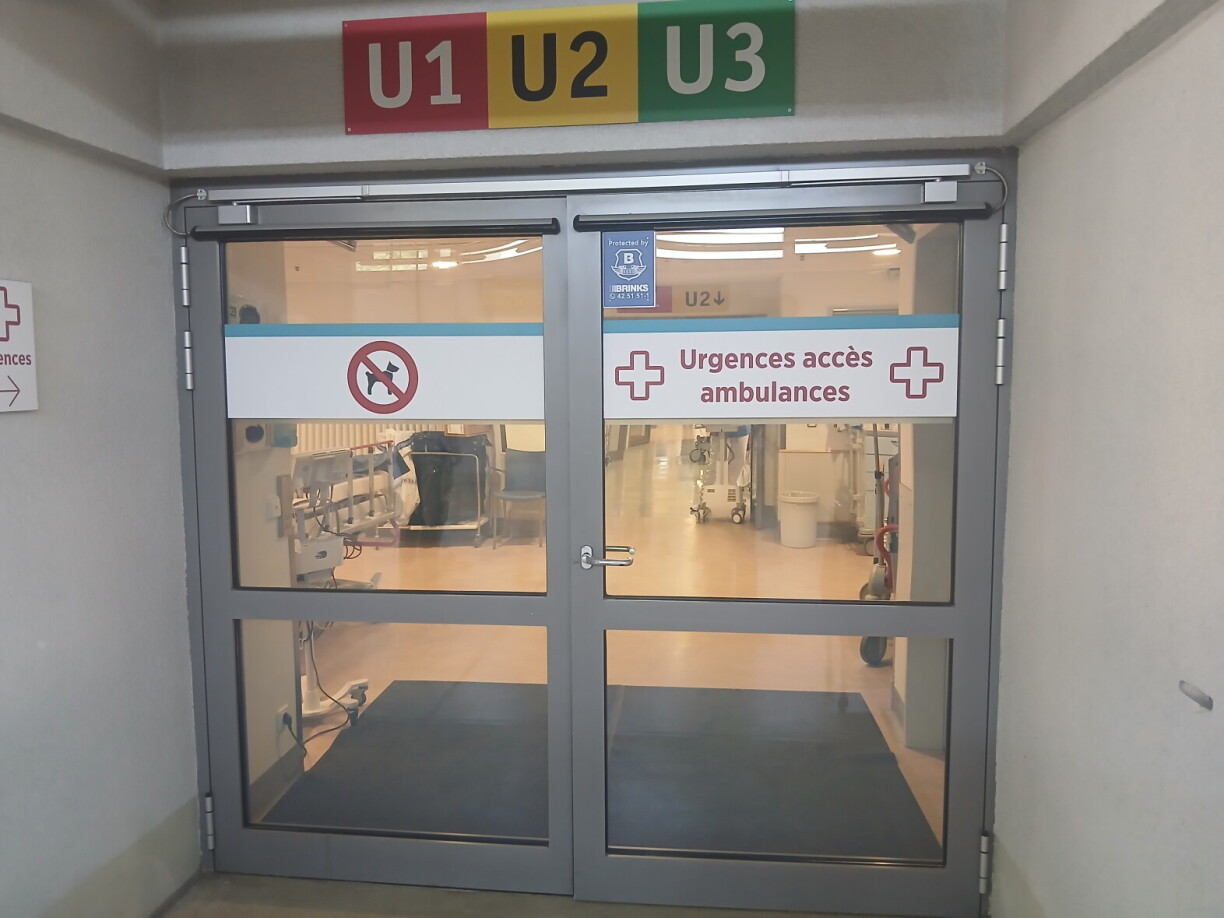
Although Luxembourg has made it through a week of temperatures over 30°C, an extended heatwave can not only negatively impact the environment, but also the healthcare system.
Health Directorate head Dr Jean-Claude Schmit said they had not noticed excess mortality due to the heat. The country's emergency departments have seen increased activity, but nothing unusual. In recent days, however, hospitals have reorganised themselves in order to accommodate more patients.
"We have two hospitals in the city which are alternating the emergency night shifts. Then there is one in the south and one in the north, they have reorganised things to accommodate an increase in patients. We've also had more staff on duty in the emergency department this week due to the number of activities in the capital following the public holiday."
On the whole, though, hospitals have been somewhat quieter than expected with such extreme weather conditions. This could be due to the fact that the public are exercising caution and their physical reserves have not yet been depleted. The Robert Schuman hospitals are expecting to be busier this weekend, with red alerts for hot weather. They have already seen a number of patients with heat-related conditions, although these have not been traditional ailments such as heatstroke.
Medical director Claude Braun said: "Because of a normal stroke, a heart attack, there is decompensation on a cardiac level, they can no longer breathe, they have problems with blood pressure, their blood pressure drops, they can barely stand on their feet. We have seen a lot of people who are extremely dehydrated, which means they don't have enough fluid, they have lost fluid, but only through sweating, maybe another illness and they couldn't improve through drinking alone."


But the high temperatures are a burden not only for patients, but also for hospital staff. In the Robert Schuman hospitals, employees are provided with lighter work clothing, but above a certain temperature this is not that helpful. In the Kirchberg premises, temperatures are currently rising to over 30 degrees in some parts of the hospital.
For Christian Kirwel, Director of Care at Robert Schuman Hospitals, structural and technical solutions are indispensable. When new buildings are built, these should be considered in advance.
"Of course, we will think about cooling ceilings, which will most likely reduce the filtration problem. I say most likely, we don't have much experience with it yet. In a few places, we have the temperature reduced by 5–6°C compared to the outside temperature, which is not bad. An air conditioner is of course significantly more effective, but you have to do filtration there, you have to do maintenance and change the filters quickly enough."
But they would also look to quickly put measures in place, such as the purchase of mobile air conditioners. Kirwel also pointed out to the additional costs that would arise from the renovation of the buildings for the hospitals, hoping for additional financial support from the state.
Dr Schmit said he is quite open to installing more air conditioning in hospitals in the future, even though there have been concerns about hygiene problems in the past.





