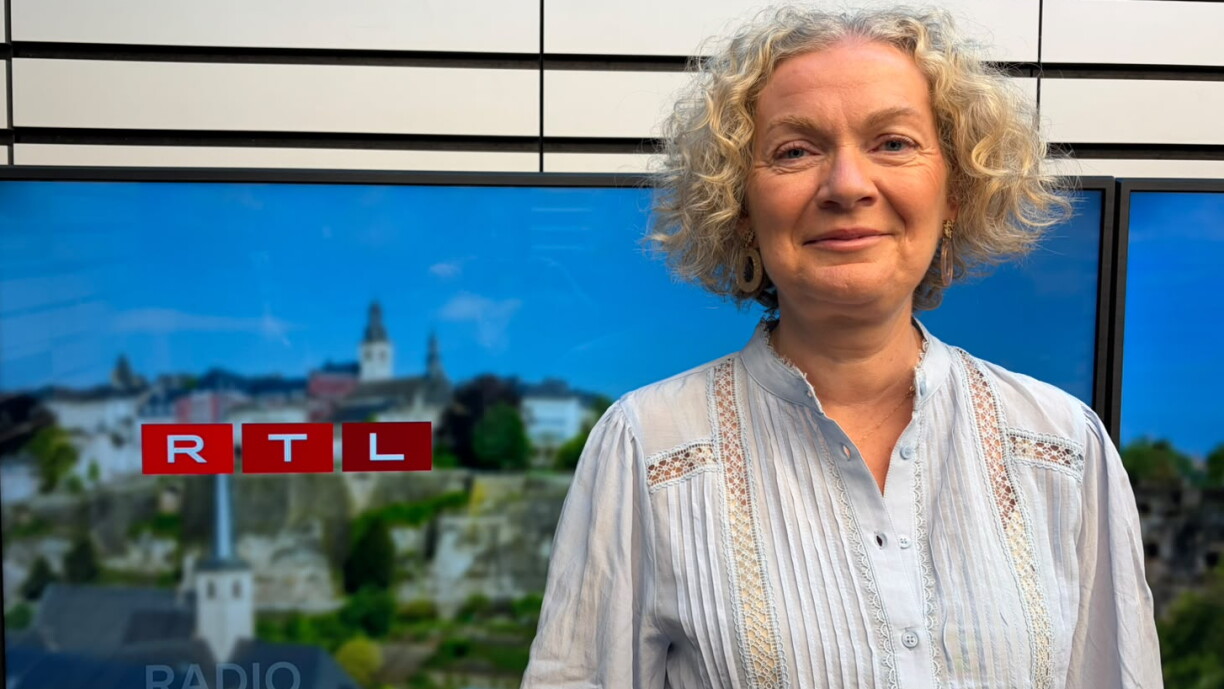
On Saturday, Isabelle Schlesser, Christina Gathmann, and Alex Mutombo joined as guests on the radio programme "Background am Gespréich" to discuss the state of work in Luxembourg.
Schlesser, Director of the National Employment Agency (ADEM), noted that Luxembourg's job market is not performing as well as it was a few years ago, but conditions have improved compared to last year. The annual growth rate in jobs has slowed to less than 1.5 percent, down from 3 percent in earlier periods. Nevertheless, the labour market remains very dynamic, with more than 140,000 people recruited every year.
More than one third of jobseekers registered with ADEM are now highly qualified, according to Schlesser, and this group is growing fastest. Many of these highly qualified people come from outside the European Union. These include not only refugees but also so-called expats, many of which were recruited from abroad for a specific job. At the same time, however, they are also the candidates who tend to find the new employment most quickly.
This is different for older workers who lose their jobs. There is no objective reason why they should struggle to find work, according to the ADEM director. In practice, however, it is clear that once they have left the workforce, they often find it very difficult to get back into employment.
The gap between the skills employers are looking for and those jobseekers can offer is enormous, according to Alex Mutombo, an adviser to jobseekers at ADEM, in an interview with RTL. This makes it particularly difficult to match candidates with vacancies. Many jobseekers feel that employers are looking for people with unrealistic profiles.

Alex Mutombo also highlights that many jobseekers receive no response or feedback on their application. He regrets that many face prejudice against unemployed people, much of which is unfounded.
The vast majority of workers genuinely want to work rather than take advantage of the system. Finding a job in today’s difficult labour market is not simply a question of willingness, Mutombo stressed. Isabelle Schlesser also pointed out that unemployed people are just as diverse as society as a whole.
While some people may take advantage of the system, quantifying this issue remains difficult.
For example, some people no longer want to work in the profession they were previously employed in. This puts ADEM in a difficult position, Schlesser explained, particularly when the sector in question is facing a high demand for workers, as is the case in hospitality.
Economist Christina Gathmann from the LISER research institute describes Luxembourg’s labour market as highly unusual, particularly given that people from across the Greater Region work in the country.
One newer trend is the growing number of people travelling to the Grand Duchy for work from further afield. However, statistics show that many of them also leave again relatively quickly.
Gathmann also added that the state has a major influence on the labour market, which is divided along linguistic and nationality lines. This is not necessarily a problem in itself, she said. However, the differences in working conditions make things difficult for the private sector.
Despite these issues, Schlesser argued that Luxembourg remains highly attractive for workers, drawing talent from increasingly far away, intensifying competition for local jobseekers.
Language skills are extremely important, and employers often ask for a higher level of proficiency than jobseekers can offer, Schlesser added.
There is also a strong willingness among foreign residents and cross-border workers to learn Luxembourgish. However, which language people should prioritise when they arrive in the country depends on the sector they want to work in. Luxembourgish, meanwhile, serves primarily as a language of integration.
Artificial intelligence is expected to have a major impact on the labour market, both LISER economist Christina Gathmann and ADEM director Isabelle Schlesser stressed. Gathmann believes that professional skills will need to evolve to keep pace with AI, particularly in the financial sector and traditional office jobs.
However, it is still too early to say exactly how AI will change the world of work.
A study by Statec found that AI will affect 90% of professions in Luxembourg, although only 10% are at risk of disappearing as a result.
These are mainly administrative jobs, meaning women and Luxembourg nationals are likely to be the most affected groups. Schlesser therefore advises people to start familiarising themselves with AI.
The biggest change in the labour market is the speed at which people must adapt. Continuous professional development is becoming essential. Although this is not something people are necessarily used to, Schlesser believes it can have very positive effects.
Both the LISER researcher and the ADEM director advise young people to pursue something they enjoy, while remaining open to the skills and professions in demand on the labour market.
Human skills, such as adaptability and communication, still make the difference between two equally qualified candidates, Schlesser said.